Moreover, the convention of the International Labour Organization "On the Procedure for Establishing Minimum Wage" indicates the necessity of regular review of minimum wage rates, taking into account the cost of living and economic conditions, as well as the opinions of all stakeholders — the state, employers, and employees.
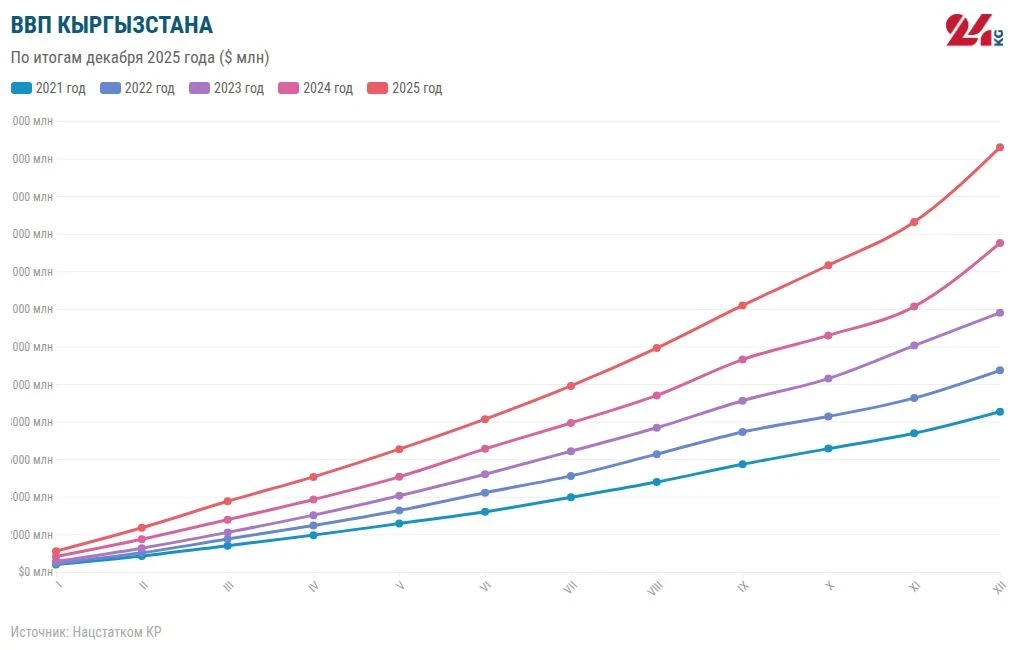
The economic indicators of Kyrgyzstan show significant growth. In 2018, the gross domestic product (GDP) amounted to 550.4 billion soms, and in 2020 — 607.3 billion soms. By 2022, this figure reached 853.1 billion soms, and in 2024, the GDP will amount to 1 trillion 454.3 billion soms, which means it has nearly tripled in six years.
Akimbaeva reminds that the adoption of the new Labor Code in 2025 will render invalid the edition from August 4, 2004, which contained an article obliging employers to index salaries based on changes in the consumer price index.In the current edition of the Labor Code, the right of the employee to fair remuneration is enshrined; however, there is no clearly defined mechanism for maintaining the real value of wages. The lack of a direct indication for wage indexing as a means of ensuring its real value leads to ambiguity in the interpretation of norms and a reduction in the protection of labor rights.
In this regard, Akimbaeva proposes to supplement Article 91 of the Labor Code with a new clause:
- The increase in the real value of employees' wages should be carried out through indexing in accordance with the growth of consumer prices for goods and services.
- Wage indexing in budgetary organizations will be carried out in accordance with the procedures established by the current laws and regulatory acts of the Kyrgyz Republic.
- For organizations not financed from the republican budget, the conditions and procedures for indexing are determined by collective agreements, treaties, or internal regulatory acts.