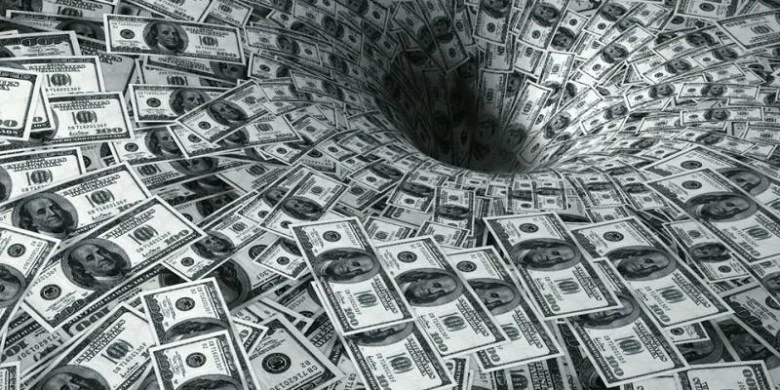
According to a new report titled "World Inequality," fewer than 60,000 of the wealthiest people on the planet own wealth equivalent to the assets of half the world's population, reports Euronews.
An international group of researchers from the World Inequality Lab presented a detailed analysis that highlights not only the unprecedented concentration of wealth but also its impact on the global economy, politics, and climate.
Wealth Inequality and the Tax System
The number of people with wealth comparable to the capacity of a football stadium is less than 60,000. These wealthy individuals control assets that are three times greater than the resources owned by the bottom 50% of the world's population. As the researchers note, the group of global elites, representing only 0.001% of the total number of people on the planet, has colossal investments.
Meanwhile, the tax burden on government finances for the upper echelon remains minimal. While tax rates for most of the population are rising, they are decreasing for billionaires and centimillionaires. Middle-class representatives, such as doctors, teachers, and engineers, are forced to pay significant amounts in taxes, undermining tax fairness and depriving society of the necessary resources for education, healthcare, and combating climate change, as emphasized in the report.
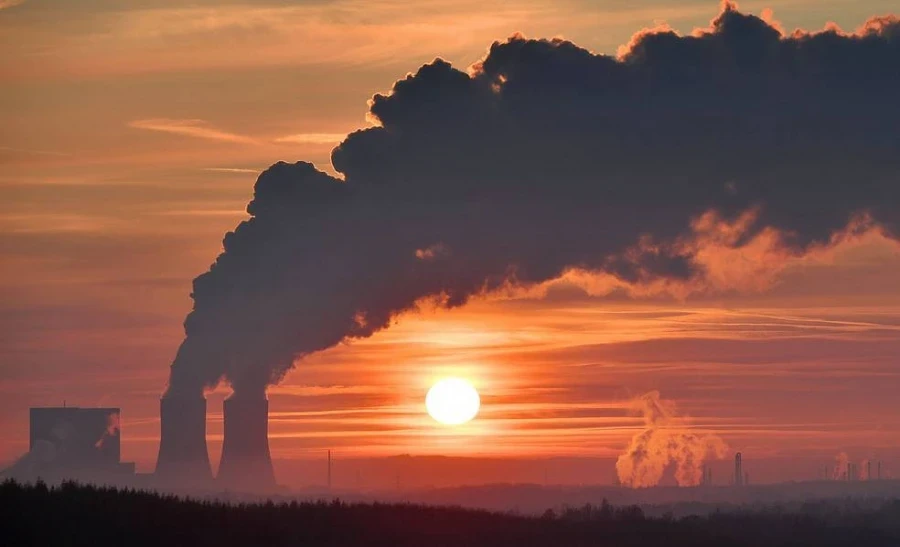
An important aspect of the work is climate responsibility, which is considered separately. The carbon footprint of the wealthiest 10% of Americans is more than 40 times greater than that of the wealthiest 10% of Nigerians. Globally, the top 1% of the population produces 75 times more carbon dioxide compared to the bottom 50%.
The traditional methodology based on consumption does not take ownership into account. Owners of large enterprises and energy companies directly benefit from polluting industries. According to an approach that considers ownership, emissions are distributed proportionally to the share of capital ownership.
For example, in France, Germany, and the USA, the carbon footprint of the wealthiest 10% is three to five times higher when their share of ownership is taken into account. In the USA, the top 10% generate 24% of emissions based on consumption but 72% based on ownership. Globally, the top 1% is responsible for 41% of all emissions when considering ownership share, compared to 15% based on consumption.
The International Financial System
The report also examines the structure of the international monetary and financial system, claiming that it was originally created in the interests of wealthy countries, leading to a constant extraction of resources from the poorest. Privileged states have the ability to borrow money at low rates and invest in more profitable assets. This phenomenon, termed "exorbitant privilege" of the USA in the 1960s, now encompasses other developed economies, including Europe and Japan.
As a result, the 20% wealthiest countries receive positive "excess returns" on their foreign assets, equivalent to about 1% of their total GDP. The bottom 80% of countries act as permanent net debtors and face negative excess returns of around 2% of their GDP. In some poor regions, the amounts flowing out as net payments to wealthy countries can exceed healthcare expenditures.
Thus, international finance functions as a hidden tax on development for poor countries, with funds that could have been directed to schools, hospitals, and infrastructure being used to service the assets of wealthy countries.
Conclusion
The authors of the study emphasize that the existing global system is not a natural result of the free market. It reflects inequality between countries and continues existing patterns of colonial exploitation in a more hidden form.