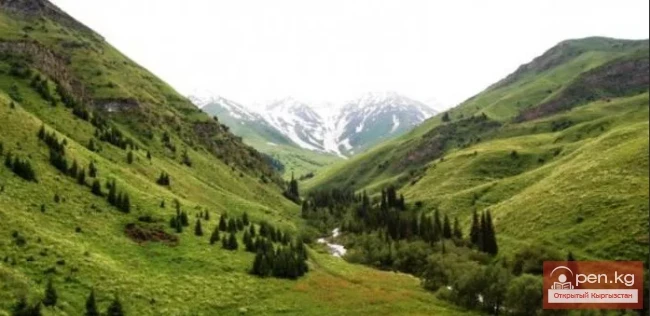
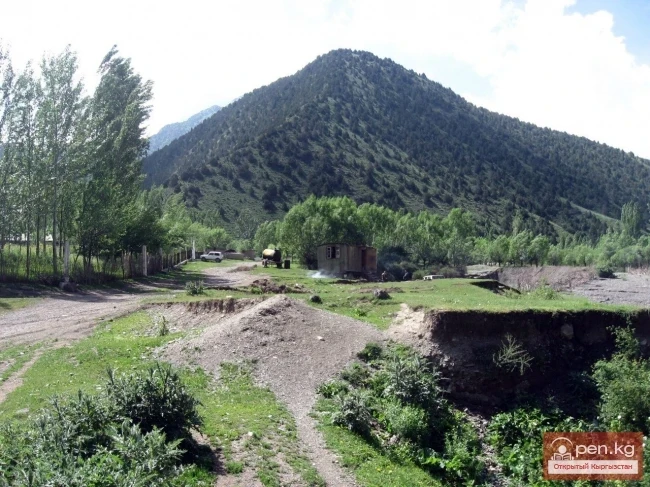
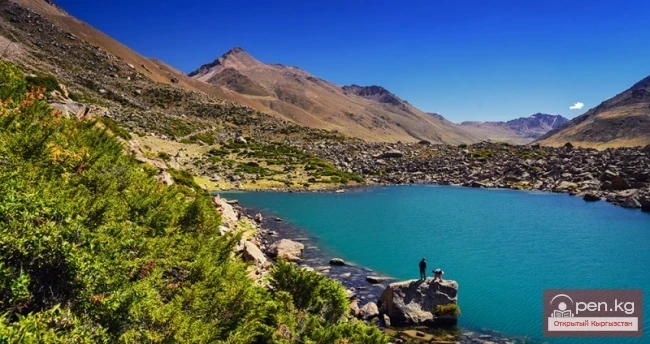
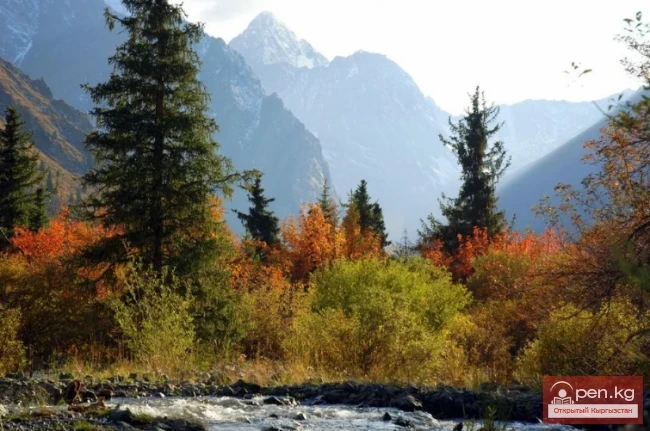
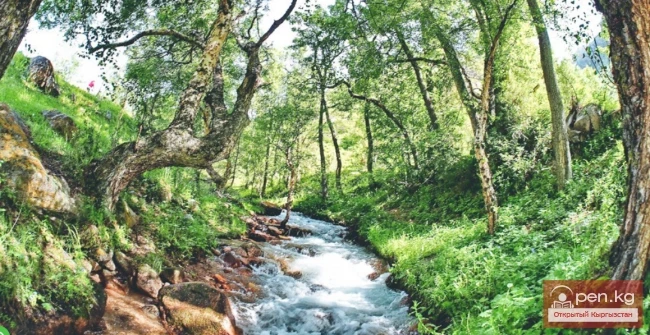
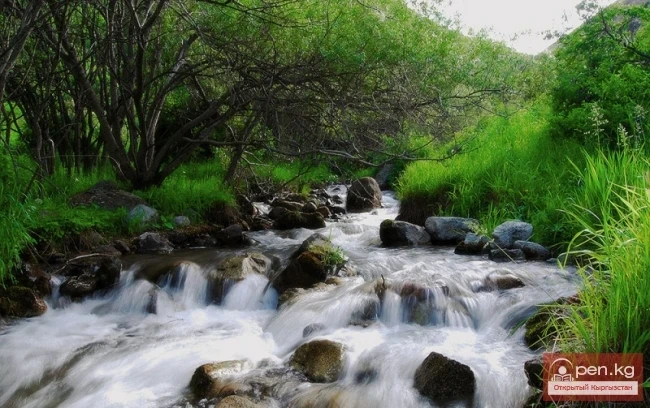
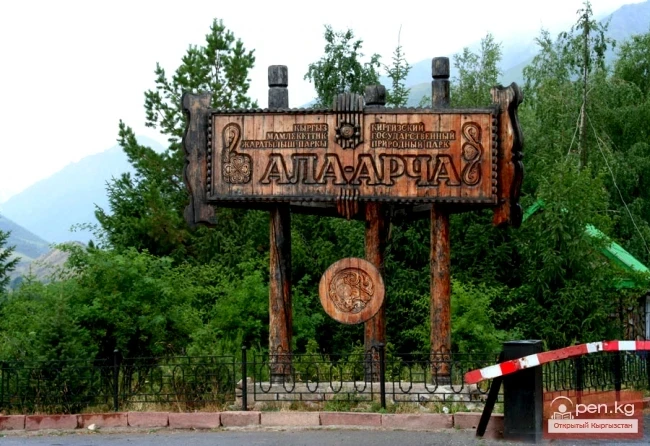
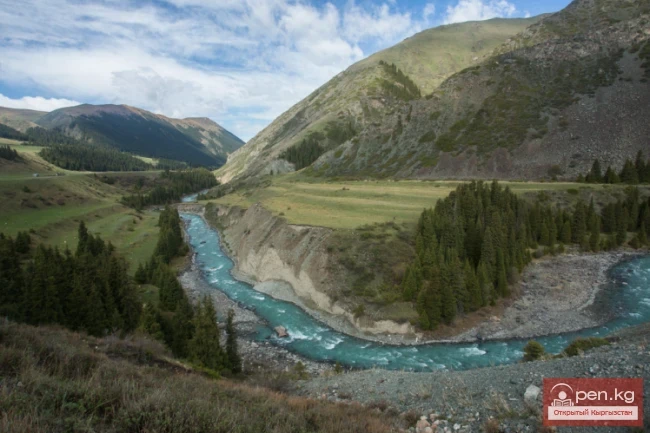
This park is known for its mineral springs, of which there are five, and is famous not only in Kyrgyzstan but also in neighboring countries such as Uzbekistan, Kazakhstan, and Tajikistan.
The mineral waters of this region are beneficial for treating various diseases, including cardiovascular diseases, metabolic disorders, gastrointestinal issues, as well as diseases of the gallbladder, liver, kidneys, anemia, diabetes, and obesity.
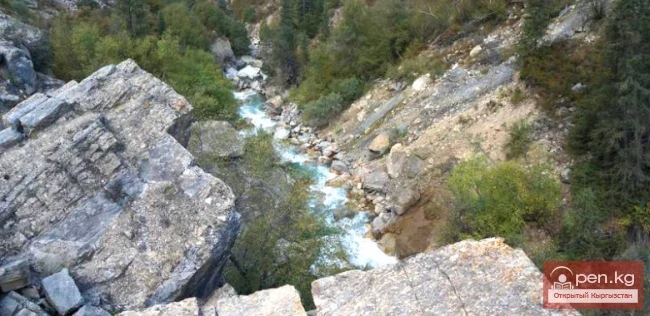
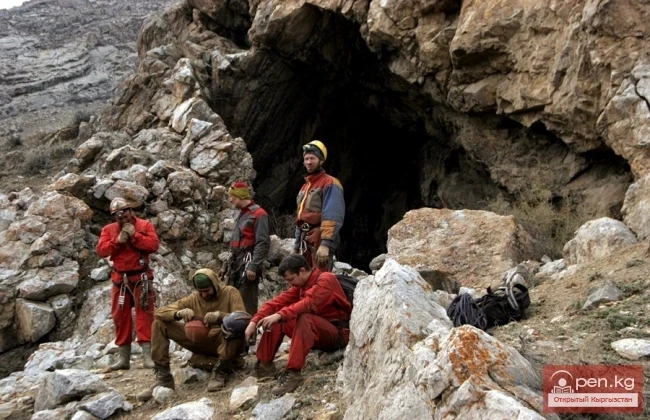
The park also features caves that attract speleologists. One of the most famous is the cave associated with the national hero Janibek Kazy. Its depth reaches 10 meters, width is about 6 meters, and height is 4 meters. This cave is an important monument of both nature and history.
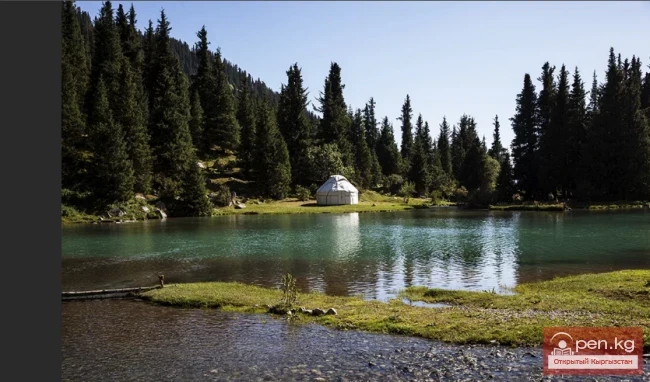
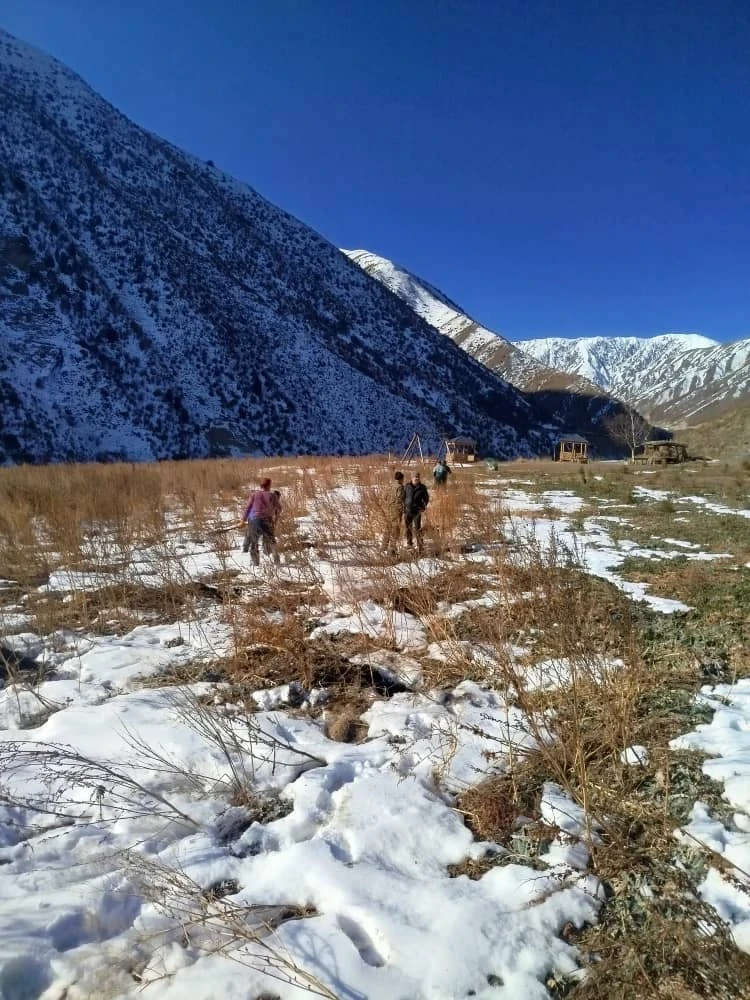
About 5,000 to 7,000 tourists visit "Kara-Shoro" during the summer tourist season. Entrance to the park costs 50 soms. Yurts are set up for visitors in the park, and there are also mineral springs.
Every visitor to the park cannot help but notice the mentioned cave, which has become a popular spot for photographs. On one side of the rock, there is a stone, and locals say that Janibek Kazy hid here. Some claim it was a pen for his livestock, as well as a place where he stored his belongings during the dekulakization.
According to some sources, Janibek Kazy used cunning: he changed the horseshoes on his horses to confuse his pursuers and headed to the cave within the "Kara-Shoro" park. Despite climbing high into the mountains, the hoof prints pointed in the opposite direction. It is said that he was never found.
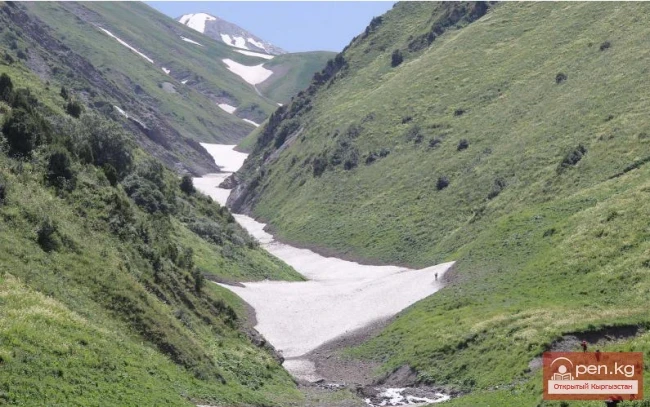
Getting to the cave is not easy, as the ascent is quite steep.
About Janibek Kazy
Sagymbay uulu Janibek was a political and state figure who was one of the leaders opposing Soviet power.
He was born in 1861 in Uzgen and actively participated in the public life of the Osh district from a young age. Over time, he became a kazy in the judicial system and received the title of ruler of one of the rural districts.
His active involvement began at the age of 56 after the revolutionary events of 1917. During the February and October revolutions, local Muslim communities in the Fergana Valley decided to unite to create a new state—the Turkestan Autonomous Region. Janibek Kazy witnessed and participated in these events. However, three months later, the Russian army suppressed the movement, leading to thousands of civilian casualties.
He was also one of the participants in the resistance, gathering about 400 people who began to arm themselves. The Soviet power labeled them as "basmachis" and tried to discredit them in the eyes of society. Meanwhile, the local population formed ranks in the Red Army against the groups led by Janibek Kazy.
From 1918 to 1922, amid armed clashes, Janibek Kazy trusted the promises of the Soviet power. His sons began to study in military educational institutions, and he himself took a government position. However, over time, his relationship with the Soviet power deteriorated.
Starting in 1927, dekulakization began, and wealthy individuals like Janibek Kazy were persecuted. He realized he had been deceived and joined the side of those rebelling against Soviet power, gathering about 200 volunteers. The Soviet power attempted both to establish contact with him and to prepare for his physical elimination.
Until 1930, Janibek Kazy was forced to hide in mountain caves. After he disbanded his volunteer warriors, he himself, along with his family, went to Pakistan, crossing the border with China.
Janibek Kazy passed away in 1933 at the age of 72.
Sagymbay uulu Janibek is the founder of the first Kyrgyz settlement in Pakistan.
This settlement arose in the picturesque Ishkoman Valley, located at an altitude of over 3,000 meters above sea level in the northwestern part of Pakistan's Gilgit-Baltistan province.
For the Kyrgyz, accustomed to a nomadic lifestyle, this area proved attractive due to the abundance of pastures necessary for livestock breeding. Given the low population density in the Ishkoman Valley, they did not encounter hostility from the local residents. There were enough resources and land for everyone.
Moreover, the harsh climatic conditions of this high-altitude region made it less appealing to the inhabitants of British India, who were used to settled life and agriculture.