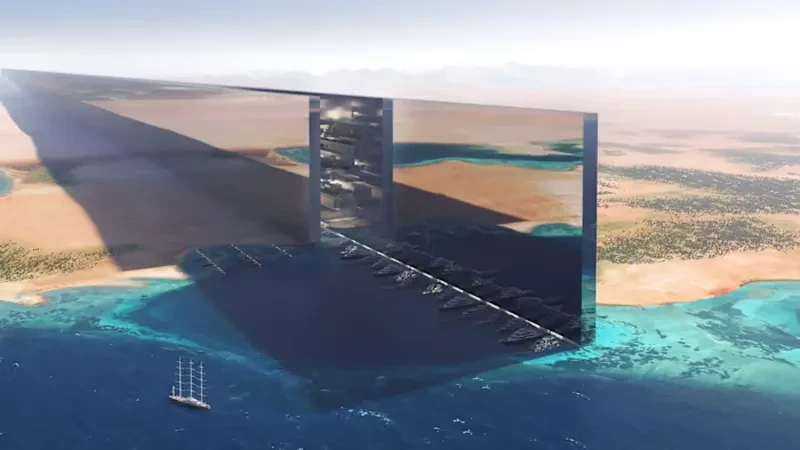
The Neom project, launched about eight years ago under the leadership of Crown Prince Mohammed bin Salman, envisioned the creation of a grand futuristic city-state on the shores of the Red Sea. The main focus was on the unique urban complex The Line — a "lying skyscraper" stretching 170 km, 500 m high and 200 m wide, which was supposed to house millions of people. However, the implementation of this idea has faced serious difficulties.
According to verified sources, after prolonged delays, significant budget overruns, and a lack of foreign investment, the Saudi authorities have begun a thorough review of the development strategy for the Neom project. The aim of this review is to optimize costs and implement more realistic plans. New proposals are expected to be ready by the end of the first quarter of 2026 or shortly thereafter.
In particular, the concept of the "lying skyscraper" will undergo significant changes, and other projects, including the Trojena ski resort, which was originally planned as a venue for the 2029 Asian Winter Games, will also be reassessed. The fate of the resort remains uncertain, as its scale will be reduced. The main idea behind the reconstruction of Neom is to shift towards more realistic and sustainable directions, such as the creation of data processing centers and artificial intelligence hubs, using the existing infrastructure.
One of the arguments in favor of utilizing the project for AI development and data processing is the availability of significant volumes of seawater in the vicinity of the complex. This water is planned to be used for cooling data centers, although it will first need to be desalinated and purified, which will require substantial operational costs for treatment facilities. However, the abundance of solar energy in this region will provide clean energy for the data centers.
It was previously reported that the Neom project became the largest consumer of concrete in the world, just for the construction of the foundation of The Line. Reducing or canceling further construction could negatively impact the concrete manufacturing industry, as the project was an important player in the global market for this material. This could create problems for many economies, although it does not fall directly within the scope of our publication's interests. However, the repercussions could also affect the electronics market, as happened during the payment crisis over ten years ago following the collapse of the construction industry in the U.S.
Nevertheless, there are positive aspects as well. The Neom project posed a threat to the region's climate, and its implementation could have had a negative impact on the environment. Now, the ecosystem, including scorpions, lizards, cormorants, and snakes, will face fewer threats from human activity.