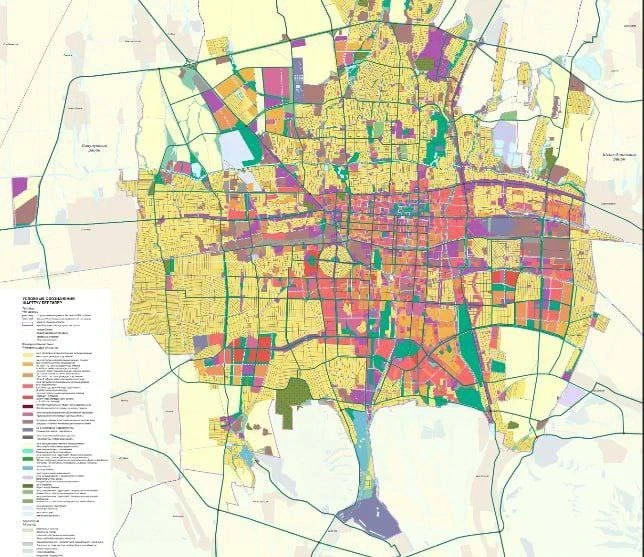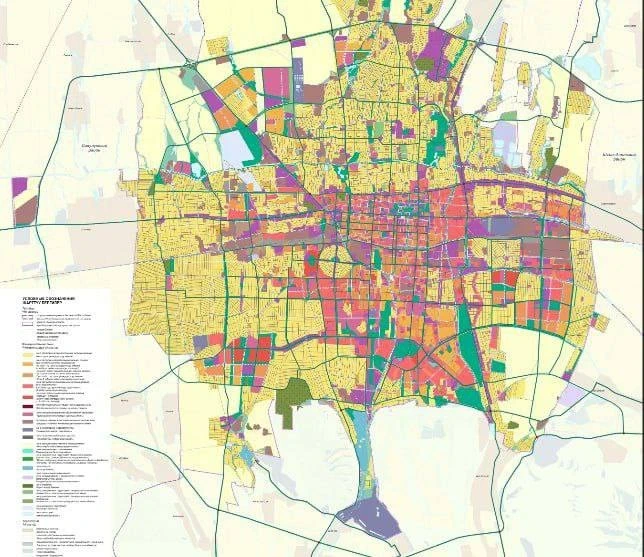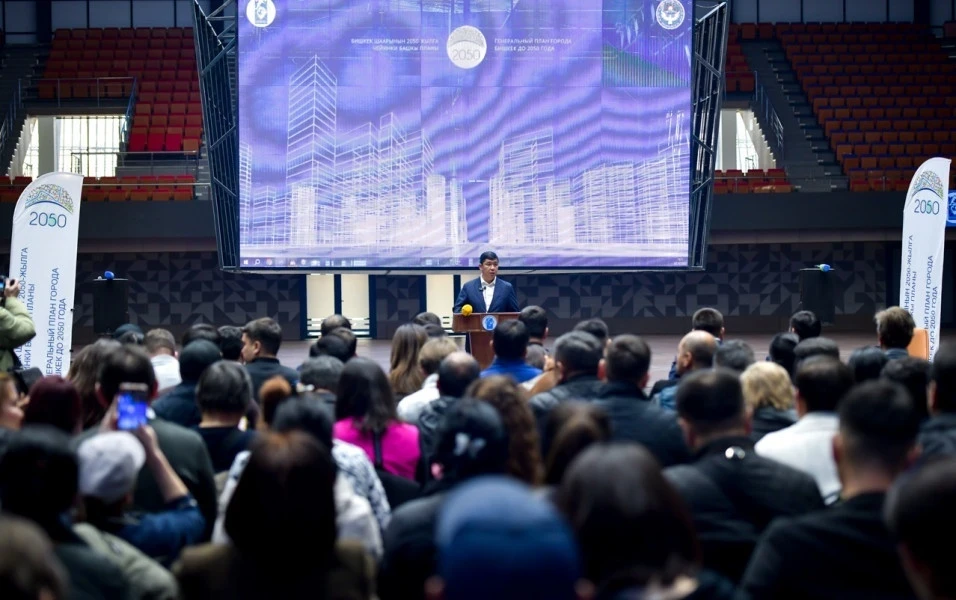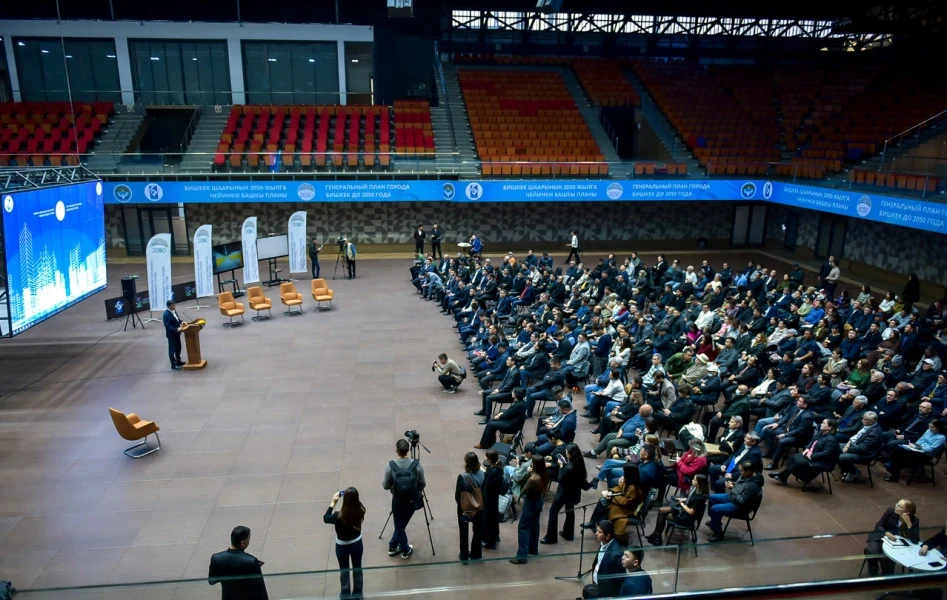
Photo from Bishkek City Hall. The new general plan was presented on October 24
As part of this plan, four key projects have been identified that could radically change the face of the capital:
- a medical cluster in the southeast;
- a water park near the Ala-Archa reservoir close to Manas Airport;
- a new bus station next to the Osh market;
- a modern racetrack in the underdeveloped northern part of the city.
These projects have been discussed multiple times at official meetings and in comments from urban planning specialists.
Currently, the general plan project is actively being discussed by both experts and city residents, and the City Hall intends to make changes based on the feedback received. Public hearings for different districts are scheduled for the end of December.
1. Medical Cluster in "Kok-Zhar": Creating a "City of Hospitals"
One of the most significant projects in the General Plan is the medical cluster located in the Kok-Zhar residential area in the southeast of the capital. This initiative is supported by a presidential decree and involves relocating major national hospitals, such as the National Hospital, Oncology Center, Cardiology Center, and other specialized medical institutions.
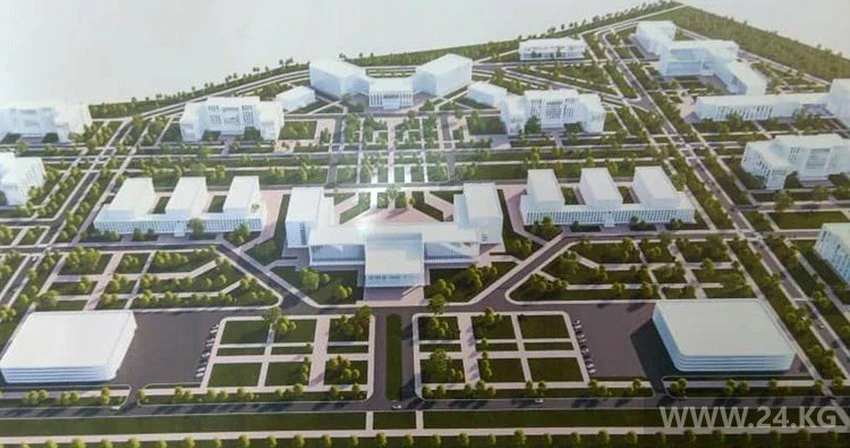
As a result, a new "city of hospitals" is planned to accommodate thousands of patients from across the republic. It is projected that by 2050, Bishkek will have about 37 hospitals with a total capacity of over 25,900 beds and 65 clinics.
Reasons for Transforming the Healthcare System
Currently, large hospitals are concentrated in the city center, making access difficult for residents of new residential areas. Relocating some medical facilities to Kok-Zhar will relieve congestion on central streets and speed up emergency response times. Additionally, it will allow for the construction of modern hospitals to uniform standards.
The General Plan also proposes increasing the number of ambulance stations from 7 to 20 and adding more substations in various districts.
Main Challenges Related to the Cluster:
- Transportation accessibility. It is necessary to organize high-capacity public transport to avoid traffic jams in the center.
- The fate of old hospital buildings. There is a risk that new high-rises will be built in their place instead of social facilities.
- Staffing issues. For the cluster to function successfully, social infrastructure and housing for medical workers will need to be created.
So far, the General Plan only provides partial answers to these questions.
2. Water Park near "Manas": A New Attraction for Tourists
The next important project is a water park and amusement park planned to be built in the northern part of the city, near the Ala-Archa reservoir and Manas International Airport. In the Bishkek Chief Architect's Office, it is emphasized that this facility should become an important center for tourists.
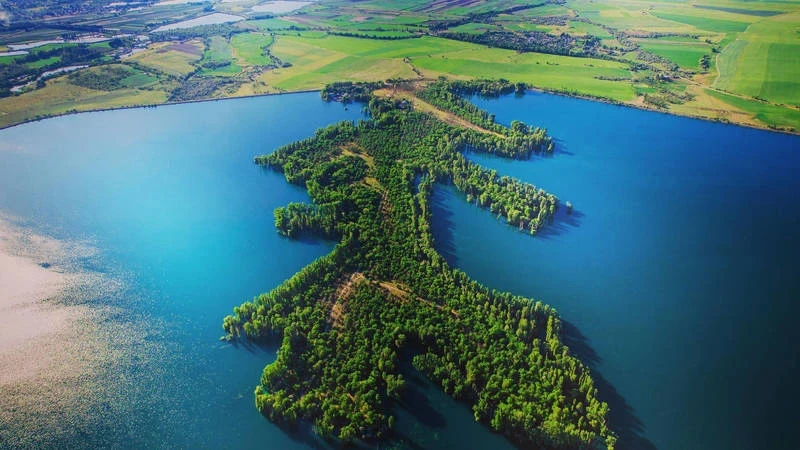
This location was chosen for a reason: it is conveniently situated between the city and the airport, making it attractive for tourists traveling to Issyk-Kul, for example. New residential complexes and a green belt are planned in the vicinity, which will improve the climate resilience of the capital.
For residents of the northern and western outskirts of the city, this will be the first large public space with areas for recreation and attractions. Currently, most family leisure activities are concentrated in the center and south of Bishkek.
Additionally, this project addresses one of the main objectives of the General Plan—to enhance Bishkek's significance on the international tourist stage and develop the economy through services rather than just trade.
Environmentalists' main concerns relate to the possibility of creating a new water body given the water scarcity during the summer months.
There are also questions about how the water park will affect the regime of the Ala-Archa reservoir and adjacent agricultural lands, as well as the potential for traffic jams on the highway to Manas without alternative public transport.
Experts suggest linking this project with water-saving programs and developing effective water recirculation and purification systems in advance; otherwise, the water park risks becoming a symbol of inefficient consumption.
3. New Bus Station near Osh Market: Solving the Transportation Problem
The third key project is the bus station, which will be located next to the new Osh market along the Bishkek—Manas Airport highway. This project is part of a comprehensive transportation modernization plan, which also includes the creation of new railway lines and bypass routes.
Currently, intercity and suburban buses are served by several locations, leading to transportation chaos in the central part of the city, especially at the western exits.
The project envisions that the new bus station will become the main transfer hub for intercity, suburban, and city transport, with commercial and warehouse infrastructure nearby.
This could reduce the number of minibuses that enter deep into Bishkek and decrease traffic jams.
However, urban planners warn that a single bus station is not enough if:
- strict regulation of intercity transport entry into Bishkek is not implemented;
- the hub is not connected to the tram network and high-frequency bus routes;
- an organized transfer area does not appear around the station, but only spontaneous construction and markets.
Thus, the new bus station will be a test for the City Hall regarding the implementation of comprehensive transportation solutions.
4. New Racetrack: Sports and Development in the Suburban Area
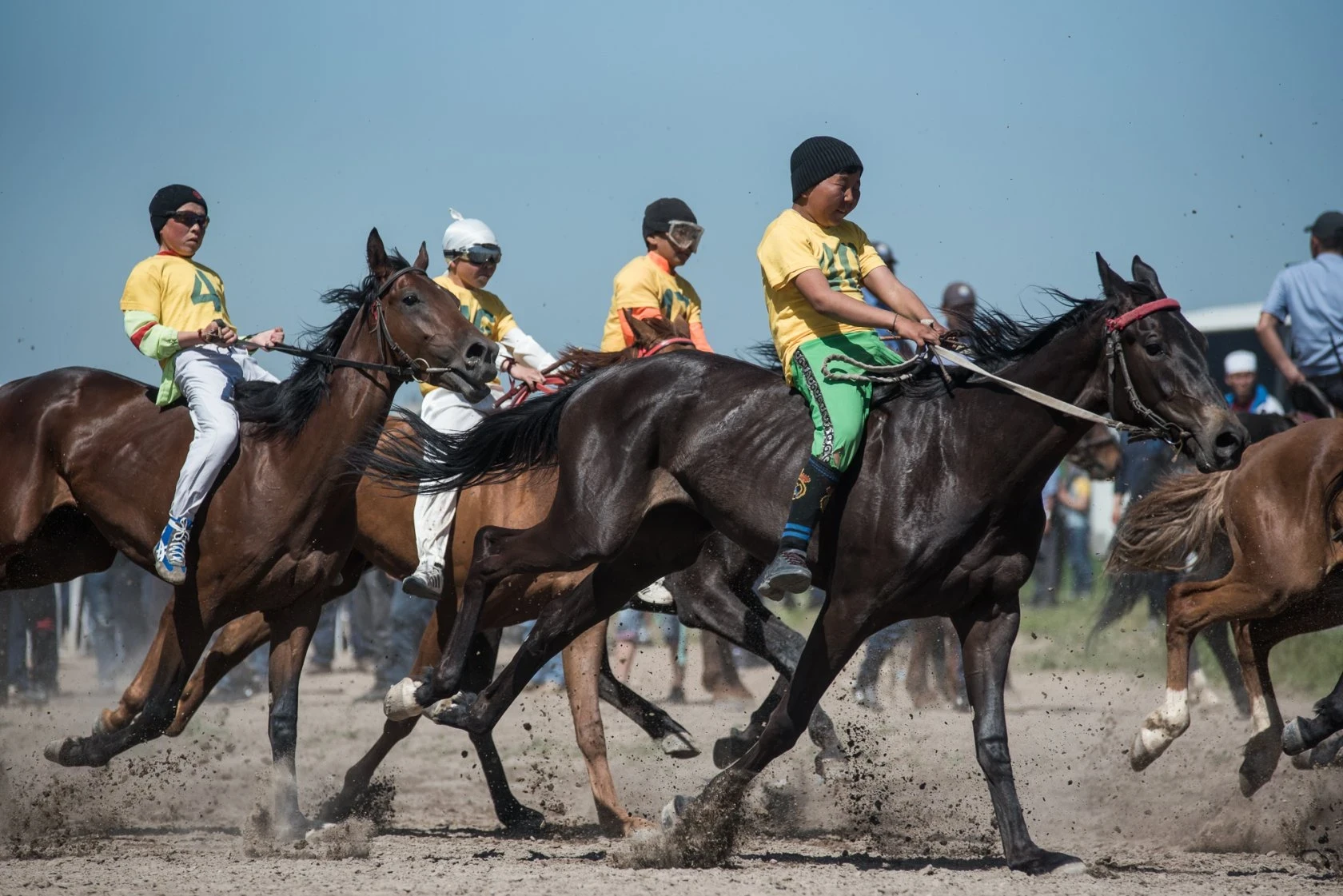
The fourth project is a new racetrack planned for the northern, underdeveloped part of the capital. The idea of creating a modern equestrian sports complex arose after the demolition of the old racetrack "Ak-Kula."
Reasons for Choosing the Northern Area for the Racetrack:
- The site of the old racetrack has become too expensive to maintain low-rise buildings;
- New residential neighborhoods need public and sports spaces, and the racetrack can be combined with parks and bike paths;
- The northern part of Bishkek is designated in the General Plan as an area for future development with new highways and centers.
A modern racetrack is not only a venue for horse racing and kok-boru but also a potential training base for national teams, a site for international competitions, and a tourist cluster with hotels and an ethnovillage.
However, this will require significant investments and a clear management model. Currently, the General Plan only outlines the direction of development; details and timelines for implementation need further discussion.
What’s Next?
The Bishkek General Plan for 2050 has not yet been approved. Public discussions are currently underway, and the City Hall promises to consider the opinions of citizens and expert suggestions. The four key projects—a medical cluster, water park, bus station, and racetrack—could significantly change not only the map of the city but also the lives of Bishkek residents.
The implementation of these megaprojects will depend on the quality of addressing issues related to transportation, ecology, water supply, and social consequences, which will determine whether the General Plan-2050 becomes a step towards a comfortable capital or a set of difficult-to-implement ideas.