The press secretary of the President of Kazakhstan spoke about Tokayev's achievements
In his Telegram channel, Ruslan Zheldibay, assistant and press secretary of the President of Kazakhstan Kassym-Jomart Tokayev, shared information about the socio-political and economic activities of the head of state in 2025, reported the Kazinform agency.
The past year has been a time of significant changes in the social and economic spheres, positively impacting the lives of citizens. New production capacities were opened in the country, high harvests were obtained, and houses, schools, and hospitals were built, along with the modernization of transport infrastructure.
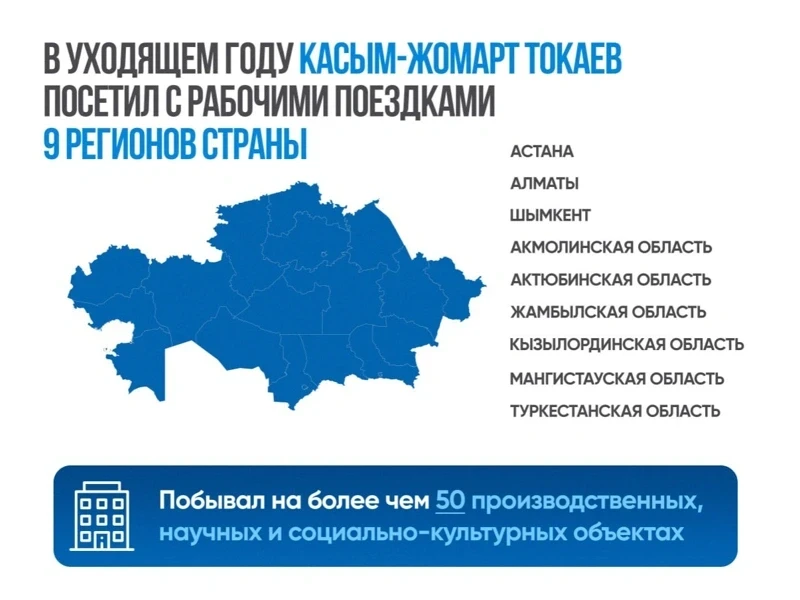
President Tokayev made working trips to nine regions, visiting more than 50 facilities, including production and scientific institutions, as well as socio-cultural sites.
Additionally, he listened to reports from 16 akims of regions and cities under republican jurisdiction.
Economic Growth
It is expected that by the end of 2025, Kazakhstan's economic growth will exceed 6%, which will be the highest figure in ten years. For the first time in the country's history, the gross domestic product (GDP) will exceed 300 billion dollars, amounting to 15 thousand dollars per capita.
Currently, 185 projects have been implemented in the country with a total volume of about 1.478 trillion tenge, which has allowed the creation of over 22.8 thousand jobs.
The launch of all projects at full capacity will ensure significant economic results, with production volumes reaching about 2.3 trillion tenge.
President Tokayev initiated the launch of the second line of the Dostyk — Moyynty railway and the KIA Qazaqstan car factory in the Kostanay region in 2025.
He also visited new airport terminals in Shymkent and Kyzylorda, and got acquainted with the production of passenger cars at the Stadler Kazakhstan plant in Astana.
Projects have been launched in sectors such as ferrous and non-ferrous metallurgy, the chemical and food industries, as well as in the production of building materials.
Development of Transport Infrastructure
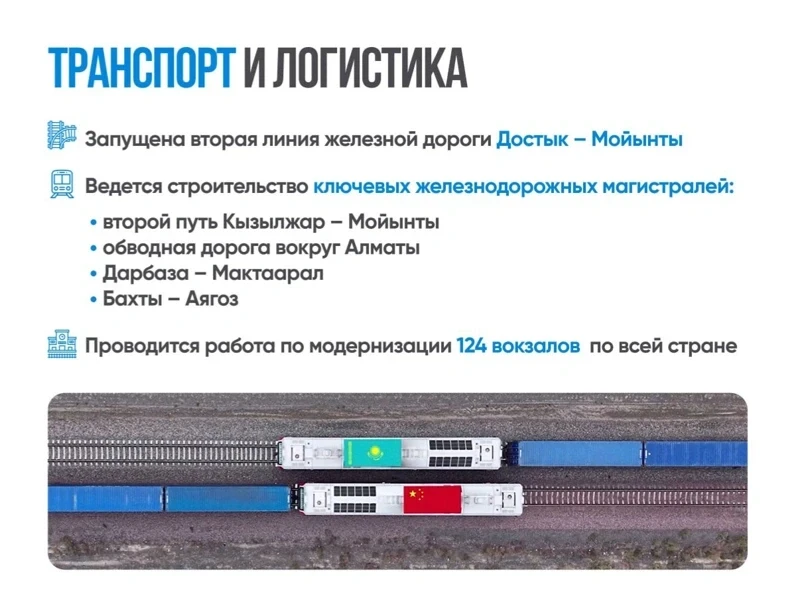
One of the key directions of state policy remains the expansion of the transport and logistics potential of the country, aiming to transform Kazakhstan into a major logistics and transit hub in Eurasia.
In 2025, work will begin on the repair and construction of 13 thousand kilometers of roads.
New projects with a total length of 1.9 thousand kilometers are being implemented, including important routes such as Center — West and sections of Karaganda — Zhezkazgan, Aktobe — Ulgaiysyn, and Atyrau — Dossor.
By the president's order, three new airports are being built in Zaisan, Katon-Karagay, and Kenderli, and the restoration of the airport in Arkalyk has begun.
The initiative to create the first national cargo airline to optimize the country's transit potential is being supported.
In 2025, new airlines arrived in Kazakhstan, and more than 35 new routes were launched, including direct flights to Shanghai, Guangzhou, and Munich.
Key railway mainlines are being constructed, such as the second tracks of Kyzylzhar — Moyynty and a bypass road around Almaty, as well as a new line from Darbaza to Maktaaral.
Additionally, 124 railway stations across the country are being modernized.
Strengthening Agricultural Potential
The agricultural sector continues to be a strategic priority of state policy. As Tokayev noted, "The development of agriculture is the development of villages, regions, and the country as a whole."
In November, the II Agricultural Forum took place, where the president outlined key tasks — the development of livestock, effective use of agricultural land, increasing water efficiency, modernization of irrigation systems, improving financing for the agro-industrial complex, and digitalization of the sector.
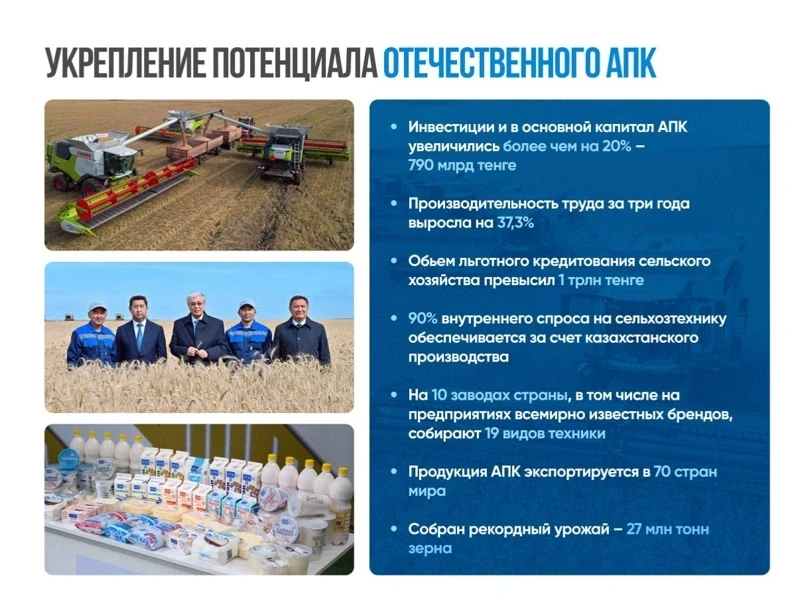
Since the beginning of 2025, investments in the agricultural sector have increased by more than 20%, reaching 790 billion tenge. Labor productivity has increased by 37.3% over three years.
This year, the volume of preferential lending to agriculture exceeded 1 trillion tenge for the first time.
Currently, 90% of the domestic demand for agricultural machinery is covered by Kazakh production.
19 types of machinery are produced at 10 factories in the country, including those of well-known global brands.
Products from the agro-industrial complex are exported to 70 countries for a total of over 5 billion dollars.
Kazakh farmers harvested a record crop of 27 million tons of grain. All regions of the country contributed to this achievement, Zheldibay noted.
Digitalization and Artificial Intelligence
In his Address, Tokayev set the task of making Kazakhstan a full-fledged digital state within three years.
As part of creating a digital ecosystem in the country, much work has already been done in the field of artificial intelligence and digitalization at his direction.
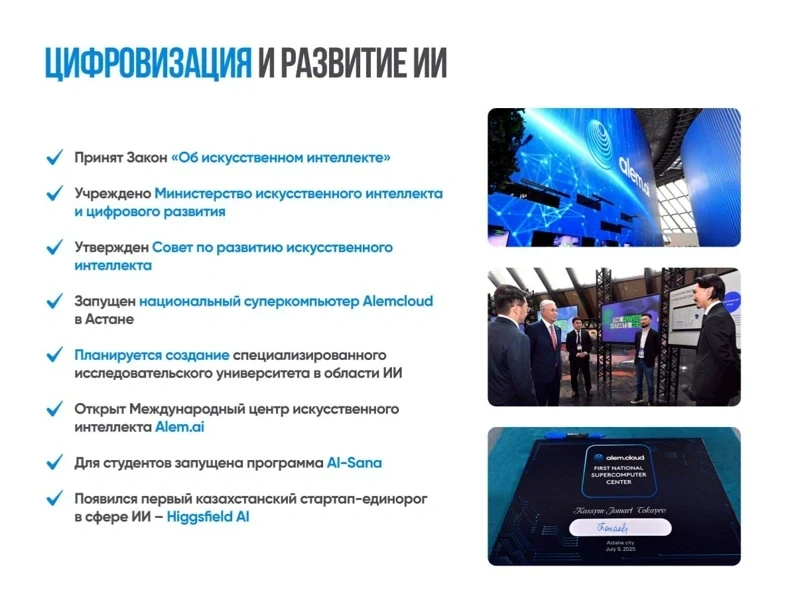
A significant step was the adoption of the Law "On Artificial Intelligence," which made Kazakhstan one of the first countries to implement legislation regulating this area.
To improve the coordination of state policy in the field of AI, the Ministry of Artificial Intelligence and Digital Development was established.
In July, Tokayev launched the national supercomputer Alemcloud in Astana, which, following testing, ranked 86th in the world supercomputer TOP-500 list.
The company Kazakhtelecom delivered the second supercomputer Al-Farabium in Almaty, which ranked 103rd in the global ranking.
The president emphasized the importance of training qualified personnel and proposed to create a specialized university in the field of AI in the country.
The International Center for Artificial Intelligence Alemai was opened in Astana.
Students can participate in the AI-Sana program, within which more than 440 thousand people have already been trained.
A significant event was the creation of the first Kazakh unicorn startup in the field of AI — Higgsfield AI.
Year of Skilled Professions
The year 2025, declared the Year of Skilled Professions, became a time of reforms in vocational education and raising the prestige of labor.
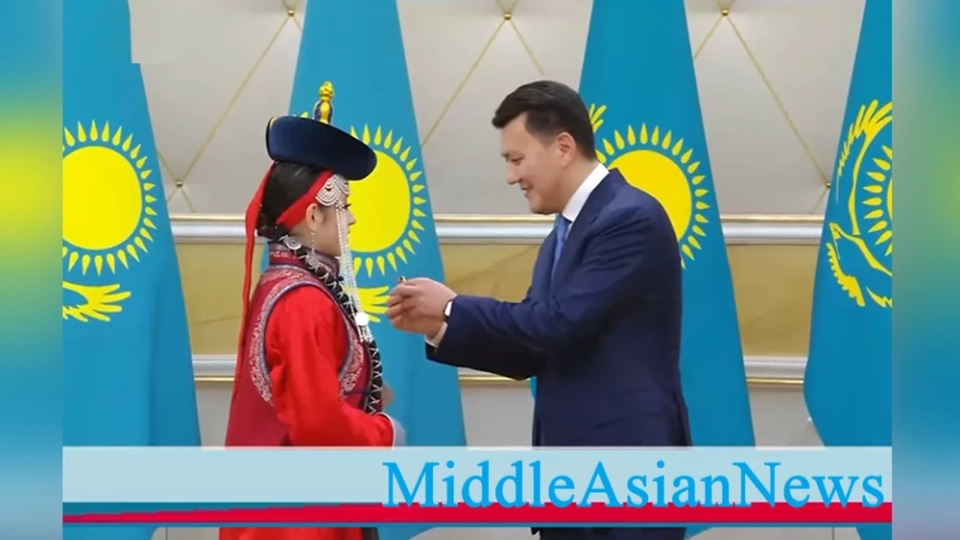
Throughout the year, achievements of workers in production and the social sphere were celebrated on behalf of the president in Akorda.
By the Republic of Kazakhstan Day, about 500 workers and representatives of labor dynasties received high awards.
Awards were also presented to more than 130 teachers and scientists, as well as over 100 medical workers.
Special attention was given to workers in the transport, energy, oil and gas, agricultural sectors, and other fields during their professional holidays.
Regulatory Acts
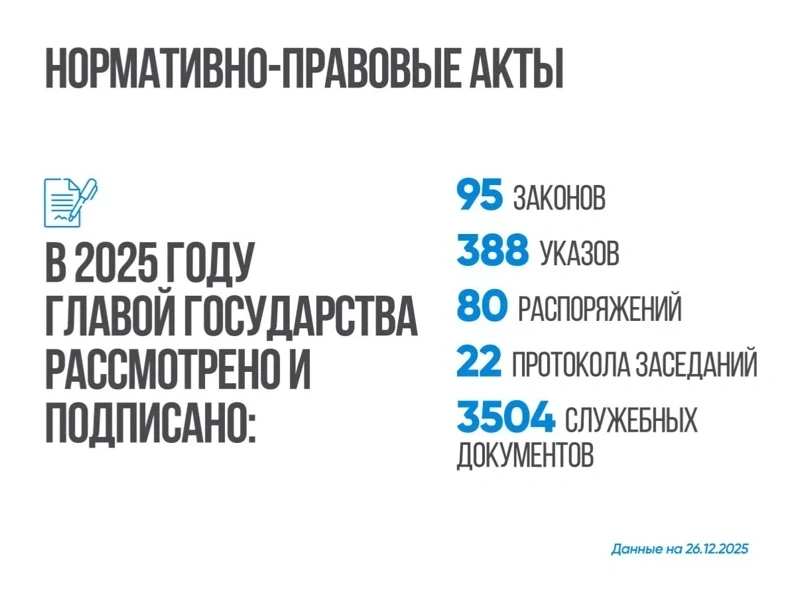
The president reviewed and signed 95 laws, 388 decrees, 80 orders, 22 meeting protocols, and 3504 official documents.
Special attention was paid to the adoption of new editions of the Budget, Tax, and Water Codes, as well as the Law "On Artificial Intelligence."
Additionally, Tokayev signed the Law "On the Special Status of the City of Turkestan" and a decree granting the city of Alatau a status of accelerated development.
— The decisions made by the president are aimed at creating new points of economic growth: transforming Turkestan into a cultural and tourist center and Alatau into a high-tech hub, — noted the press secretary.
Kazakhstan in International Relations
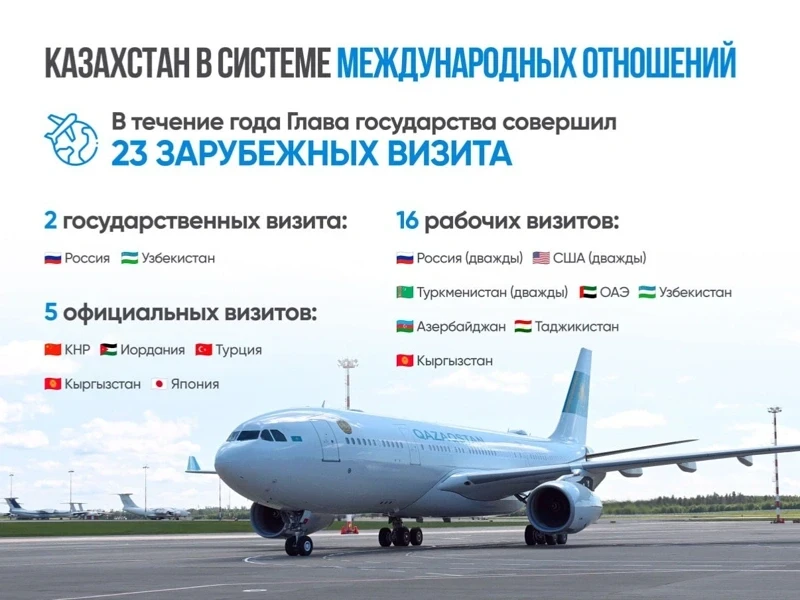
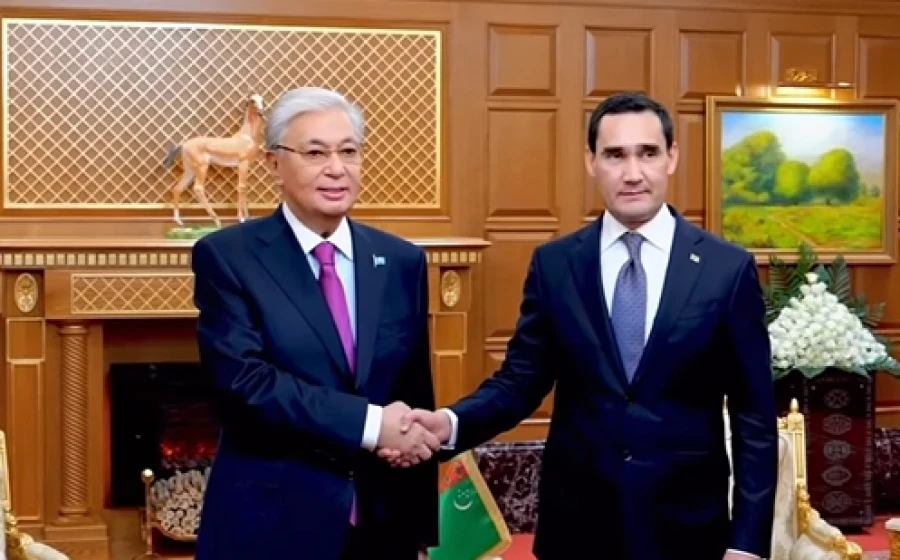
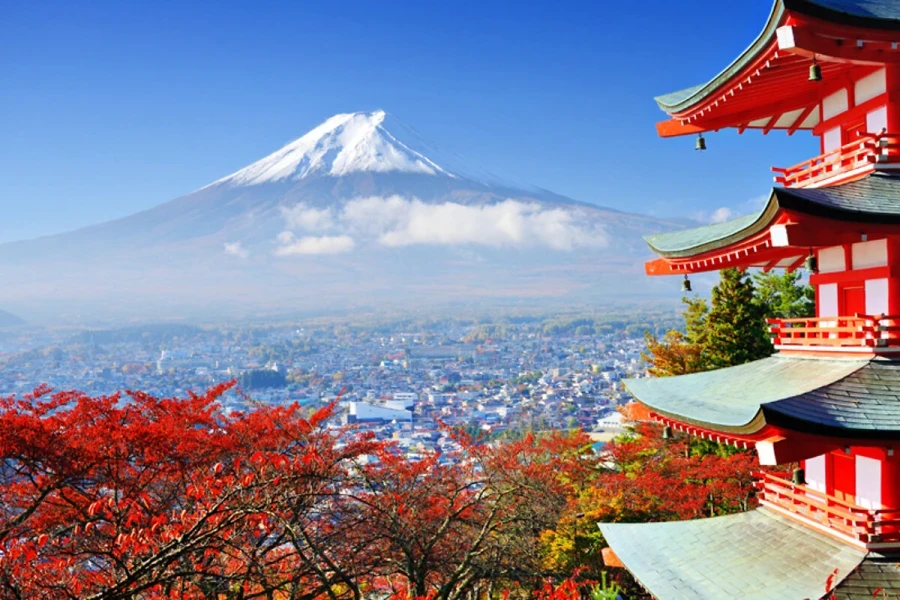
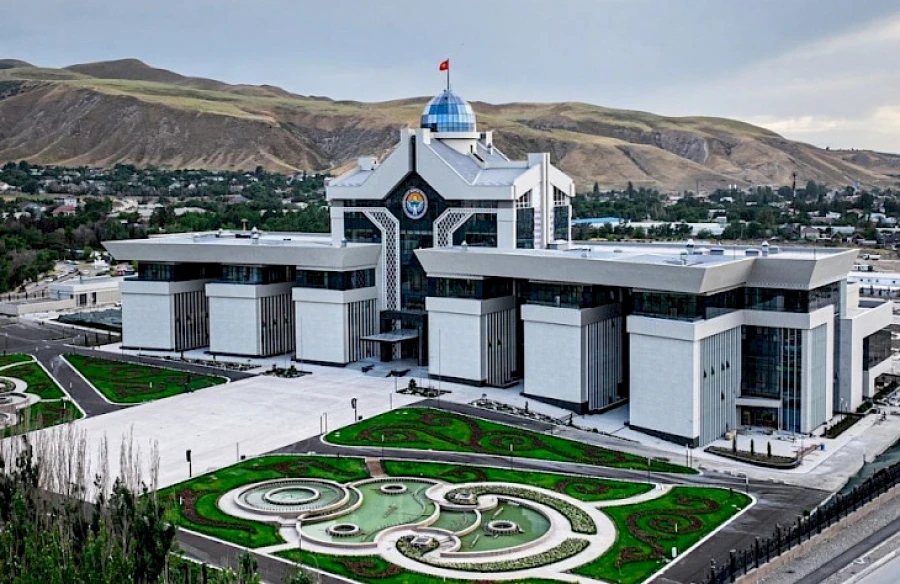
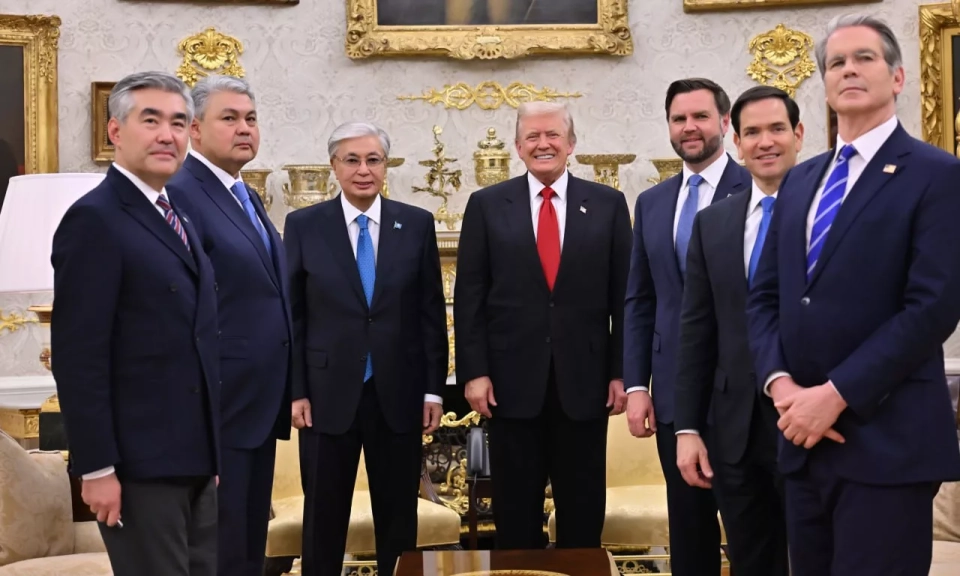
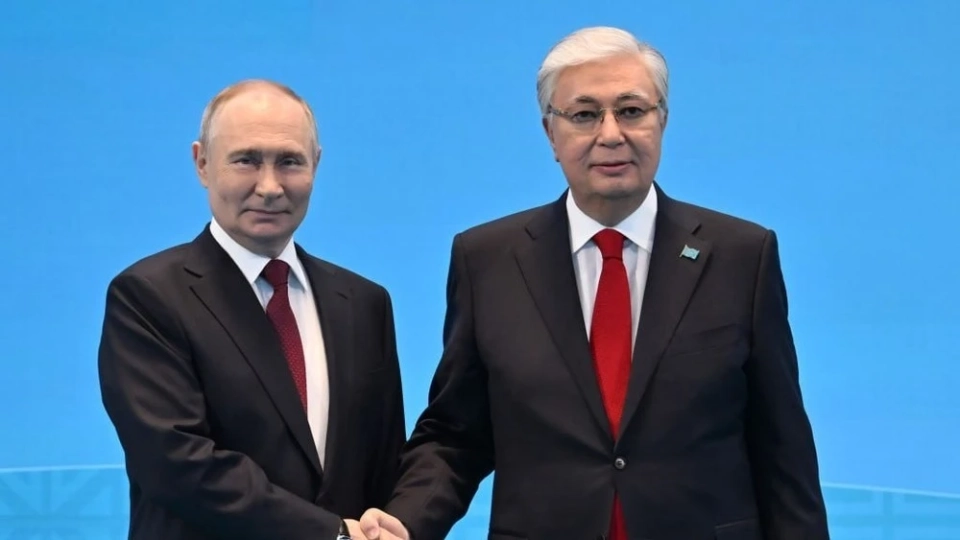
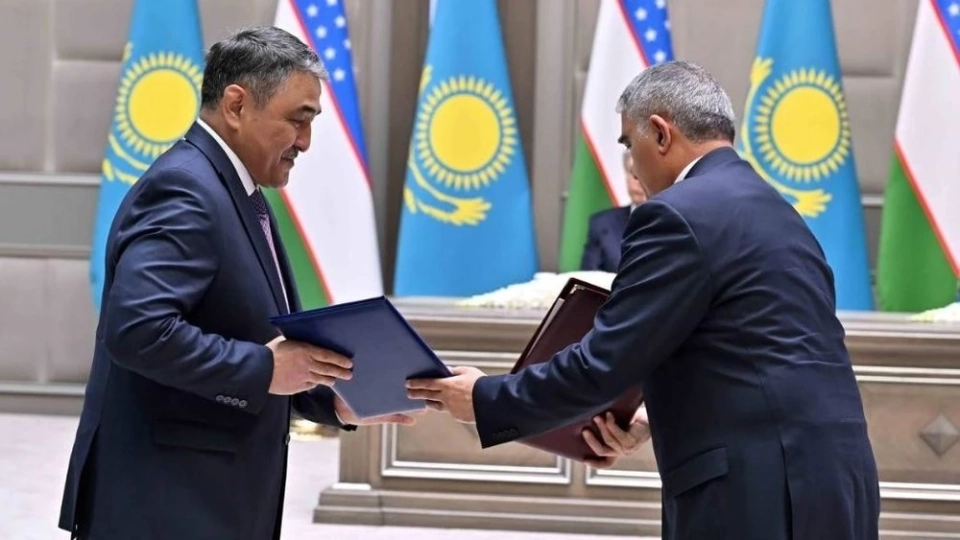
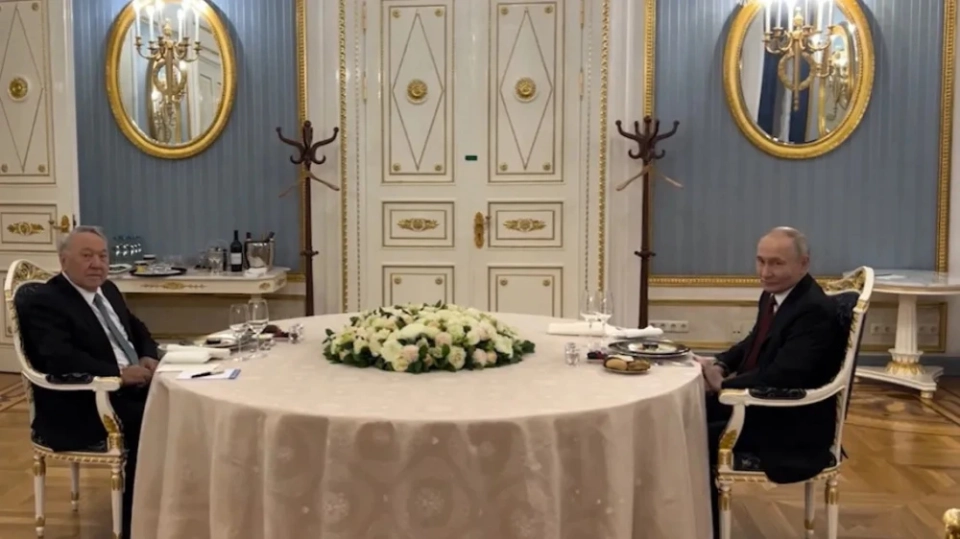
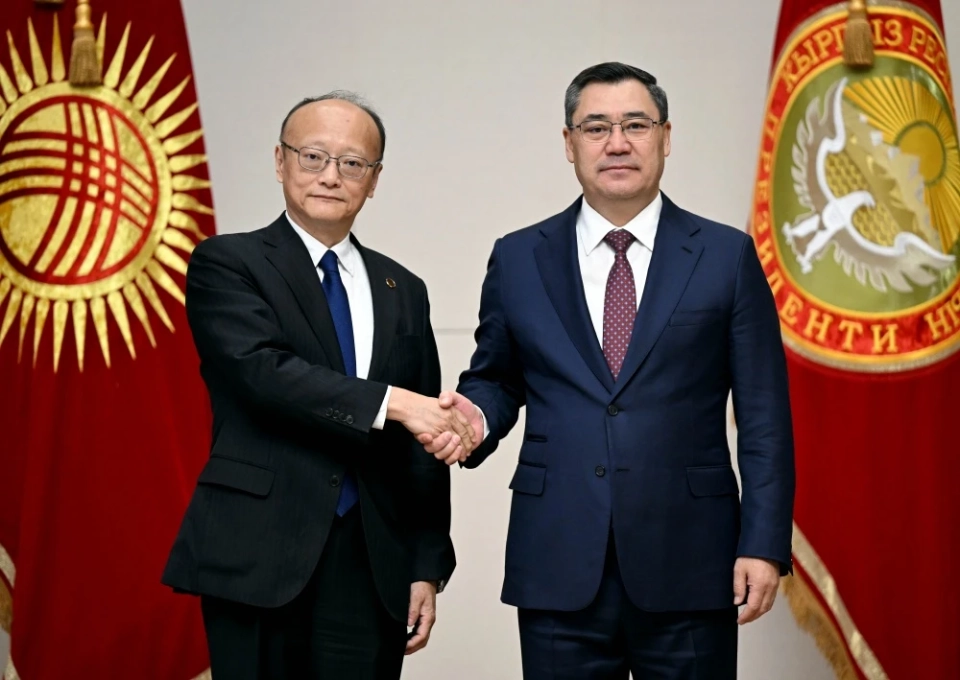
Throughout the year, Tokayev made 23 foreign visits, including two state visits to Russia and Uzbekistan, five official visits to China, Jordan, Turkey, Kyrgyzstan, and Japan, as well as 16 working visits to Russia (twice), the USA (twice), Turkmenistan (twice), the UAE, Uzbekistan, Azerbaijan, Tajikistan, and Kyrgyzstan.
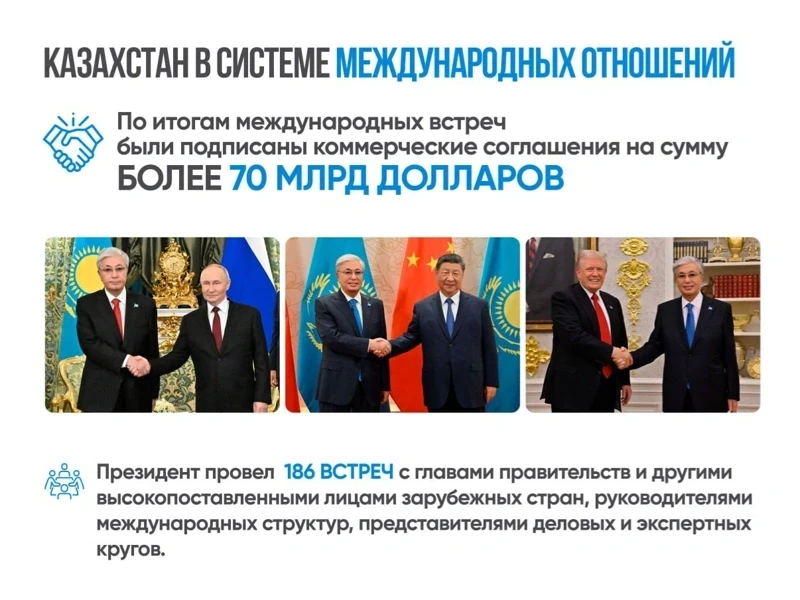
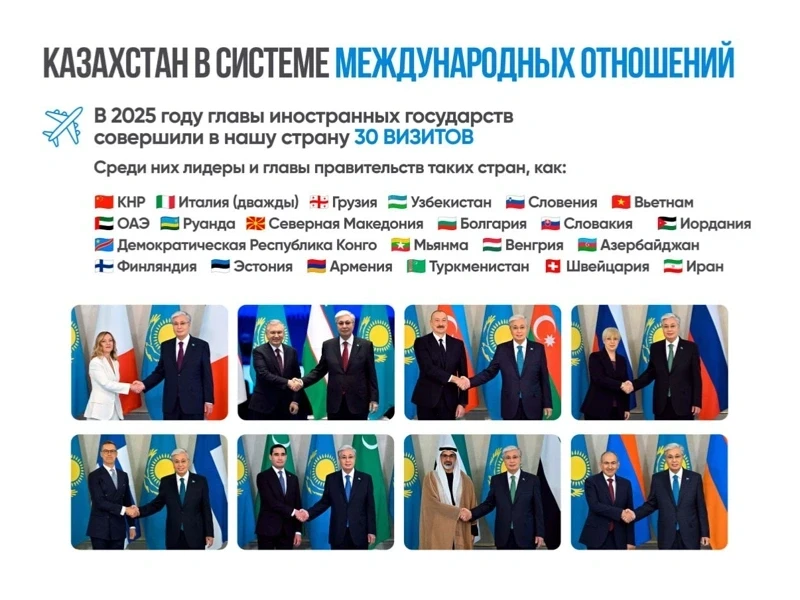
Kazakhstan became an important platform for international dialogue, with leaders from 30 foreign states visiting the country in 2025, reported the president's assistant.
Among them were heads of states and governments from China, Italy (twice), Georgia, Uzbekistan, Slovenia, Vietnam, the UAE, Rwanda, North Macedonia, Bulgaria, Slovakia, Jordan, the Democratic Republic of the Congo, Myanmar, Hungary, Azerbaijan, Finland, Estonia, Armenia, Turkmenistan, Switzerland, and Iran.
Kassym-Jomart Tokayev held 43 phone conversations with foreign leaders and received credentials from 30 ambassadors during four official ceremonies.
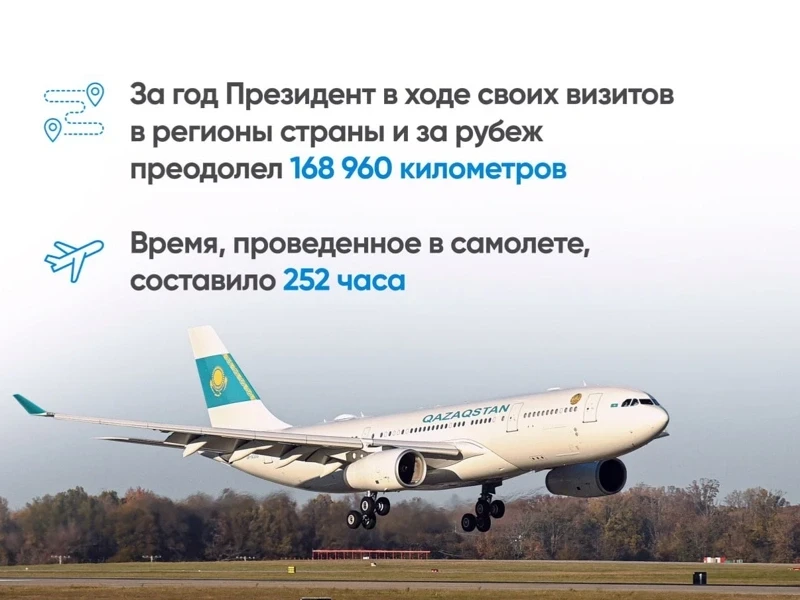
Over the year, he traveled 168,960 kilometers during his trips within the country and abroad.
The travel time amounted to 252 hours.
The implementation of the "Listening State" concept remains one of the priority areas of work. In 2025, the president's administration received 82,500 appeals.
To effectively address requests, a quality digital infrastructure was created: 50 thousand organizations and 320 thousand employees are connected to the "eOtinish" system.
The process of handling appeals is constantly improving, with elements of artificial intelligence being implemented, and successful experiences from digital governments such as the USA, South Korea, and Singapore being studied.
In offline format, dialogue is also being conducted: more than 150 citizen reception centers have been opened in the regions, where qualified assistance has been provided to over 360 thousand people.
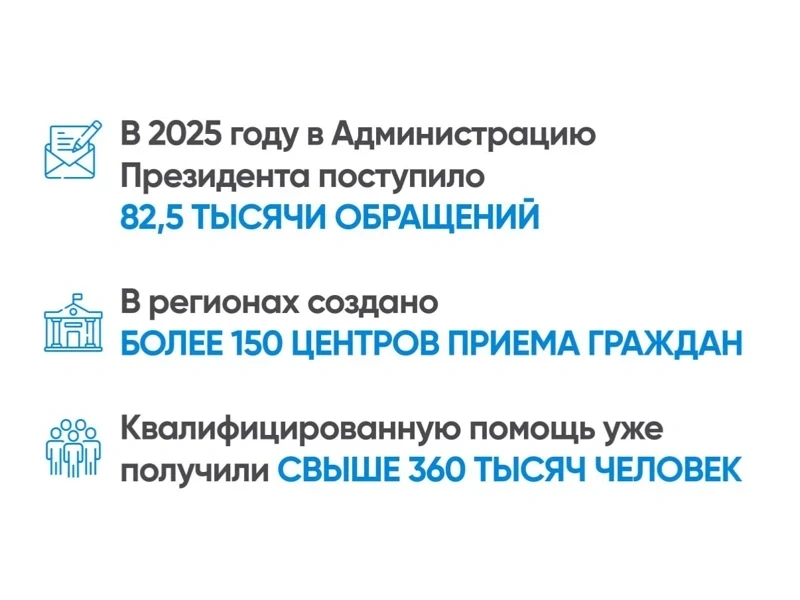
Photo www