Upai Eshimkanova was born in 1905 in Konorchok, a small village in the Ak-Tal district of the Naryn region. After completing her education at a local school, she married Asankozho, a resident of the village of Birlik in the At-Bashinsky district. Later, she continued her education at the Central Asian University, which was unusual for Kyrgyz girls at that time.
After receiving her diploma, from 1933 to 1941, Eshimkanova served as the head of the personnel department in the executive committee of the Ala-Buka district, worked as a literary employee at the newspaper "Bolshevist Path," and headed the personnel department in the regional justice department.
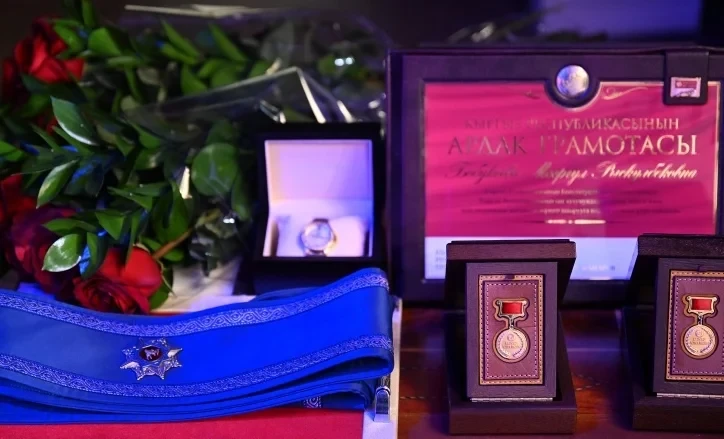
From 1941 to 1955, she was an inspector in the district social security department and head of the women's affairs department, as well as the head of preschool institutions. For her contributions, she was awarded a Certificate of Honor from the Presidium of the Supreme Soviet of the Kyrgyz SSR, the Order of Lenin, the medal "For Valorous Labor in the Great Patriotic War," and other awards.
According to the director of the historical museum, Myktybek Apilov, Upai was an outstanding personality: "She had a high level of education and insight. During the Soviet period, she held significant positions, actively promoting the ideas of the Communist Party. She was the initiator of the mass liberation of women in the southern regions of the country, calling for education and the protection of women's rights. U. Eshimkanova was also one of the first women in the Kyrgyz SSR to be accepted into the Communist Party, which was very difficult at that time. The revolutionary Taabaldy Pudovkin supported her candidacy."
In 1941, she moved to Ak-Tal and opened the Council of Women, actively campaigning among women, encouraging them to get an education and participate in public life. She also addressed social support issues for women in difficult situations.
Upai Eshimkanova's granddaughter, Zhainagul Kalchaeva, shared her memories of her grandmother. She recalls growing up with her and how her grandmother was a serious and respected woman. After Upai left to study, her husband Asankozho married another woman, and she faced persecution and the loss of her children. In 1940, Asankozho went to the front, and her grandmother, trying to get her children back, moved to Ak-Tal.
“She was the first to start removing the paranja from women and even burning it. Once, she spoke at a meeting in Uzgen, calling for the removal of the paranja, and she was assigned security. At the meeting, there was a woman who was the first to follow her example. Later, a man came to my grandmother, claiming that he had killed his wife, who was the very woman who had removed the paranja at the meeting. My grandmother had to endure many hardships,” Zhainagul recounted.
Upai Eshimkanova passed away in 1990 at the age of 85.