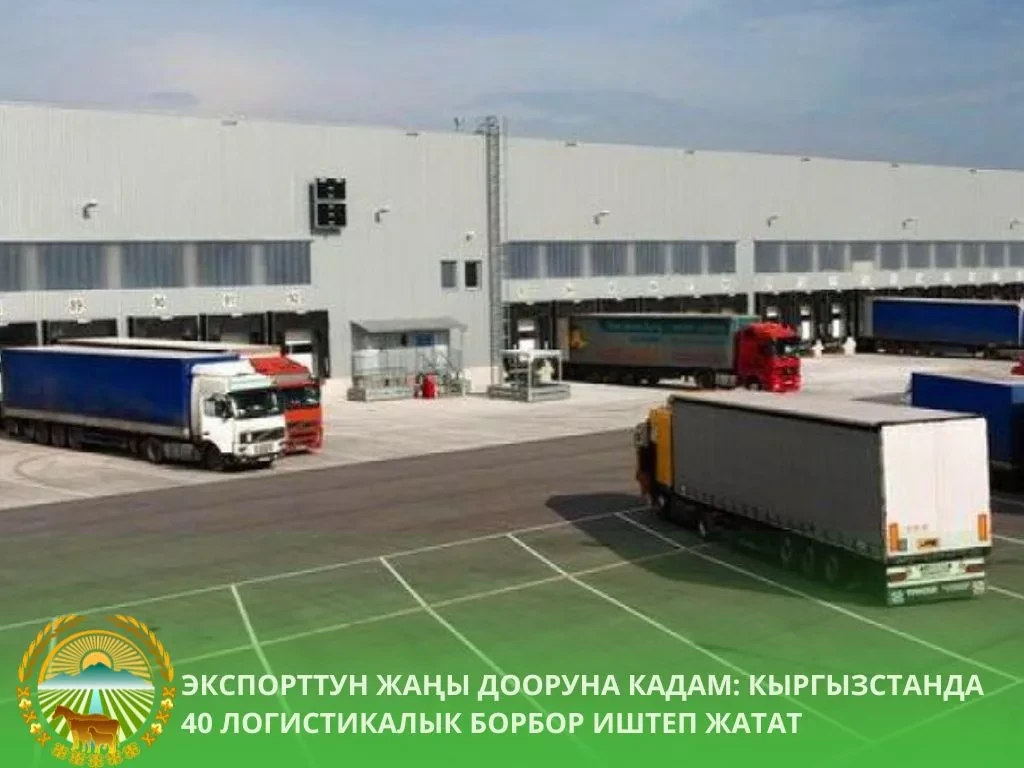
These logistics centers are equipped with modern warehouse facilities and specialized blocks designed for the storage and freezing of both products and raw materials necessary for processing. Additionally, such centers handle packaging, labeling, certification, and transportation of agricultural products.
According to information from the ministry, the launch of another 75 enterprises in the processing sector is planned for 2026, including 8 new trade and logistics centers.
As part of the strategic development program until 2030, the construction of an additional 40 trade and logistics centers across the country is planned.
The ministry emphasizes that the creation of such centers is aimed at improving the management of export-import flows, as well as optimizing the storage, processing, and distribution of agricultural products.
The process of creating a trade and logistics center includes several key stages. First, the project's objectives are defined, a location is chosen, and a business model is developed. Next, a site and infrastructure plan is created, and the necessary permits for construction work are obtained.
During the construction phase, warehouse complexes and administrative buildings are erected, modern equipment and information technologies are installed. Then, the processes of receiving, storing, and shipping goods are optimized, and electronic document management and digital services for clients are implemented.
An important aspect is the selection, training of personnel, and the implementation of motivation systems, as well as key performance indicators (KPIs). Cooperation with transport companies and retail chains is established, and ties with government bodies are strengthened.
The new centers undergo trial operation, based on the results of which their effectiveness is assessed. In the future, it is planned to expand the range of services and implement innovative technologies such as process automation, e-commerce, and blockchain solutions.