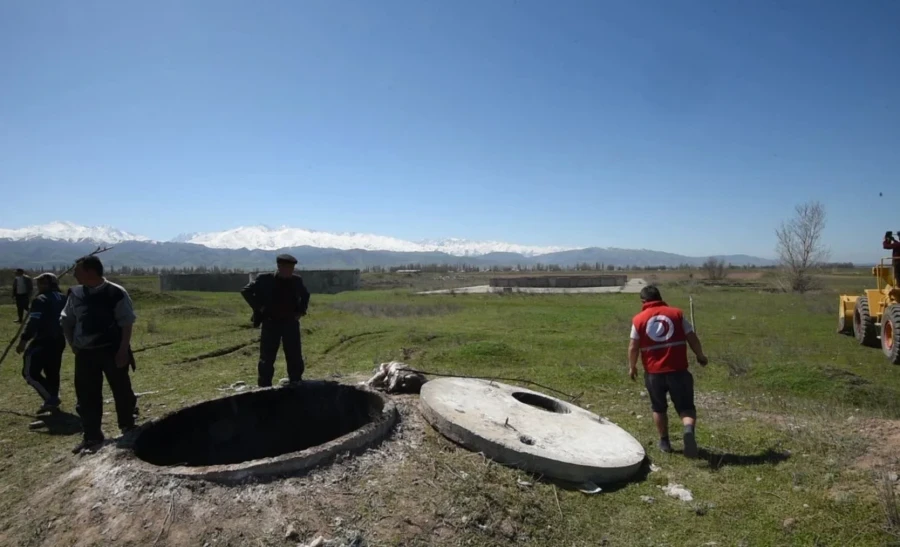
Local residents claim that after the culling of animals, they should have been disposed of in a special pit for bio-waste located on the Buz-Bel site. According to the residents, throwing the carcasses into the ditch is the wrong decision.
Villagers are concerned that the remains of the animals are beginning to decompose, causing an unpleasant odor. With the warming weather, they say, the situation could worsen, negatively affecting sanitation, air quality, and the health of local residents.
In response to these complaints, the head of the hunters, Marat Danilov, confirmed that the culling of stray dogs in Kara-Kungoy did indeed take place. “We have come to this village five times this year to cull stray dogs. Each time after that, we disposed of the carcasses by dropping them into the Bekari pit. However, local deputies claim that there was no culling. Therefore, to let the deputies see and photograph the bodies themselves, we temporarily left them on the outskirts of the village. In winter, they won’t decompose quickly and won’t start to smell badly in just one day. We informed the village elder [ayyl bashchy]: as soon as the deputies take their photographs, we will remove the carcasses the next day,” Danilov reported.
He added that some residents may not have been aware of the situation, which led to the misunderstanding. “At the moment, there are no stray dogs left in Kara-Kungoy and the surrounding villages,” he noted.
The elder of Kara-Kungoy, Erlan Aydarov, also confirmed that the culling of dogs did indeed take place, and the bodies were left until the arrival of the transport vehicle. He added that after the commission's inspection, the bodies were loaded and taken to the Bekari pit.
The administration of Ormon Khan allocated 201,580 soms for the culling of stray dogs.
View this post on Instagram
Post by Turmush (AKIpress) (@turmush.akipress)