Specialists from the P.K. Sternberg State Astronomical Institute (GAISH) of Moscow State University, together with an international team of scientists, have developed an innovative approach to assess the conditions necessary for the existence of life on Earth-like planets orbiting red dwarfs—the most common type of stars in our Galaxy. The study, funded by the Russian Science Foundation (RSF), was published in the Monthly Notices of the Royal Astronomical Society.
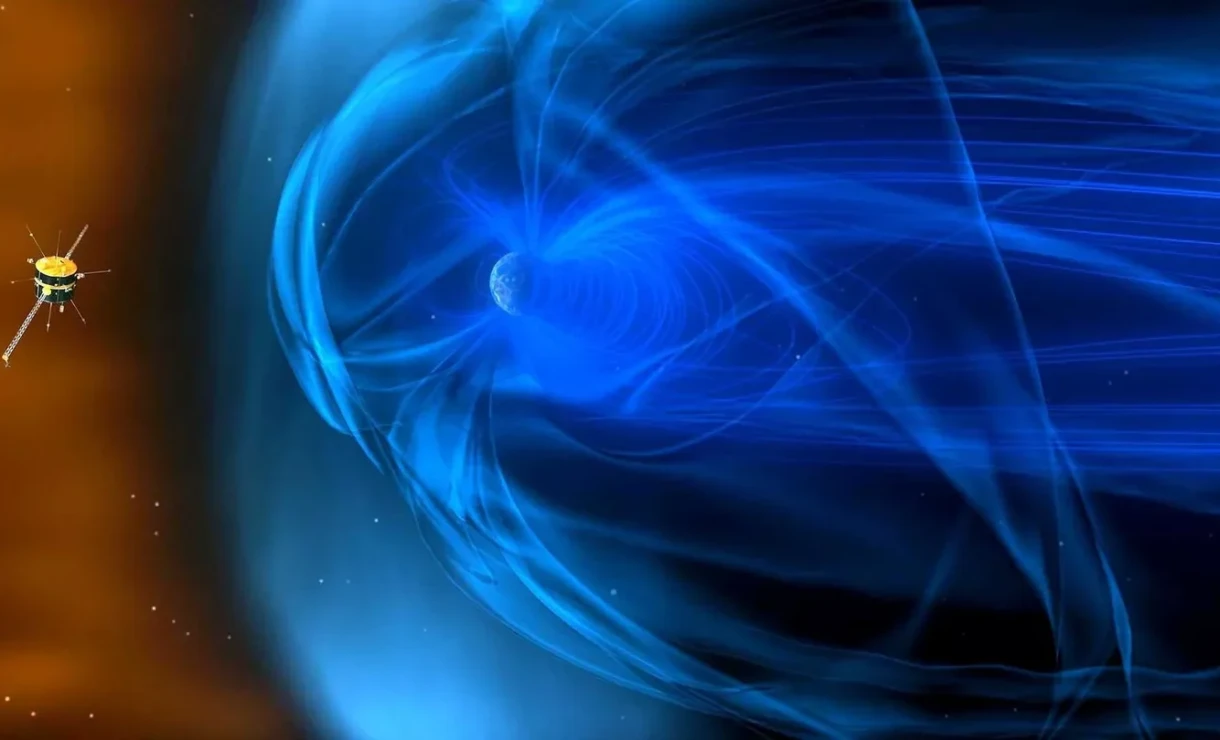
Scientists noted that red dwarfs, like our Sun, are capable of producing flares caused by fluctuations in their magnetic fields. These flares can emit significant energy bursts over short periods.
As representatives of the RSF pointed out, red dwarfs have much stronger magnetic fields compared to yellow dwarfs, which makes their flares significantly more powerful. The high activity of such stars may hinder the emergence of life on planets in their orbits. Conversely, the relative stability of a red dwarf's magnetic field may be a sign of the potential habitability of exoplanets.
To study the activity of red dwarfs, the team of scientists created a catalog of flares, documenting each one while accounting for interference from Earth satellites and other artifacts. This was made possible by applying machine learning methods to analyze vast amounts of data collected by telescopes.
Researchers faced challenges in capturing such fleeting events, so they developed algorithms capable of processing and recognizing flares. To train the algorithm, the lack of real photographs was compensated by creating artificial images based on actual data about flares recorded by space telescopes.
According to the results of the new study, scientists found that red dwarfs of spectral class M4, with temperatures around 3000 °C, experience flares more frequently than hotter M0 stars with temperatures of 3800 °C, which have significantly fewer flares. Additionally, flare activity decreases with distance from the plane of the Milky Way, as the age of stars increases and their magnetic fields weaken with greater distance, the foundation clarified.
In the future, the team plans to continue their research, focusing on searching for flares in star clusters, which will help better understand stellar evolution and identify the most stable red dwarfs, reported GAISH laboratory assistant Anastasia Lavrukhina.