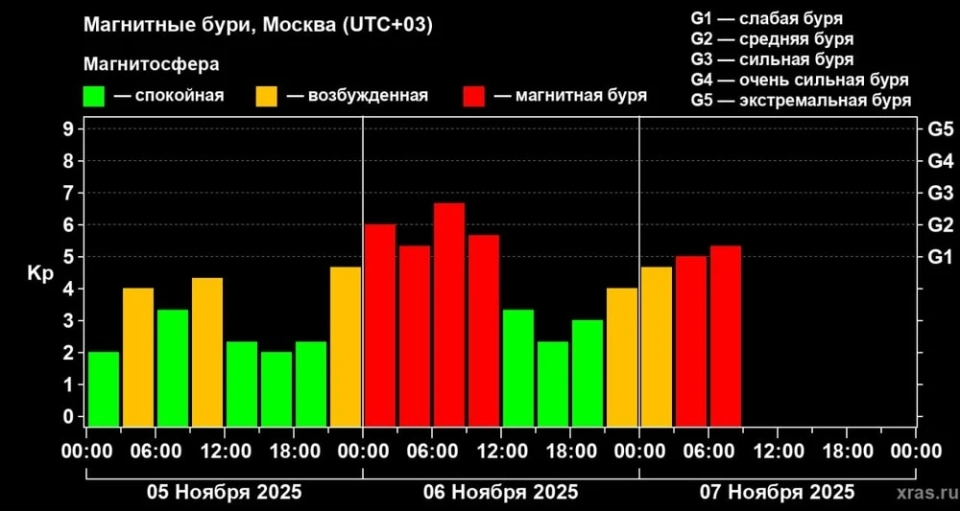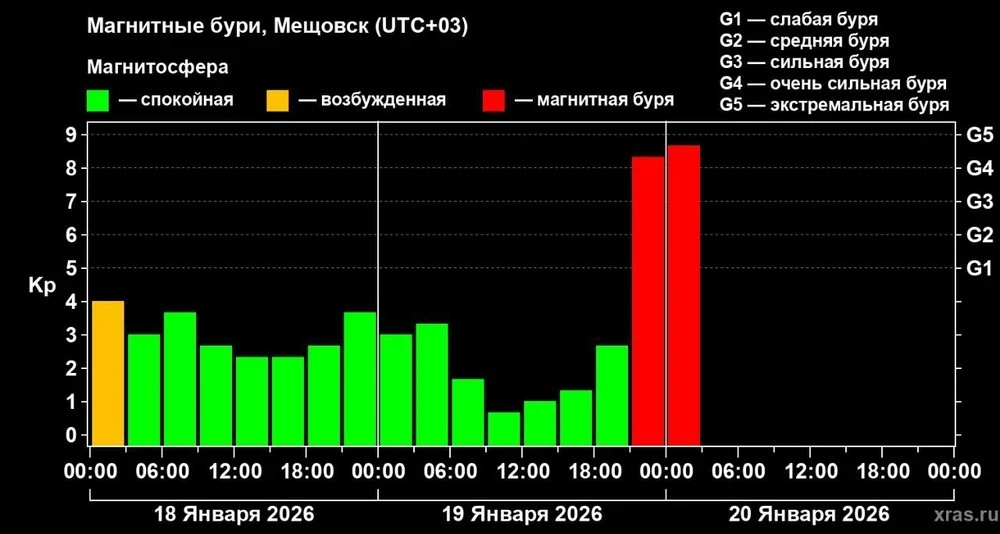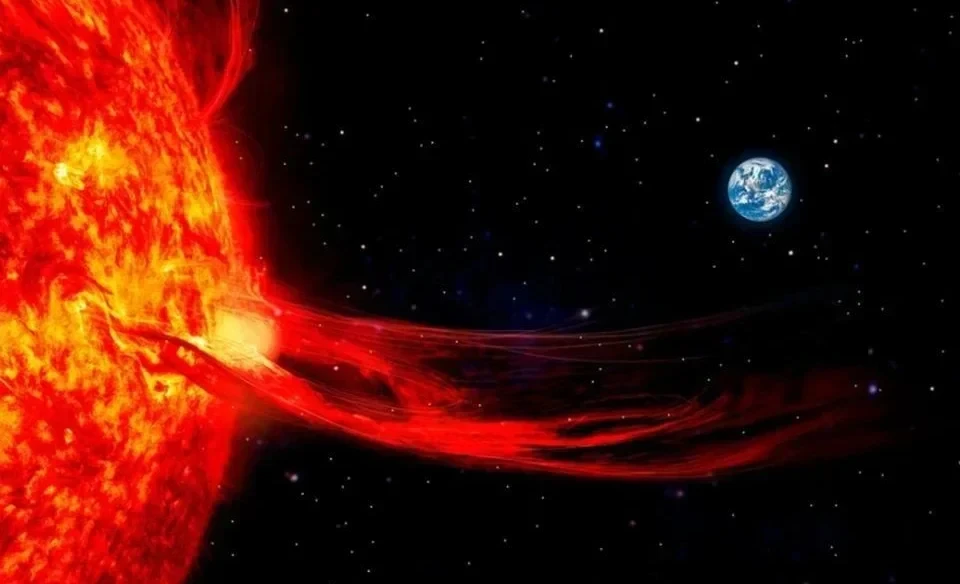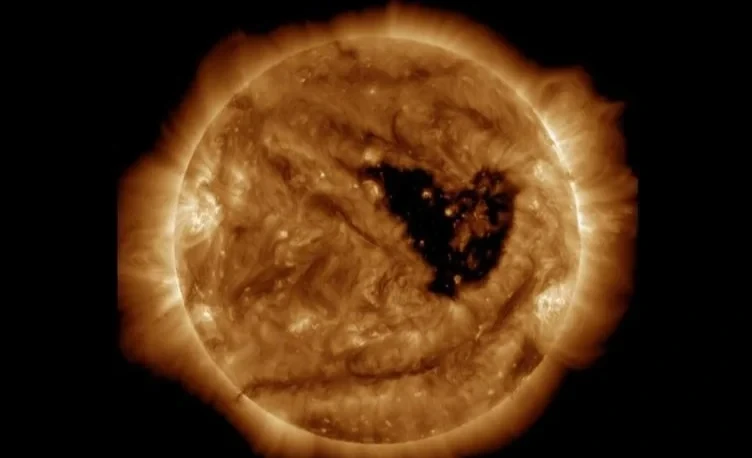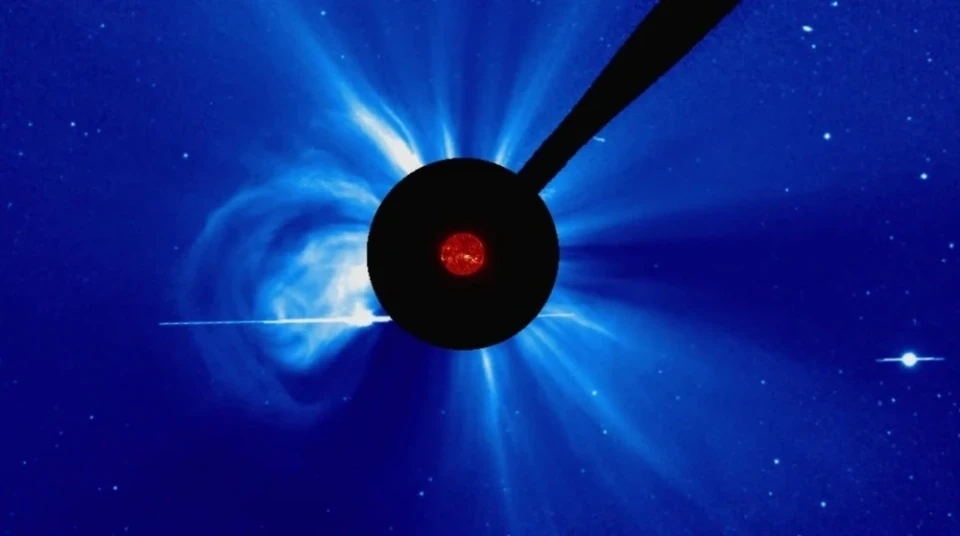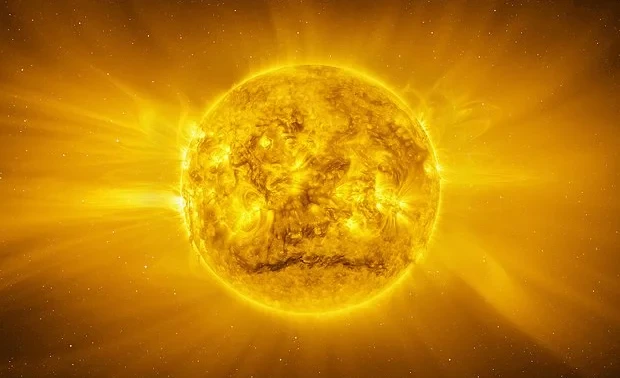
A powerful cloud of charged particles ejected from the solar surface recently reached Earth in a record 25 hours, triggering a G4 level geomagnetic storm. This phenomenon allowed residents of various countries to observe the northern lights in unexpected places.
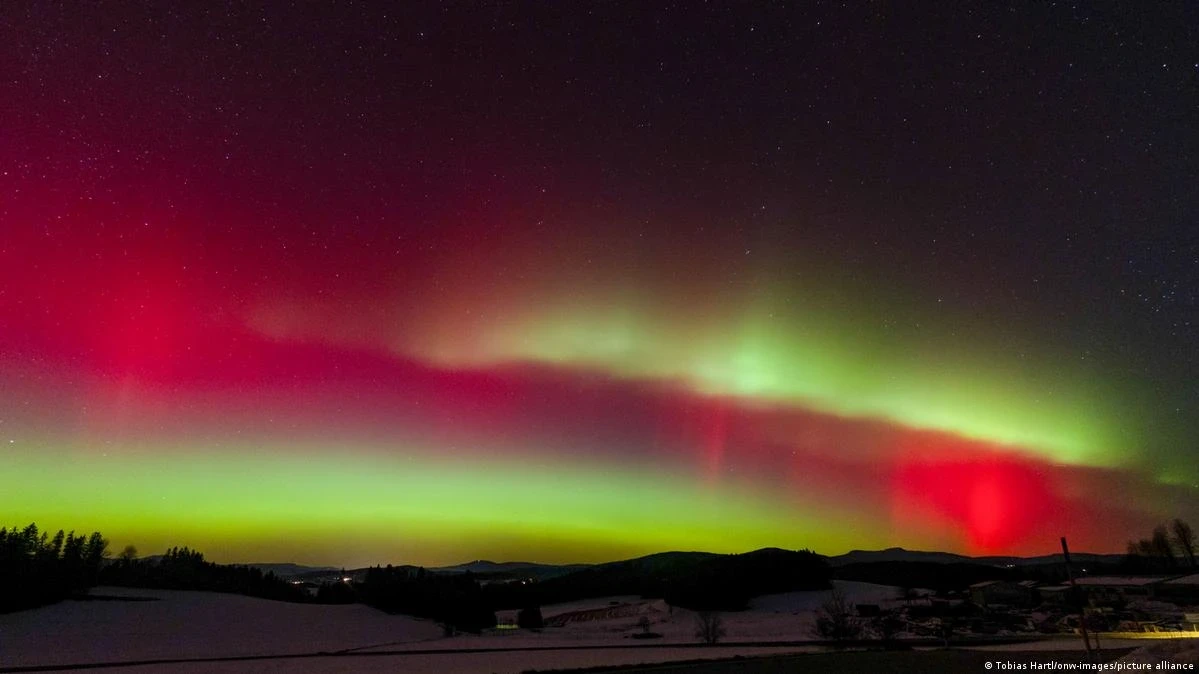
According to reports on the Spaceweather platform, the coronal mass ejection traveled the distance from the Sun to Earth in a record time, significantly less than the average of three to four days.
At the Institute of Space Research of the Russian Academy of Sciences, which studies solar astronomy, it was noted that the induction of the solar wind's magnetic field reached historically high values.

Experts warned that the "storm" would last for at least another day, and full stabilization of the geomagnetic situation is expected only in two to three days.
The northern lights were recorded in various countries in Europe and North America, with some regions experiencing this phenomenon at latitudes where it is extremely rare.

Theoretically, similar light effects can appear in some areas of Central Asia, especially in the northern part of the region, during clear weather and at night.
Experts also warn of possible related consequences, such as temporary disruptions in radio communication, deterioration of GPS performance, and increased load on satellite systems.
Why this event is considered rare
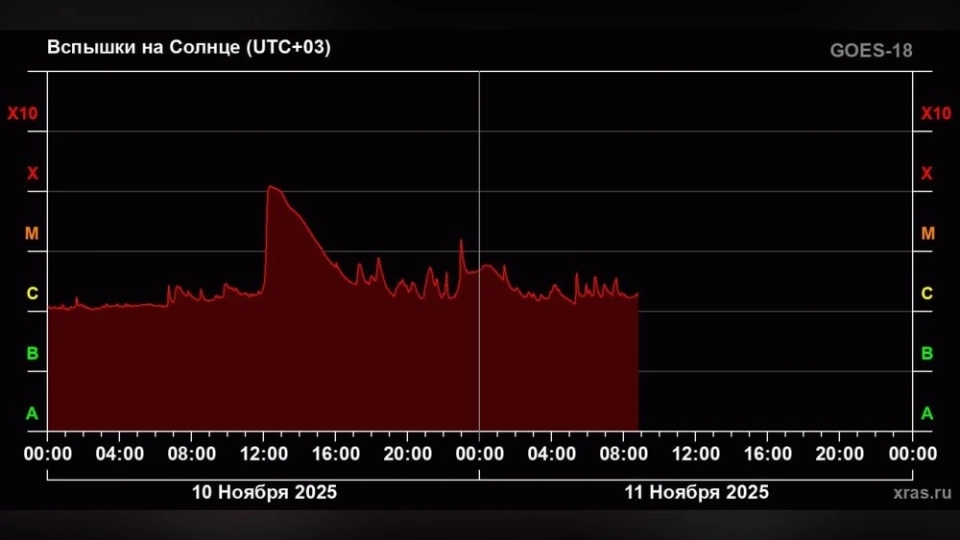
Geomagnetic storms occur after powerful solar flares when a cloud of high-speed particles reaches Earth and almost directly "hits" the magnetosphere.

The G4.7 level refers to the international scale of geomagnetic storms used by NOAA (USA) to assess the impact of solar activity on the planet's magnetosphere.
The scale includes five categories:
- G1 — weak;
- G2 — moderate;
- G3 — strong;
- G4 — severe;
- G5 — extreme.
A rating of 4.7 indicates that the current storm is close to the extreme G5 level, making it one of the most powerful magnetic storms in recent years with global geophysical consequences.