The motto of the event was: "You can hear thanks to technology. You can be heard thanks to people."“I am the mother of a child with hearing impairment; my son’s name is Alinur. We have three children, and two of them have normal hearing. Alinur is currently in the second grade of a regular school and is successfully mastering the curriculum. He wears binaural hearing aids,” she shared.
Many mothers, according to Rysbaeva, mistakenly believe that after hearing aids are fitted, their children will immediately start speaking. However, for this, understanding must develop: the child needs to learn to analyze information and adapt to the surrounding environment.
“During rehabilitation, we implemented a comprehensive program: in addition to working with a deaf educator, speech therapist, and defectologist, the sessions included sensory integration and physical development. This yielded significant results: Alinur became more confident, improved his understanding, and coordination of movements. Children with hearing impairments often face vestibular system dysfunction, which can manifest in clumsiness and difficulties in group games. The development of motor skills and proprioception plays an important role in understanding the world and speech development,” she noted.
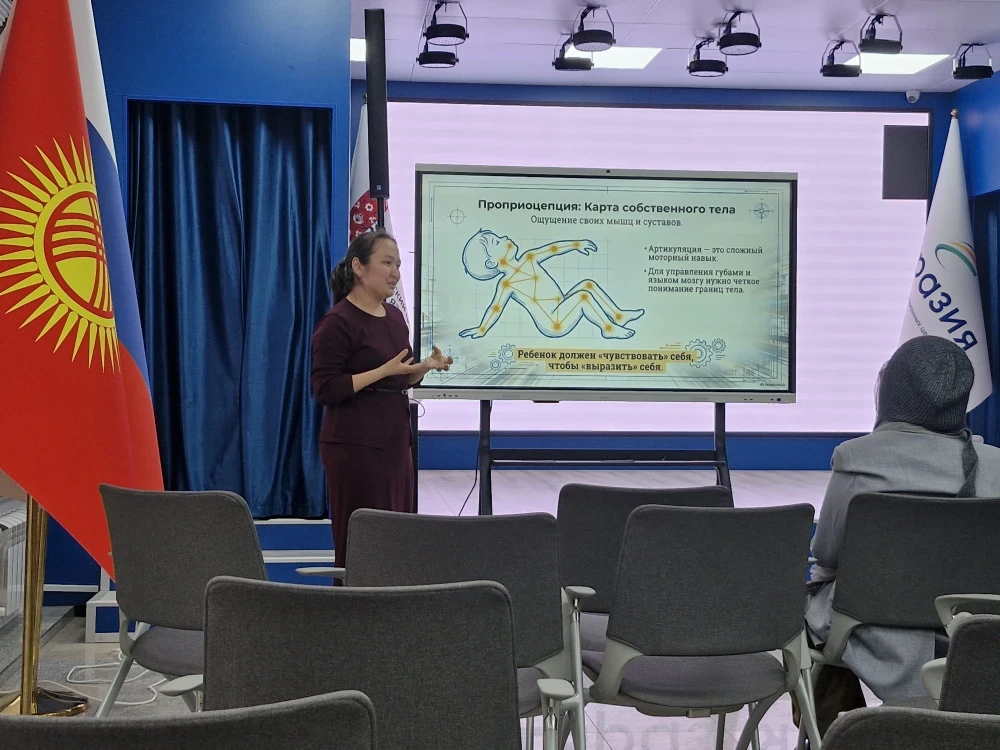
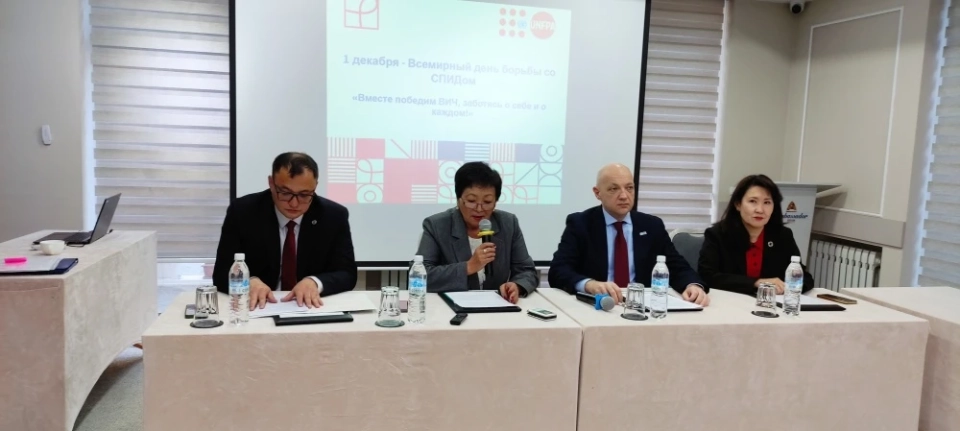
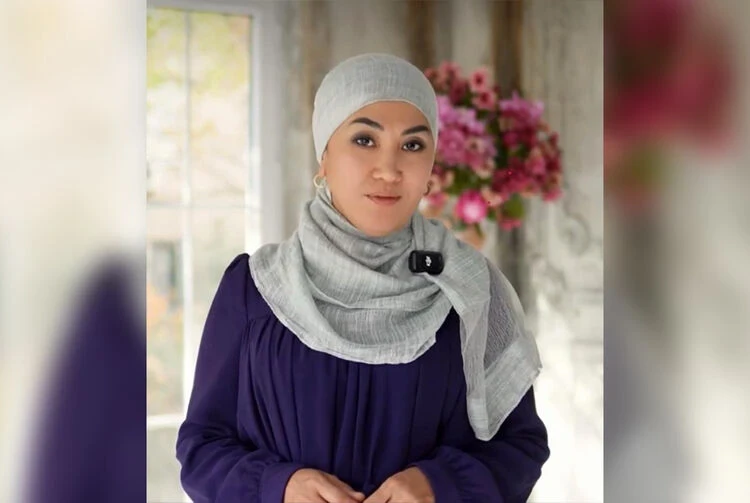
Tattygul Rysbaeva. The event dedicated to the International Day of Cochlear Implantation.
“Children who start hearing later perceive the world mainly visually. Alinur, for example, learned the multiplication table at the age of five by watching cartoons and studying the material visually. He loves numbers, knows them in Russian and English, counts to a million, and performs mathematical operations. However, his speech developed more slowly than his mathematical skills,” the mother added.
After Alinur received his hearing aids, active work began on his vocabulary. Using visual cards, the mother demonstrated how to open and close windows while saying the phrases aloud. Thus, a connection between the word, action, and image was gradually formed.
During walks, they discussed everything they saw: cars, houses, trees, etc. By repeating new words, sometimes over the course of a week, the child memorized them both audibly and visually.
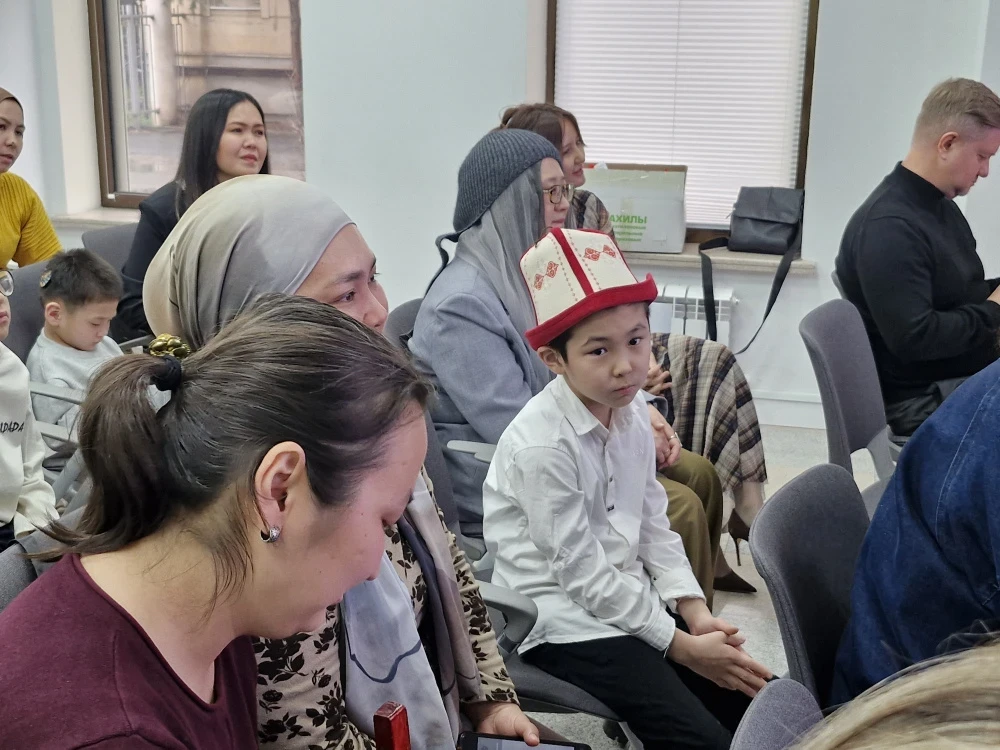
Alinur. The event dedicated to the International Day of Cochlear Implantation.
Rysbaeva emphasizes that such work requires constant effort from the whole family.
“Only with the full involvement of the family can a child succeed in rehabilitation,” she is convinced.It is also important to monitor the condition of the hearing aids, which require constant care. “Batteries discharge quickly. I always check the devices after work: whether everything is in order, whether he can hear. We clean them at least every two days to ensure that earwax does not interfere with sound perception. The devices need to be dried properly, removed during sleep, and the battery compartment opened for their 'rest',” Tattygul added.
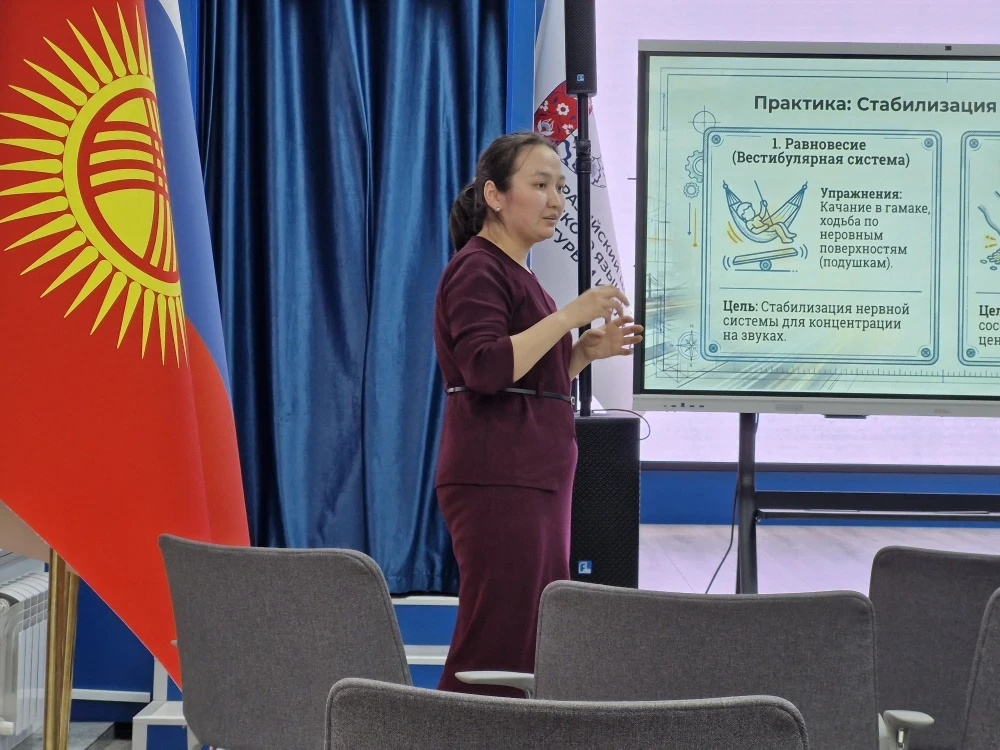
Tattygul Rysbaeva. The event dedicated to the International Day of Cochlear Implantation.
According to Rysbaeva, it is important to explain to the child that these are his hearing aids and that no one should touch them. It is necessary to teach him to inform other children that these are not headphones, but devices that help him hear.
“Once a classmate asked Alinur if he had headphones on his ears. My son calmly explained that these are hearing aids that help him hear,” the mother shared.“Before sending him to school, I met with the deputy principal and the class teacher, explaining to them the importance of inclusion for our child. Alinur is safe; he has no mental or psychological disorders, he is attentive and teachable. Usually, children with hearing impairments are sent to specialized schools, but we were recommended a regular school for further development,” she shared.
Rysbaeva noted that those around her react to her son’s peculiarities quite normally. There has been no open discrimination. “Perhaps someone thinks something to themselves, but no one says anything negative out loud. Maybe this is because I present my son as a full member of society. I do not allow people to treat him with pity or condescension. On the contrary, I set higher expectations for him than for other children, because if I do not set a high bar, he may start to slack off,” she notes.
Currently, Alinur does his homework independently, except for complex math problems that require a lot of reading. He helps his younger brother, who is in the first grade: he keeps track of the schedule, brings the necessary books, and assists with homework. The boy feels a sense of responsibility as the older brother.
“It is important to remember that before losing his hearing, Alinur responded well to sounds. For example, he heard us opening a soda bottle and would run from another room shouting, 'Cola, cola.' The hearing loss occurred later. Therefore, no one is immune to this. It is important to be more humane and open to children and people with special needs,” concluded Tattygul Rysbaeva.