Earlier, Deputy Temirlan Aitieff claimed that a Ministry of Health order allegedly prohibits injections in FAPs and family doctor groups. He also called for an inspection of private medical offices where citizens receive drips and injections.
The Ministry of Health clarified that according to order No. 252 dated March 13, 2025, "On Improving the Quality of Medical Services and Transparency in the Use of Medicines and Medical Devices in Healthcare Organizations of the Kyrgyz Republic," injections can only be performed based on a doctor's prescription, which must be confirmed by medical documentation (doctor's signature and seal or electronic signature).
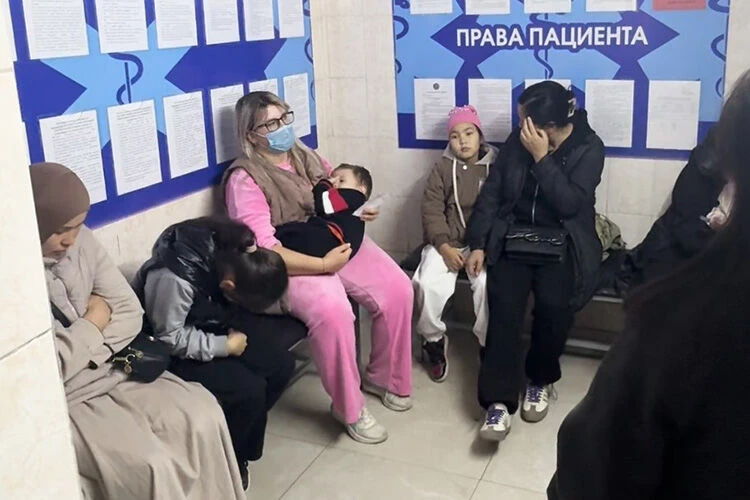
“There are situations when patients come to PHC and FAP with prescriptions that lack the doctor's signature and seal, especially if the prescriptions were made by private medical institutions. In such cases, the nurse cannot confirm who exactly prescribed the treatment, and the responsibility for performing the procedure may fall on her,” the agency explained.
Therefore, nurses have the right to refuse to perform an injection if the prescription does not contain the necessary information from the doctor.
Additionally, the Ministry of Health noted that according to current clinical protocols and treatment standards within PHC, medications are primarily prescribed in oral form.
Parenteral administration, including intravenous infusions, is used in limited cases, most often in emergency care with subsequent hospitalization of the patient.
During monitoring of the work of some primary medical organizations, it was found that intravenous infusions were sometimes performed without sufficient medical indications, occasionally at the initiative of the patients themselves.
This approach contradicts the principles of evidence-based medicine and can lead to serious complications, including infections, allergic reactions, and anaphylactic shock.
In this regard, primary health care medical institutions are recommended to strictly follow clinical protocols and treatment standards, and to perform intravenous infusion procedures only when there are appropriate medical indications.