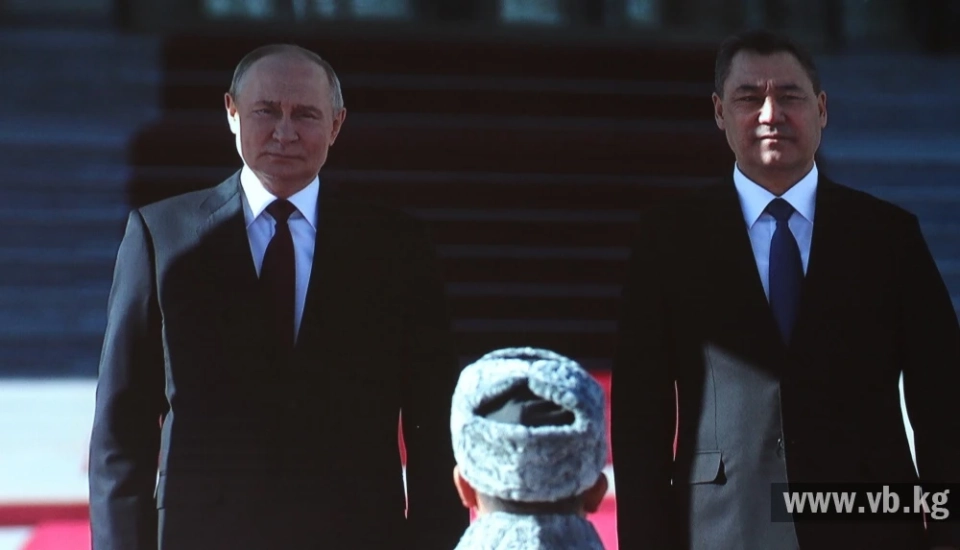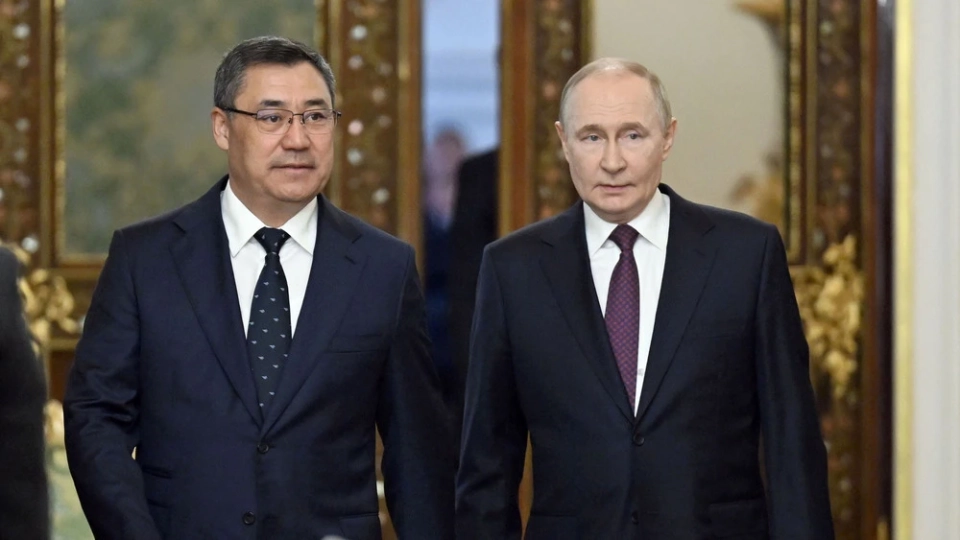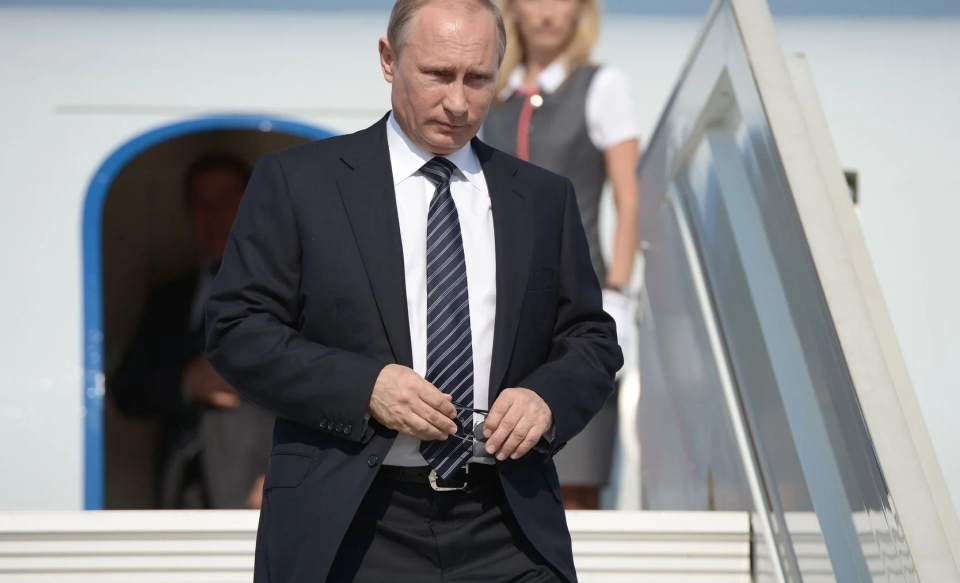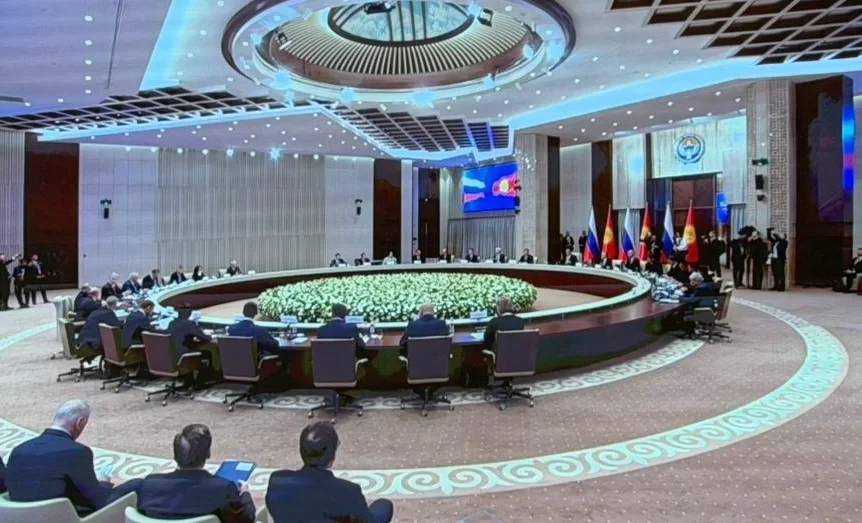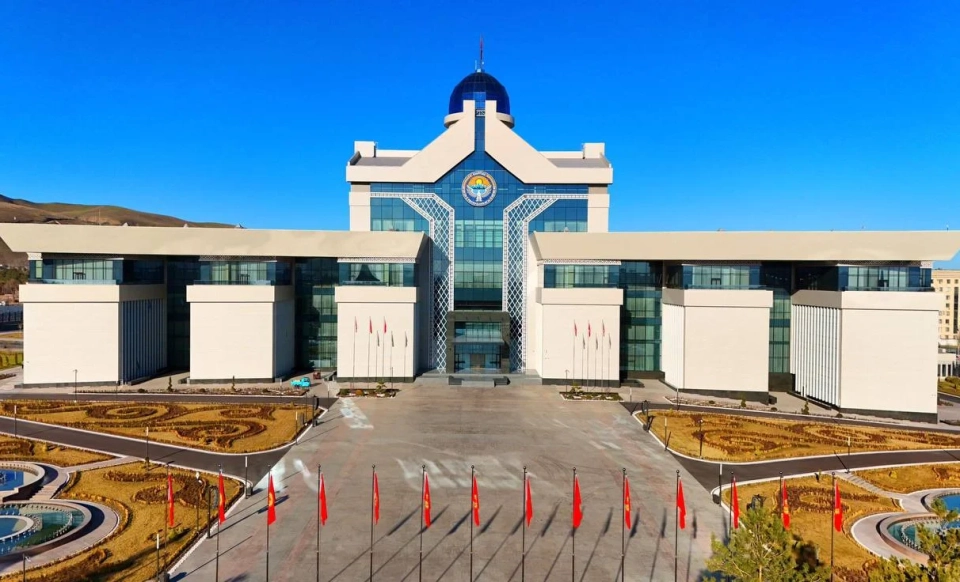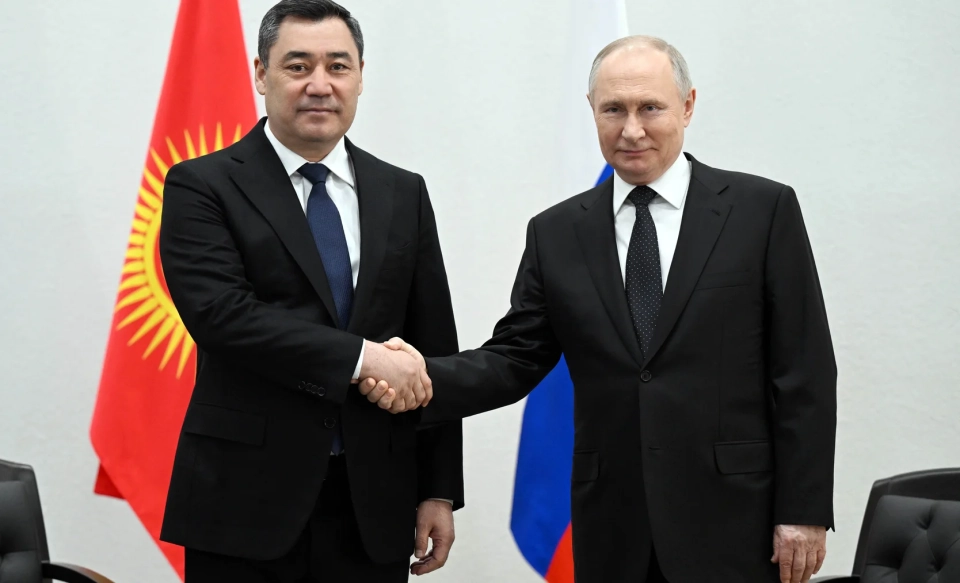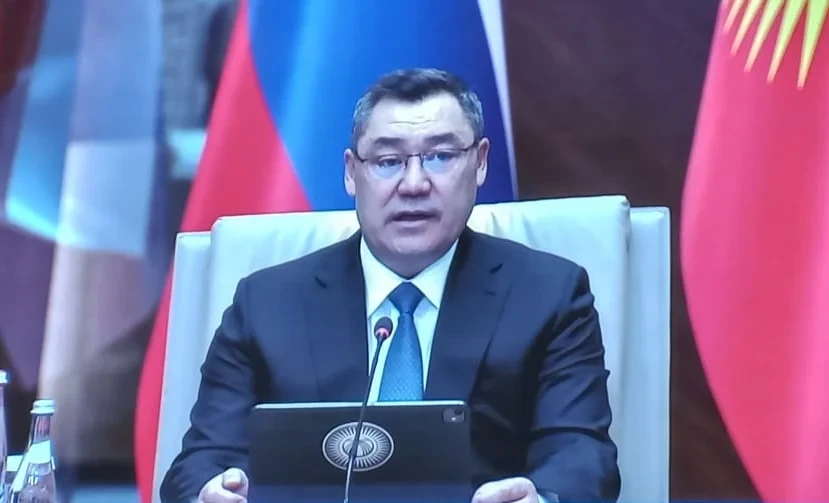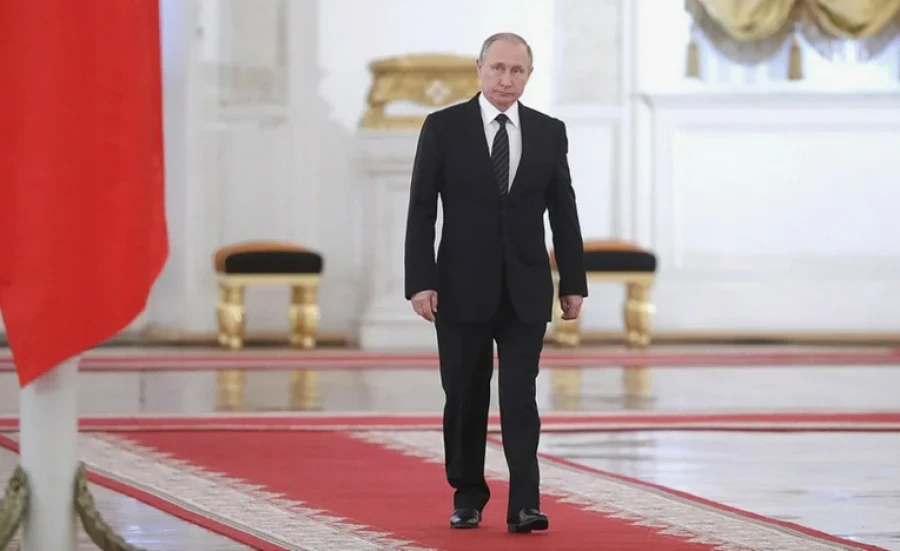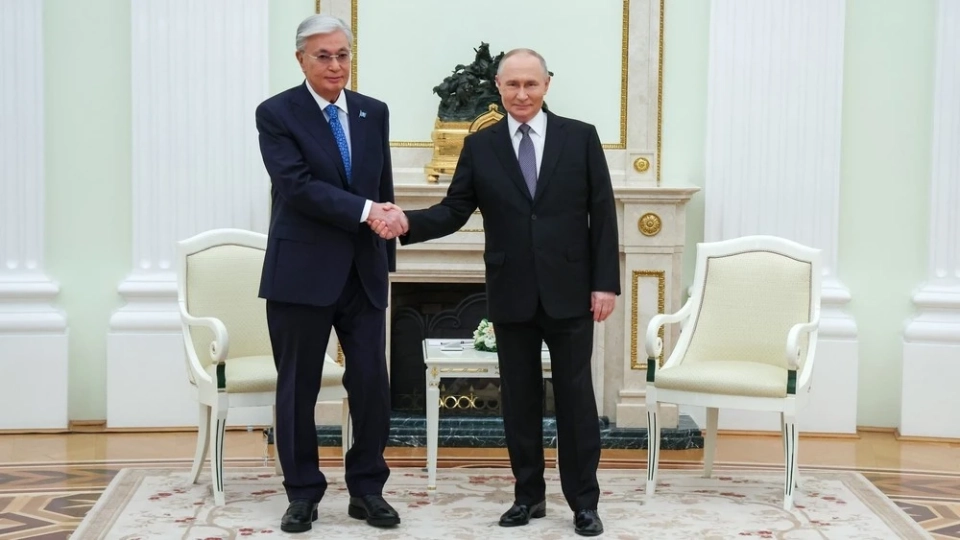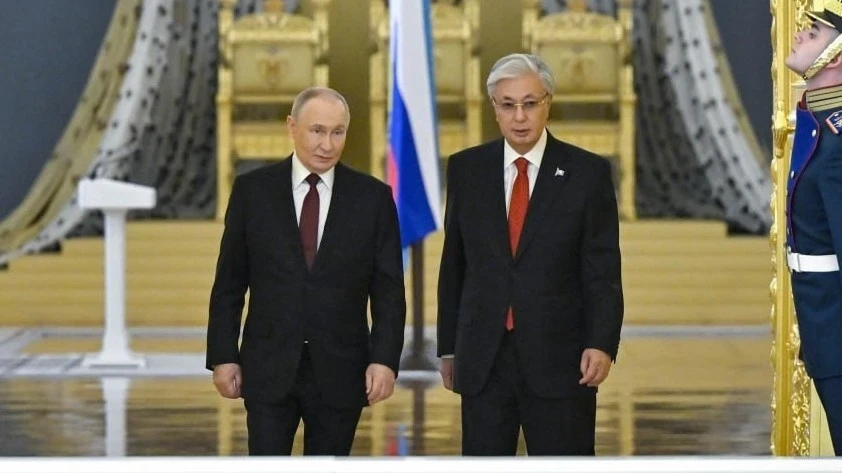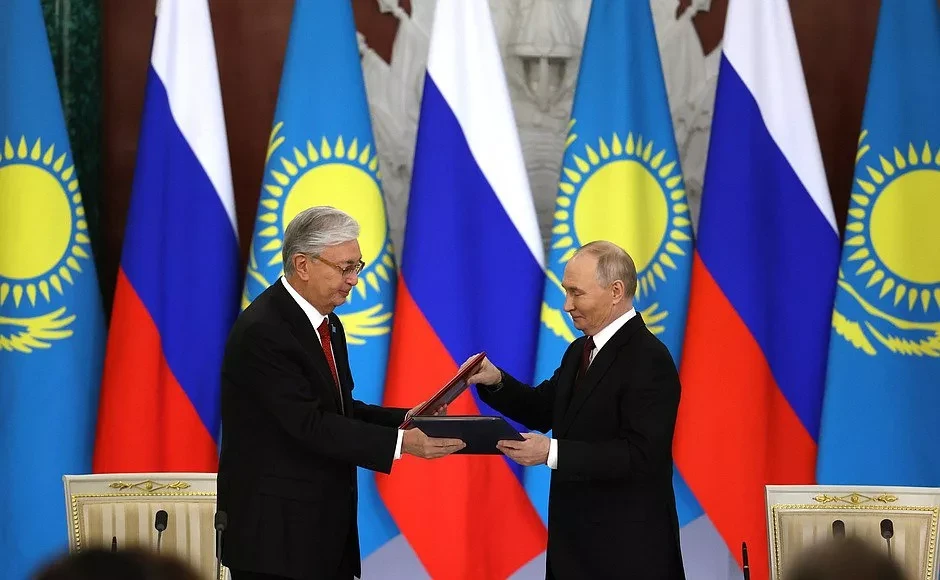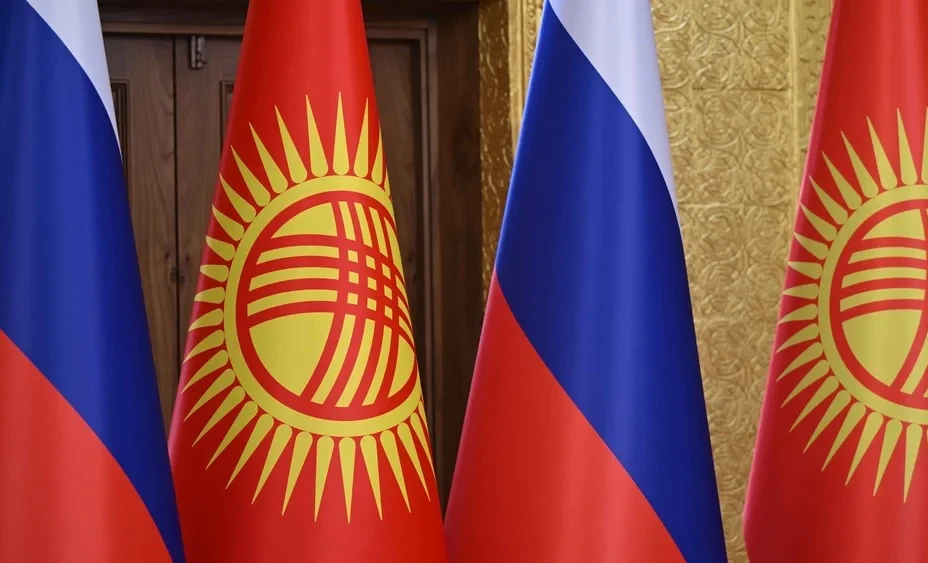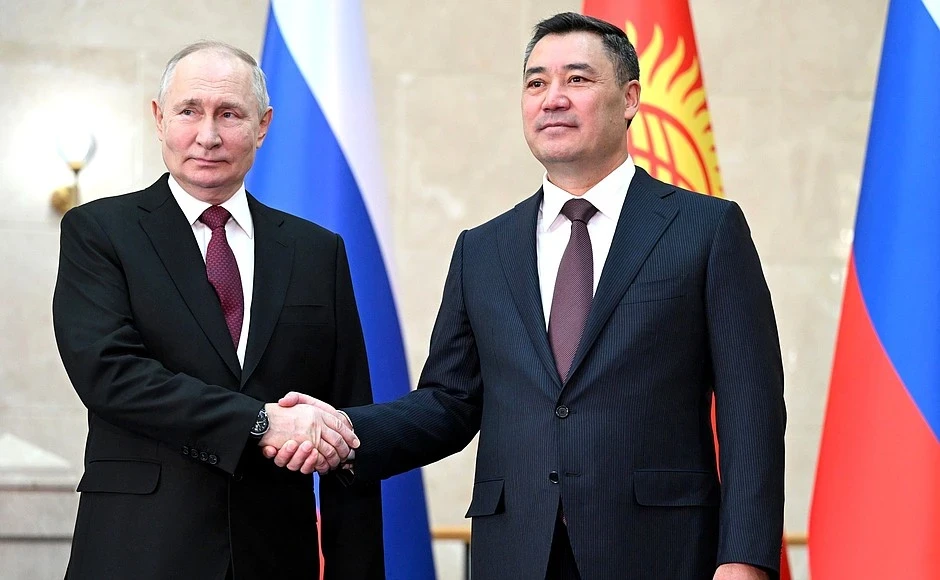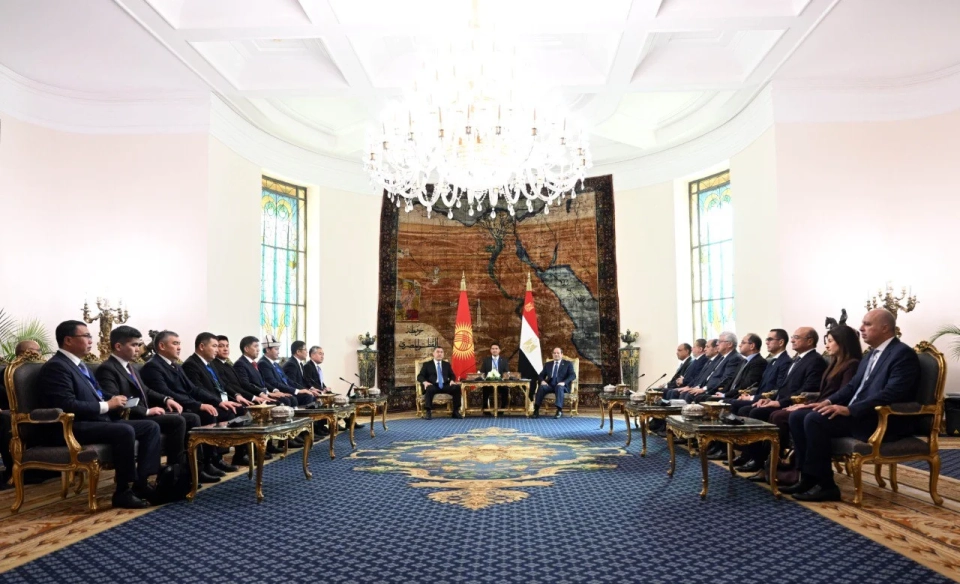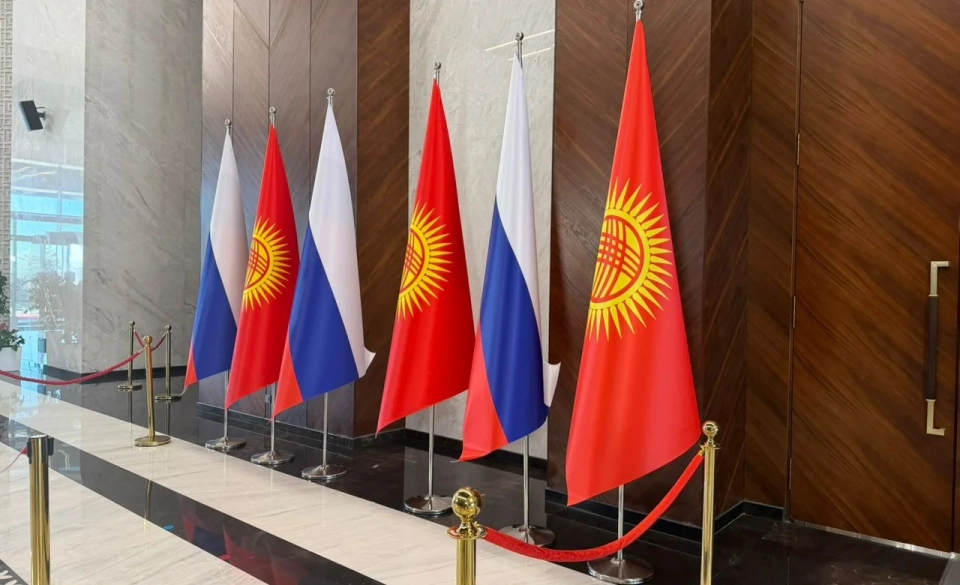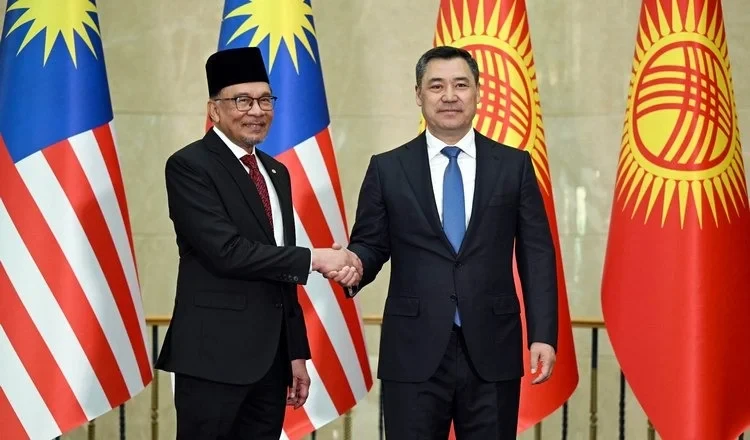
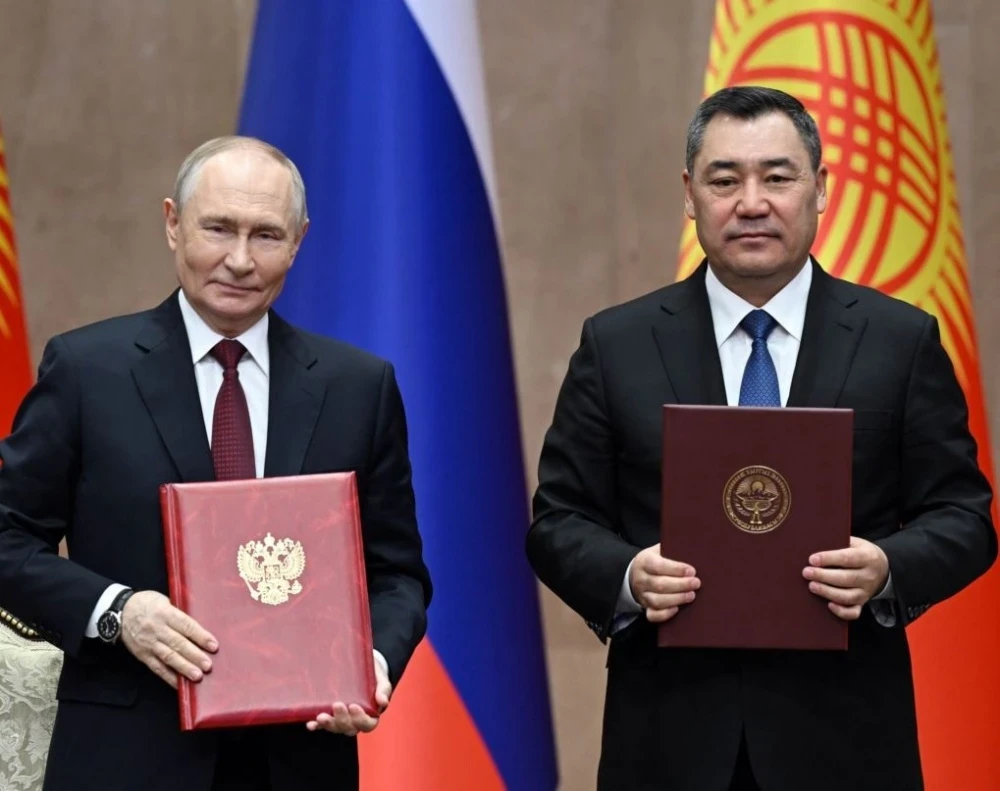
Vladimir Putin's state visit to Kyrgyzstan has become an event that immediately marked itself as something more than just an official trip. Despite Bishkek hosting numerous high-profile delegations, it was this visit, with its composition, symbolism, and atmosphere, that became a significant milestone in the development of allied relations between Moscow and Bishkek.
Every aspect of this visit, from the choice of date to the protocol details, served as an important element of the political scene.
Historical Context of the Visit
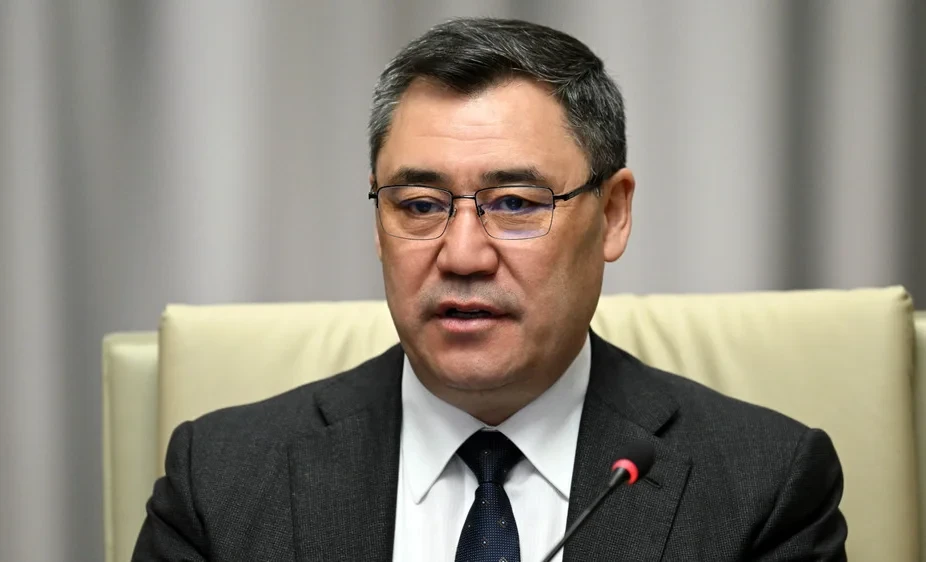
Putin's visit coincided with the 25th anniversary of the signing of the Declaration of Eternal Friendship and Partnership between Russia and Kyrgyzstan. This date was not just commemorated; it became an important backdrop for the entire visit. The President of Kyrgyzstan, Sadyr Japarov, emphasized that:
“Partnership with Russia meets the long-term national interests of Kyrgyzstan.”
These words were not spoken by chance. They underline that Bishkek recognizes the strategic significance of Moscow and seeks to continue a course that has withstood the tests of changes in power, international crises, and economic challenges.
Personal Trust as the Basis for Cooperation
In diplomatic relations, there are aspects that hold more significance than formal agreements. One such aspect is the personal trust between leaders. Putin clearly stated that the most important issues in bilateral relations are discussed directly with Japarov. This changes the traditional structure of interaction: there are no lengthy approvals, disputes between agencies, or hidden bureaucratic games. For Russia, this is a signal of stability: Bishkek is a predictable and reliable partner.
Economic Ties: From Dependency to Mutual Benefit
The current figures of trade turnover are not surprising, but in the relations between Moscow and Bishkek, a qualitative shift is important. Kyrgyzstan has become not just a market but an important part of Russia's broad economic network, especially in light of the region's activation in global logistics. In the republic, there are:
over 1,800 Russian companies, investments amounting to nearly 2 billion dollars, and the logistics infrastructure is transforming, making Kyrgyzstan a link between Russia and external markets.
The role of the Russian-Kyrgyz Development Fund is also significant. It has become a real tool for modernization, supporting thousands of projects, financing regions, and creating new productions. The doubling of the fund's capital testifies not only to financial capabilities but also to trust and effectiveness.
Energy Cooperation as a Strategic Aspect
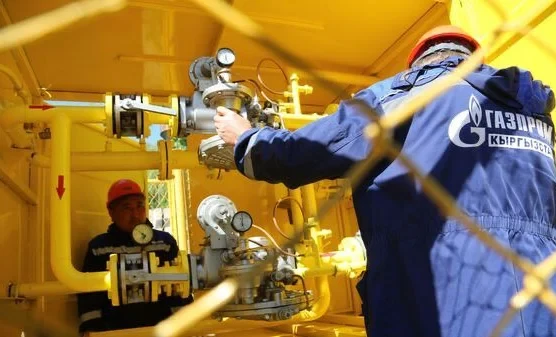
Putin emphasized the energy sector — this is not accidental. Kyrgyzstan needs new capacities, and Russia is ready to provide technological support.
Discussions include not only hydropower plants but also:
solar and wind power plants, digital energy, and joint projects in the field of peaceful nuclear energy.
This is not just an update of individual facilities, but a striving for the integration of the energy systems of the two countries.
Humanitarian Ties: The Foundation of True Partnership
True long-term partnership begins with people. Russia and Kyrgyzstan demonstrate a high level of interaction in this aspect. For example, 16,000 Kyrgyz citizens are studying in Russian educational institutions.
Nine schools are being built in Kyrgyzstan, the first of which will open in 2027, and 157 Russian teachers are working in the republic.
The Kyrgyz-Russian Slavic University is undergoing large-scale modernization, the Kyrgyz House of Science and Culture is opening in Moscow, and the "Eurasia" park has become the largest family recreation area in Central Asia.
The creation of a common cultural and educational space makes the partnership resilient to political changes.
Security as a Zone of Common Interest
The Russian airbase in Kant plays a key role in ensuring regional security. In the context of instability in Afghanistan and the strengthening of certain external players, the base serves as a stabilizing factor. Moscow and Bishkek have similar assessments of threats, which allows for the development of joint mechanisms within the CSTO, EAEU, and SCO.
The Visit of Prominent Businessmen as a Signal for Investors
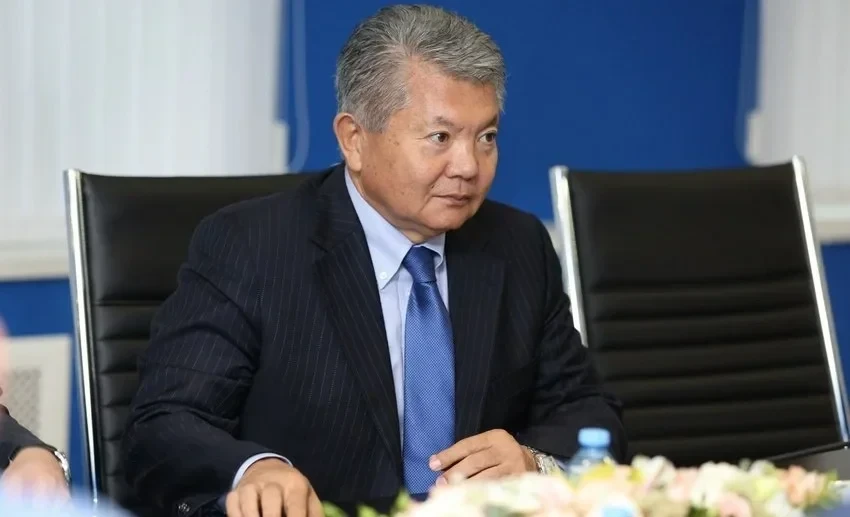
The presence of businessmen such as Roman Abramovich and Musa Bazhaev was an important sign during the visit. These figures do not appear next to the president without significant reasons. Bazhaev represents interests in mining and large investments, while Abramovich signals upcoming large-scale infrastructure and logistics projects, the details of which have not yet been disclosed but are clearly visible from the composition of the delegation.
For regional and international investors, this is a sign: Kyrgyzstan is becoming an attractive platform for investments.
Conclusion: A Quality Alliance
The main outcome of the visit lies not in the number of signed documents or conducted ceremonies, but in the fact that after the speeches of the two leaders, it became clear: Russia and Kyrgyzstan have reached a new level of alliance — mature, stable, and mutually beneficial.
This is an alliance that:
• has withstood the test of time,
• has strengthened in the fields of culture and education,
• has become the foundation of economic reciprocity,
• has acquired geopolitical depth,
• and is perceived by both sides as part of the strategic future of their states.
This visit did not create an alliance; it merely confirmed what has long been evident: Russia and Kyrgyzstan are moving forward together, confidently and for the long term.