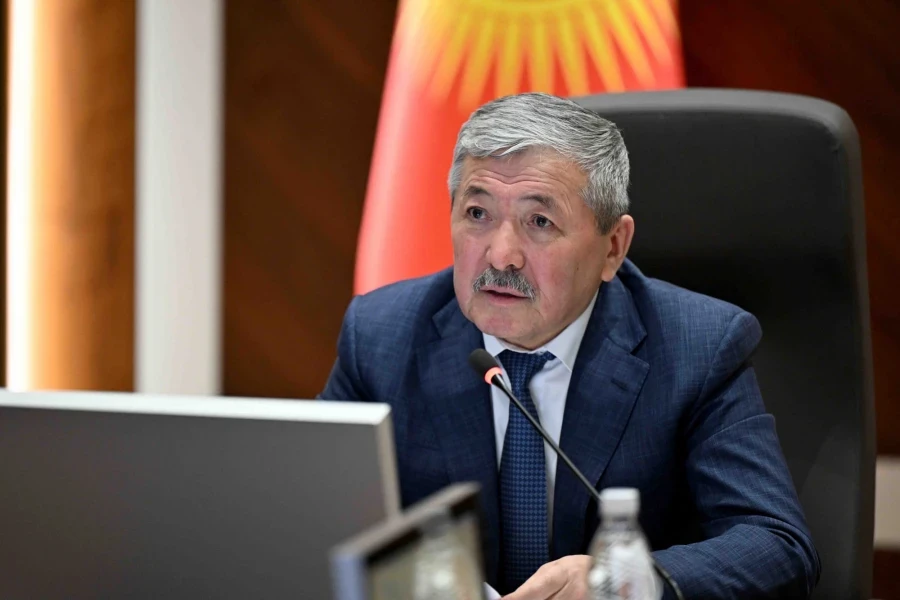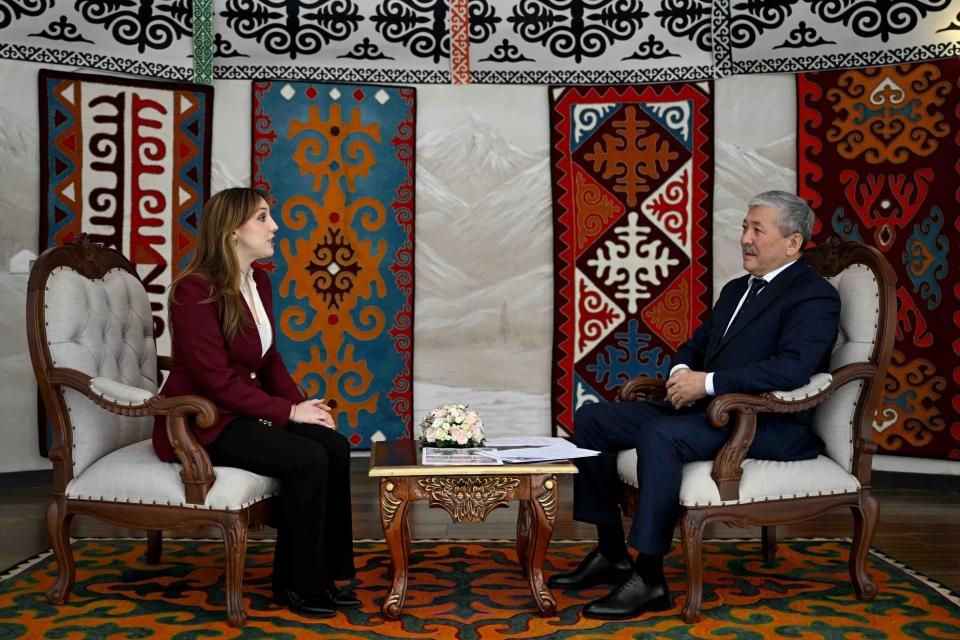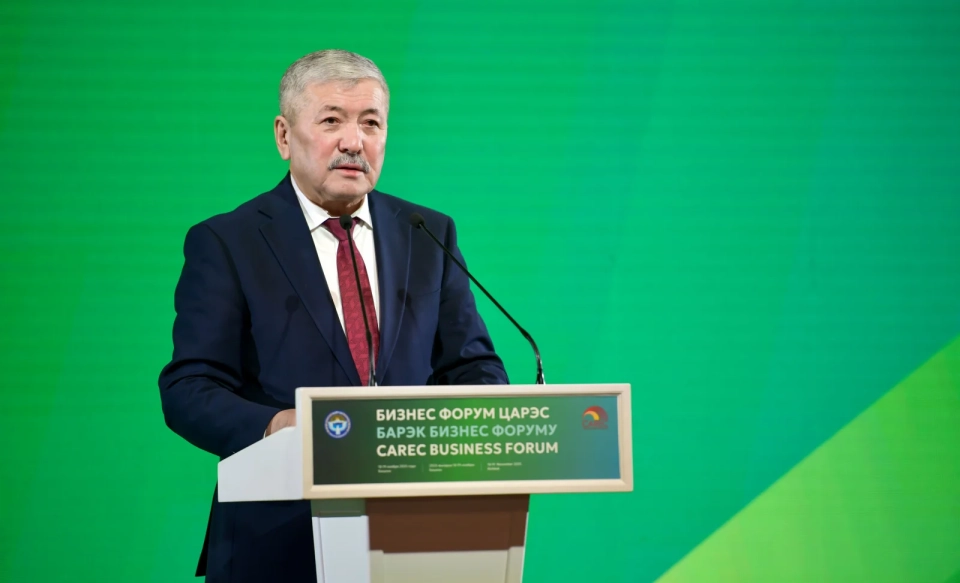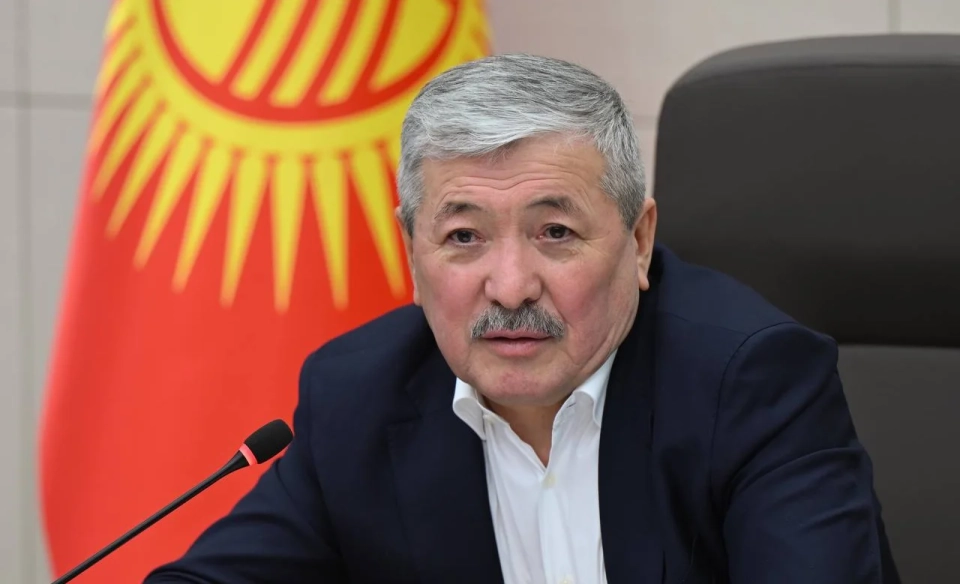
“First of all, over the past two to three years, the growth rate of the country's gross domestic product has not fallen below 9%. The task is to maintain these indicators. Additionally, it is necessary to attract more investments. The main goal is to improve the living standards of the citizens of Kyrgyzstan,” Kasymaliev reported.
According to data from the National Statistical Committee, in the first half of 2025, Kyrgyzstan managed to attract about $562.7 million in foreign direct investments, while the outflow amounted to $284.5 million. This marks a 21.7% increase compared to the same period last year.
The increase in GDP, especially in the construction sector, has led to a labor shortage. According to the Ministry of Labor, in the 2020s, the quota for the employment of foreign citizens was about 12,000 people, and today it is already 42,000. The country allows 47,686 foreigners to work.
In the labor market are:
- citizens of China — 18,898,
- citizens of Bangladesh — 11,677,
- citizens of Pakistan — 8,268,
- citizens of Uzbekistan — 2,060,
- citizens of India — 2,603,
- citizens of Turkey — 1,210,
- citizens of Vietnam — 421, as well as citizens of other countries.
At the same time, Kyrgyz citizens are also actively seeking work abroad. According to the Ministry of Labor, since the beginning of 2025, 22,000 citizens of Kyrgyzstan have found jobs outside the country. The demand for employment remains high; for example, more than 73,000 people have registered for seasonal work in the United Kingdom.
One of the reasons for the high demand for labor is the tightening of legislation in Russia regarding labor migrants.
Kasymaliev also discussed the situation with cargo delays at the borders within the Eurasian Economic Union. He pointed out that this problem has worsened due to increased inspections by Russia.
“The situation has worsened within the EAEU. The Russian side has intensified control over goods coming from Kazakhstan and other countries. Previously, only imported goods were delayed, but now our products are also being held at the border,” said Kasymaliev.
To address this situation, a headquarters has been established under the Ministry of Economy. Kasymaliev noted that constructive negotiations are ongoing with the Russian side both within the framework of the headquarters and in a separate format. An agreement has already been reached to simplify procedures for Kyrgyz goods. In particular, for representatives of the textile industry, there are no serious obstacles for direct supplies, but difficulties continue with goods supplied through marketplaces.
Kasymaliev also mentioned the shortage of electricity in the country, which is estimated at 4.3 billion kWh and is covered by imports. According to him, Kyrgyzstan's hydropower potential is utilized only at 10%. In this regard, the government is actively working on the construction of small, medium, and large hydropower plants. This year, more than 10 small hydropower plants have already been commissioned.
He emphasized that the most important project in this area remains the construction of the Kambar-Ata HPP-1, which is being carried out in cooperation with neighboring countries. However, a lack of water may affect the operation of hydropower plants.
“You can see that the water level in the Toktogul and Orto-Tokoy reservoirs is decreasing. We understand that there is less and less water, so we are focusing on the development of solar energy,” he noted, speaking about the new energy policy.
President Sadyr Japarov is currently on a visit to Japan, where the first summit “Japan - Central Asia” will take place. In 2004, Japan became the first country to initiate cooperation with Central Asia as a single region.
Central Asia continues to be an underexplored region for Japanese companies. However, in recent years, the areas of potential cooperation have expanded, including interest in rare metals and transport corridors, in addition to energy resources and metals.
In the context of increasing geopolitical tensions in the Asia-Pacific region, Japan needs to increase military spending, which rose by 13% in 2024 and has doubled over five years. In this context, Central Asian countries, including Kyrgyzstan, are becoming more significant partners for Japan.
Kyrgyzstan desperately needs investments, and Japan can contribute through the Asian Development Bank, where it is one of the largest shareholders, alongside the USA, or through other international aid structures.
The publication Bloomberg characterized Kyrgyzstan as an economic tiger, comparing it to South Korea, Hong Kong, Singapore, and Taiwan, which demonstrated rapid growth in the 1970s. The article includes interviews with the Chairman of the National Bank, Melis Turgunbaev.
According to him, the main factors for growth are a boom in tourism and construction, increased domestic consumption, and the re-export of goods from China to neighboring countries. However, the prospects remain unclear. Bloomberg refers to an IMF report, which states that economic forecasts for Kyrgyzstan still heavily depend on geopolitical factors. Moreover, “the deepening of sanctions against Russia may lead to a decrease in remittances and a slowdown in economic growth due to the devaluation of the ruble.”
Thus, if the war ends, re-export may cease, and if the conflict continues, the volume of remittances will decrease. The question is, what can be understood about our economy from across the ocean?