Factors contributing to the region's growth identified
In recent years, Central Asian countries have shown a noticeable acceleration in economic growth, and the year 2025 turned out to be one of the most successful for this region. The total gross domestic product of Central Asian countries exceeded 500 billion dollars, while the average GDP per capita was over 12 thousand dollars. This data was provided by analyst Asan Kurmanbekov, as reported by inbusiness.kz, citing halykfinance.kz.
Kurmanbekov highlights several factors contributing to this growth. First and foremost, there is high demand for mineral resources in international markets, the expansion of trade relations, and the gradual creation of a common economic space in the region.
The analyst noted: "In recent years, the economic growth of Central Asian countries has shown dynamics, and 2025 has been particularly successful. Significant influence on this has been exerted by high demand for mineral resources, the opening of new markets, and the formation of a unified economic space."
Internal factors also play an important role in economic growth. In particular, the region is experiencing double-digit growth in both investment and consumption.
Kurmanbekov explained: "In addition to external factors, investments and consumption are growing at double-digit rates, which, in turn, restrains inflation, which remains high in some countries."
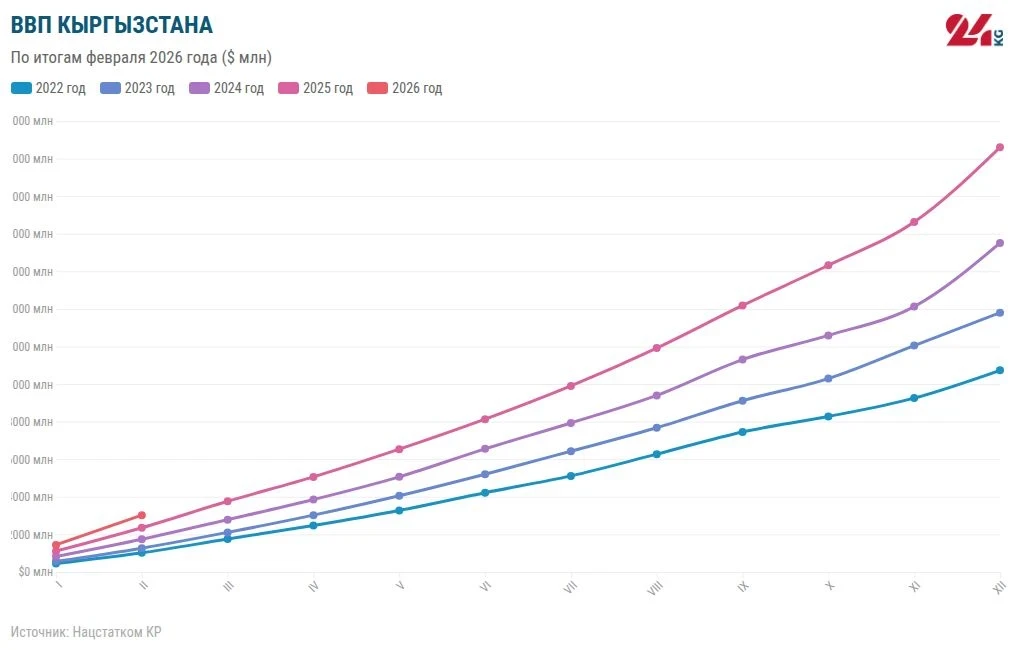
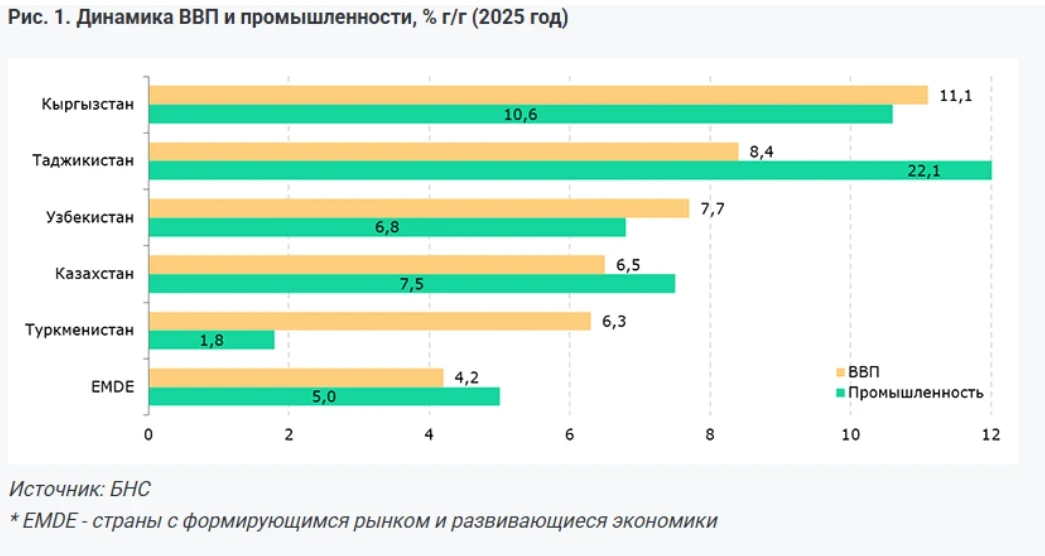
According to studies, 2025 was the most successful year for the economies of Central Asia in recent years, especially in Kyrgyzstan, where economic growth increased from 9% to 11.1%.
"Kyrgyzstan significantly accelerated its growth rate — from 9% to 11.1%. Uzbekistan also showed growth from 6.5% to 7.7%, while Kazakhstan grew from 5% to 6.5%," the analyst added.
The economies of Tajikistan and Turkmenistan, in turn, maintained stable growth rates without significant changes.
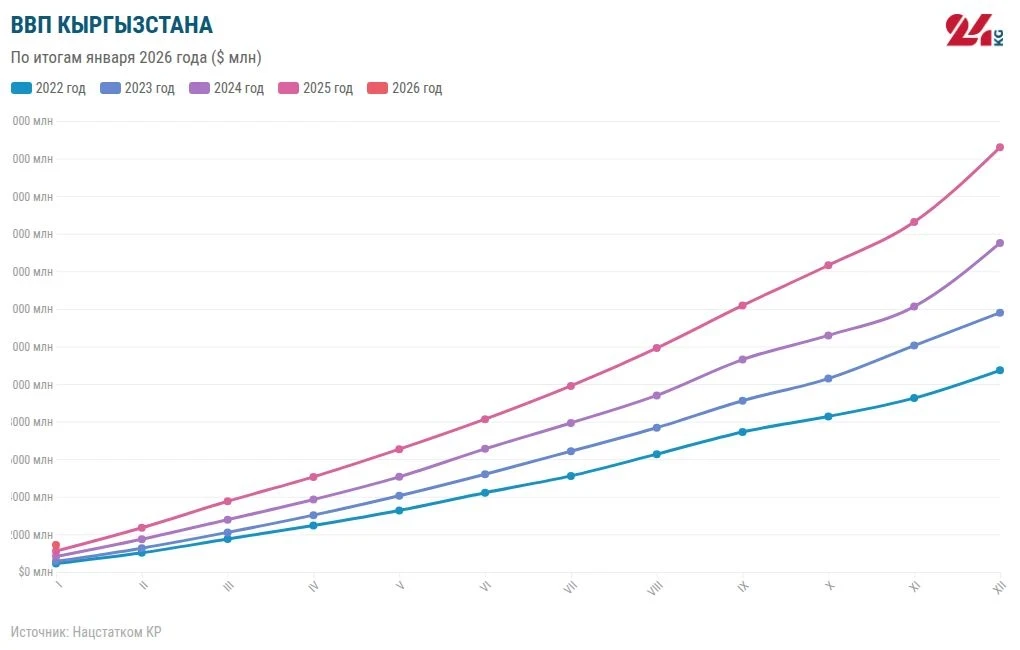
Kurmanbekov emphasized that since 2022, Kyrgyzstan has remained the leader in economic growth in the region, increasing its GDP by almost 44% in real terms.
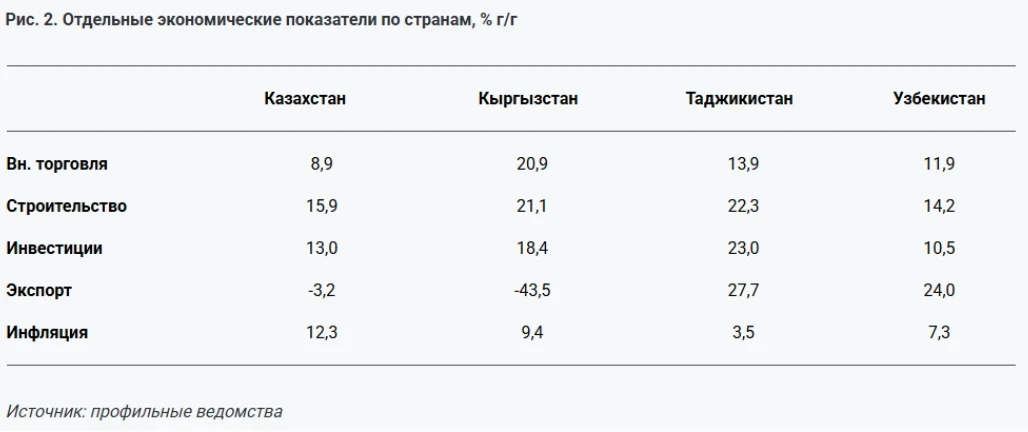
"Such a sharp increase compared to previous moderate indicators, which fluctuated around 4%, is due to the increase in domestic production, a construction boom, rising consumer demand, and the re-export of goods, as well as improvements in tax and customs management," he noted.
The economic dynamics of the region have allowed Central Asian countries to outpace many developing economies in terms of growth rates.
"The high economic dynamics have allowed Central Asia to significantly surpass other developing countries in both GDP growth rates and industrial production indicators," Kurmanbekov added.
Industry has also become an important driver of economic growth. Particularly high results were noted in Tajikistan and Kazakhstan.
"The industrial sector in Tajikistan showed growth of over 22%, while in Kazakhstan it was 7.5%, which significantly contributed to overall economic growth," the analyst emphasized.
Domestic demand also plays a key role in economic dynamics. All countries in the region are seeing high indicators in trade and investment.
"All countries in the region have recorded impressive domestic demand indicators, measured in double-digit values in trade and investment," Kurmanbekov reported.
At the same time, remittances from migrants also significantly affect consumption in several countries.
"In Tajikistan, for example, remittances from migrants account for almost half of GDP, which supports consumption," the analyst noted.
Kurmanbekov also pointed to the influence of global commodity markets, which have contributed to the growth of export revenues for several countries in the region due to rising world prices for gold.
However, inflation remains one of the main economic problems for the region.
"Inflation poses a significant problem for Central Asia, except for Tajikistan, where the rate of price growth slowed to 3.5% by the end of 2025," he noted.
According to him, inflationary pressure is prompting the central banks of Kazakhstan, Kyrgyzstan, and Uzbekistan to maintain a tight monetary policy.
In conclusion, the analyst noted that Central Asian countries are showing sustainable economic growth despite various external and internal challenges.
"Thus, the impressive dynamics of economic growth in Central Asia continue to persist despite various shocks," Kurmanbekov added.
He also indicated that further development of regional integration could become an additional driver of economic growth.
"The gradual creation of a common market will undoubtedly contribute to the economic growth of all countries in the region," the analyst concluded.
photo www