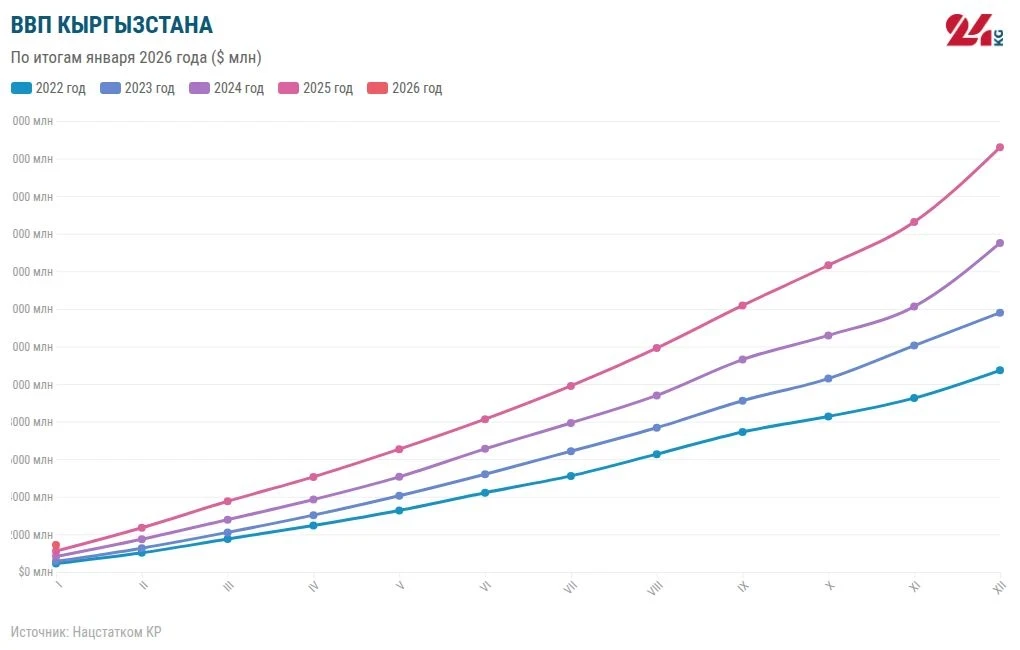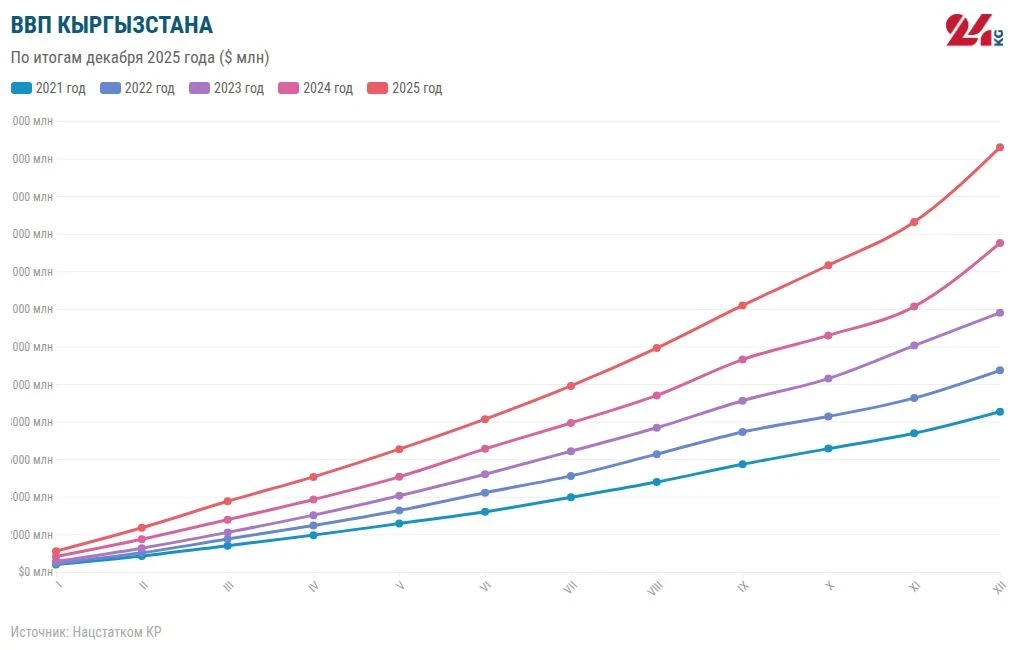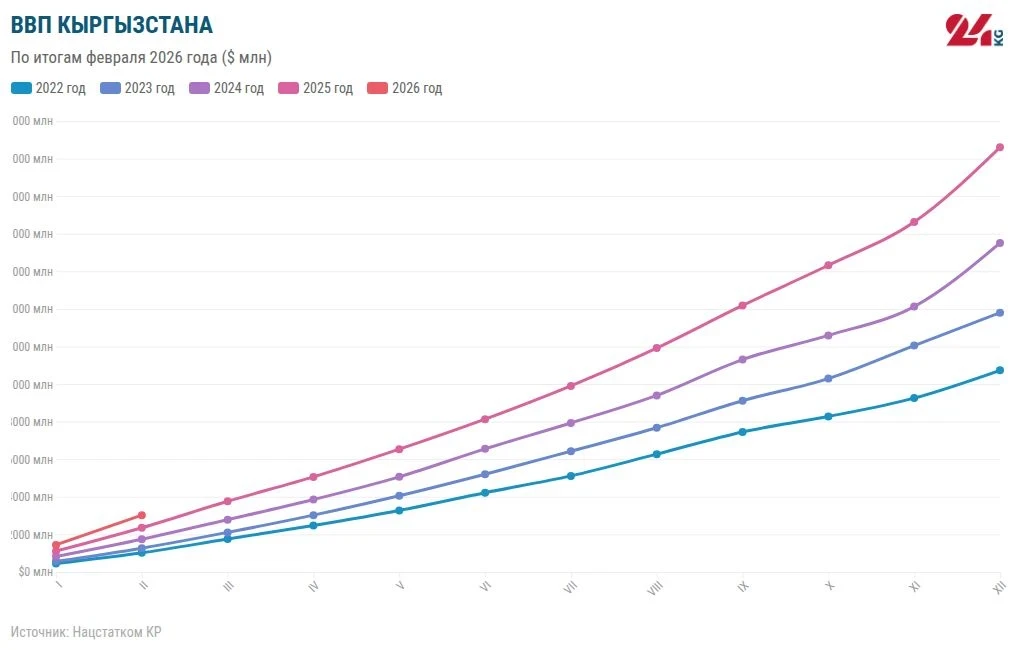
The main factors driving GDP growth are the development of commodity production, services, and net taxes on products.
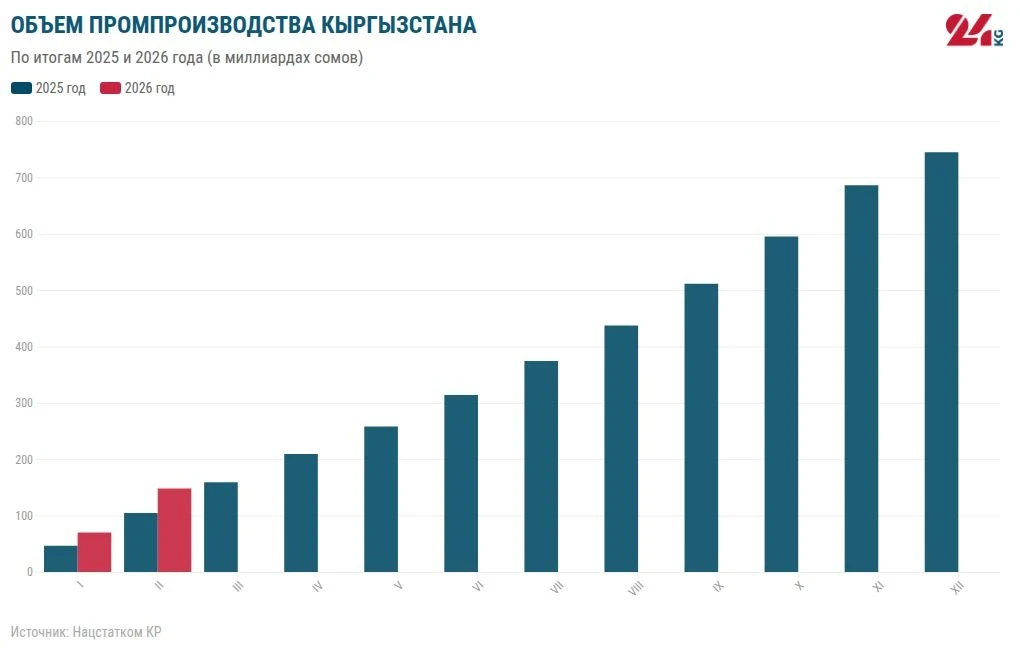
The key sectors contributing to the economic upturn in the first two months of 2026 were the chemical industry (increased by 3.1 times) and pharmaceuticals (by 1.7 times), as well as the production of rubber and plastic products, building materials, wooden and paper products, as well as printing products (by 1.6 times) and vehicles (by 42.4 percent).
According to an analysis conducted by 24.kg based on data from the National Statistical Committee, it cannot be fully asserted that these figures accurately reflect the real economic situation in the country, as alternative sources of information are lacking.
Gross Domestic Product
When calculating GDP and its changes compared to the previous year, factors such as prices, production volumes in industries, budget revenues, and government expenditures are taken into account. Kyrgyzstan is a country with a high dependence on imports, which affects economic indicators, especially when converting to other currencies. This review uses official data in soms.
The share of the service sector in the total GDP amounted to 49.9 percent, while commodity production accounted for 31.1 percent, and net taxes on products made up 19 percent.
Industrial Sector
The gross volume of industrial production in January-February 2026 amounted to 147 billion 813 million soms, which is 15.5 percent more compared to the previous year. This growth is ensured by an increase in production volumes:
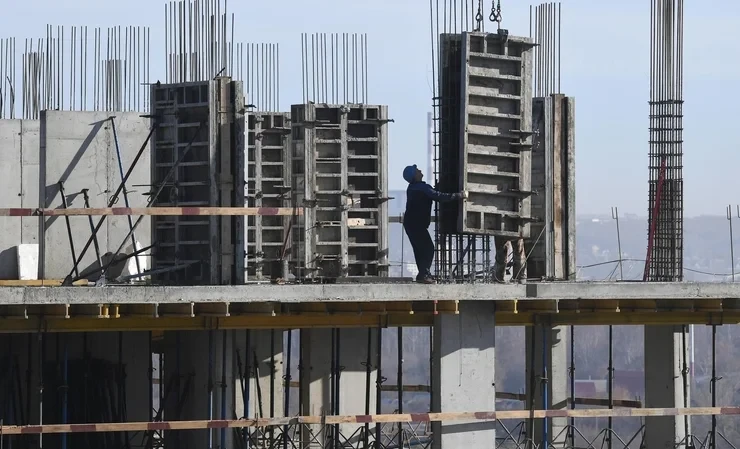
Among the positive trends, it is worth noting the growth in postal and courier services, which increased by 28.5 percent since the beginning of the year. The construction sector also showed impressive results, increasing by 23.2 percent.
The hotel and restaurant sector added 13.2 percent, while wholesale and retail trade grew by 11.4 percent, and freight transport by 9.4 percent.
However, electricity production volumes decreased by 14.1 percent.
In the sectors of water supply, waste treatment, and processing, the growth of 9.9 percent is mainly due to an increase in water collection and distribution.
Investments in Fixed Capital
The volume of investments in fixed capital for January-February 2026 increased by 8.4 percent compared to the same period in 2025, thanks to an 11.5 percent growth in domestic sources of financing. External investments, on the contrary, decreased by 26.3 percent since the beginning of the year.
Since the beginning of 2026, the total volume of investments amounted to 17 billion 851.2 million soms.
The majority of investments in the first two months of 2026 (over 80 percent of the total volume) were directed towards housing construction and manufacturing, as well as education, mining, and energy projects.
Economic Forecasts
According to the latest forecast from the World Bank, economic growth in Kyrgyzstan is expected to be at 6.5 percent. Analysts from the Eurasian Development Bank (EDB) provide a more optimistic estimate of 9.3 percent. Forecasts from other experts also fall within this range.
The main factors contributing to growth are high domestic demand and significant government investments. The government allocates considerable funds for infrastructure development: 21 percent of external loans are directed to the transport sector, and almost 20 percent to energy.
The construction industry and the service sector continue to demonstrate double-digit growth rates.
In 2026, the monetary policy of the National Bank of the Kyrgyz Republic is characterized by high rigidity aimed at curbing inflation. The discount rate of 12 percent underscores the desire to cool the overheated consumption market.
This makes loans for businesses and individuals expensive, limiting the volume of new borrowings, but serves as a necessary barrier for financial stability.
The projected inflation rate for 2026 is between 6.9 and 9.4 percent. The main factors driving price growth remain the planned increase in utility tariffs and excise taxes on excise goods. The high rate of the National Bank of the Kyrgyz Republic is aimed at minimizing the risks of an inflationary spiral, keeping price levels within targeted guidelines.
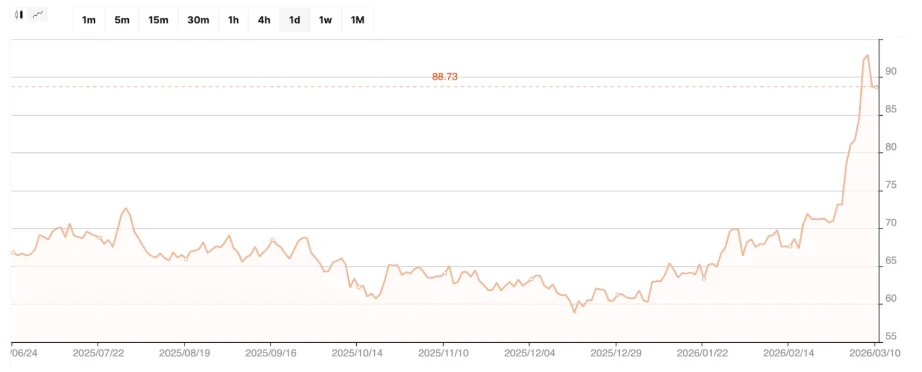
The national currency, the som, demonstrates stability. In March 2026, the official exchange rate was fixed at 87.45 soms per $1, which is a local maximum value over the past few months. The som is supported by stable remittances and high gold prices, a key export commodity of Kyrgyzstan.
The National Bank also conducts regular interventions to support the national currency's exchange rate, having sold $546.55 million on the currency market since the beginning of 2026.
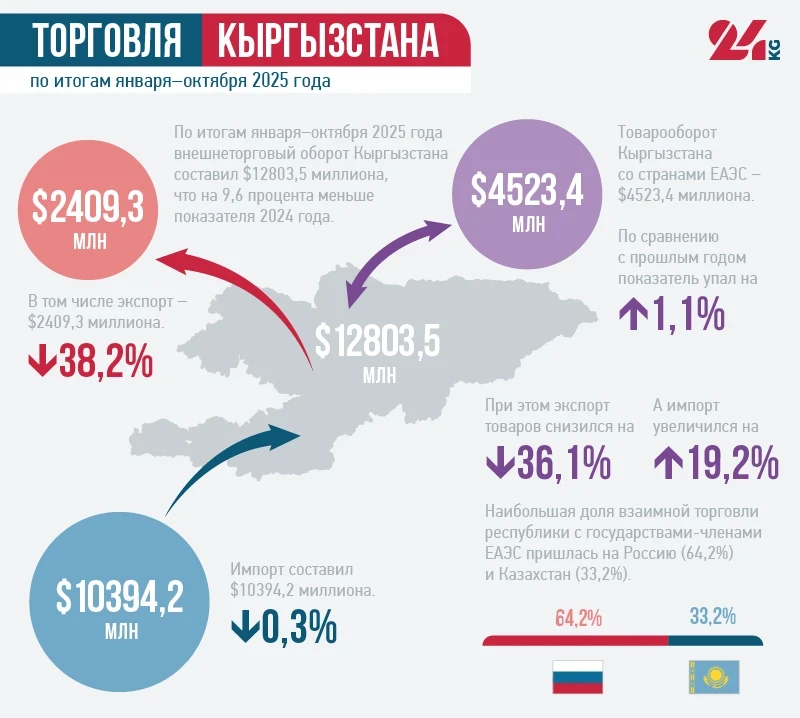
External risks to the economy are associated with geopolitical tensions and the threat of secondary sanctions. Trade restrictions and uncertainty in global supply chains may negatively impact the country's re-export potential.
The economy of Kyrgyzstan remains sensitive to any changes in trade relations with key partners — China and the EAEU countries.
Overall, experts note that the economy of Kyrgyzstan began 2026 with active expansion; however, long-term success will depend on structural reforms. Strengthening the private sector, addressing issues in the energy sector, and diversifying export directions will be key factors in ensuring stability in the coming years.