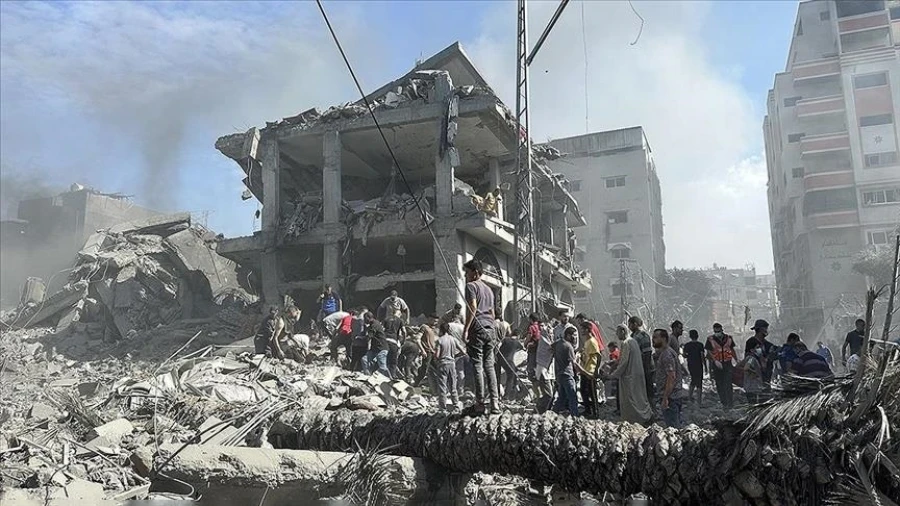
Countries are boycotting the contest, justifying their actions by the humanitarian consequences of the conflict and manipulations in the voting system. They proposed to hold a secret vote on Israel's participation, but instead, new voting rules were established at the EBU meeting in Geneva.
According to the EBU, the majority of participants agreed that an additional vote on the participation of countries in the contest is unnecessary, and "Eurovision-2026" should proceed in the planned format with enhanced security measures.
Isaac Herzog, the President of Israel, characterized the EBU's decision as "a sign of solidarity and brotherhood," emphasizing a victory over attempts to silence Israel.
Shortly after, the Dutch broadcaster Avrotros announced its withdrawal from the contest, noting that participation under the current conditions contradicts their public values.
Spain, one of the "Big Five" countries, also confirmed its exit, emphasizing that it will not broadcast the semifinals and final of "Eurovision-2026."
RTVE Secretary General Alfonso Morales stated that the situation in Gaza and the use of the contest for political purposes make it impossible to maintain the neutral cultural character of the event.
The Irish broadcaster RTE also noted that participation in the contest would be unacceptable due to the humanitarian crisis in Gaza.
The national broadcaster of Slovenia, RTV Slovenija, confirmed that they have also withdrawn from the contest. Natalia Gorchak, the head of the channel, noted that if Russia was excluded after the start of the war with Ukraine, the same rules should apply to Israel. She added that any aggressor should not participate in "Eurovision."
Iceland is expected to join the boycott, and representatives of the Belgian broadcaster stated that they will make a decision in the coming days.
What was discussed at the meeting?
At the meeting, about 50 broadcasters belonging to the EBU discussed the future of the contest, which is watched by more than 150 million viewers annually. Participants were urged to approve new rules aimed at preventing government interference in the voting process, amid accusations of unfair voting in 2025 in favor of Israel.
Several countries, including Spain, Turkey, Slovenia, and Belgium, actively criticized Israel, while Sweden took a neutral position, calling for the contest to be freed from political issues. The UK supported this approach, stating that Israel's internal affairs should not affect the contest.
Ukraine opposed voting on Israel's participation, pointing out the unacceptability of comparing it to the situation surrounding Russia.
After the start of Russia's full-scale invasion of Ukraine in 2022, the country was banned from participating in the contest. A similar measure was taken against Belarus in 2021 due to human rights violations.
Before the meeting, Germany, one of the main sponsors of the contest, announced that it would not participate if Israel was excluded. There were also reports of a possible refusal to broadcast the contest in the country.
Austria, which will host "Eurovision" next year, expressed support for Israel. Roland Weissman, the CEO of the Austrian broadcaster, emphasized the importance of inviting all EBU members in an interview.
According to the BBC, the discussion of new contest rules included a clause stating that participants agreed not to hold a vote on Israel's participation.
“This vote certifies that all EBU members who agree to comply with the new rules and wish to participate in 'Eurovision-2026' have the right to participate,” said the EBU.
Golan Yohpaz, head of the Israeli broadcaster KAN, characterized the attempt to exclude the country as a cultural boycott, emphasizing that this could have serious consequences for the contest in the future.
The BBC, which broadcasts "Eurovision" in the UK, confirmed its support for the collective decision of EBU members, emphasizing the importance of adhering to the rules and inclusivity.
Among those who approved the changes were broadcasters from Norway, Sweden, Finland, Denmark, and Iceland, who expressed support for the EBU's decision to improve the voting system.
However, the Icelandic broadcaster RÚV stated that a final decision would be made only next week.
Germany expressed approval of the decision made, emphasizing the expectation of participation next year as a celebration of cultural diversity. At the same time, they expressed regret over the withdrawal of individual EBU members from the contest.
Main complaints against Israel
The last two "Eurovisions" took place against the backdrop of protests against Israel's participation due to military actions in Gaza, which began after the Hamas attack on Israel on October 7, 2023.
After "Eurovision-2025," several countries expressed concern over the results of the viewer voting, demanding verification. The representative of Israel, Yuval Raphael, received the highest number of votes from viewers; however, in the jury voting, she ended up in 14th place, finishing second overall.
As reported by the EBU agency, the advertisement for the winner was paid for by the Israeli government, which also raised questions about the fairness of the voting.