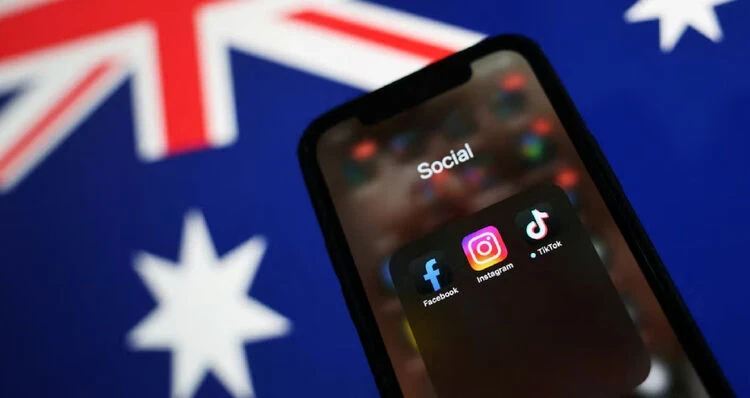
According to the new law, all social networks will have to block access for users under 16 years old who are located in Australia. Due to the time difference, the law came into effect for Germany on December 9 at 14:00. Prime Minister Anthony Albanese explained the necessity of this measure as a desire to protect youth from excessive screen time and harmful content.
The law, titled the "Online Safety Amendment (Social Media Minimum Age) Bill 2024," was passed by parliament a year ago. According to surveys, the majority of Australians support this initiative. "What we are doing is not easy," Albanese noted at the UN podium. "But the burden of social media that our young people experience is much heavier. Starting December 10, we will begin to reduce this burden. We know that the whole world is watching us."
Critics of the law argue that it is poorly thought out and may create new problems, making the internet more dangerous for teenagers. Many young Australians express doubts about the effectiveness of this measure, and a lawsuit against the law has already been filed in the Supreme Court.
What does this law mean for youth?
Starting December 10, all social networks must disable accounts of users under 16 years old in Australia. This affects hundreds of thousands of teenagers: according to Snapchat, their number reaches 440,000, on Instagram — about 350,000, and on YouTube — 325,000.
Although teenagers will still be able to view open content, they will not be able to create new accounts or log in. The eSafety regulator claims that the lack of access to personalized recommendations and constant notifications will reduce the likelihood of encountering harmful content.
According to eSafety data, 95% of teenagers aged 13-15 actively used social media last year.
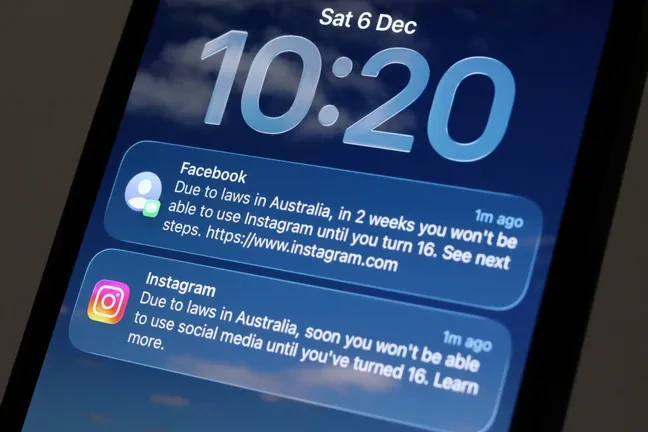
Photo: Holly Adams / REUTERS via Der Spiegel
Which apps are subject to the ban — and are there exceptions?
The law covers platforms such as Facebook, Instagram, Kick, Reddit, Snapchat, Threads, TikTok, Twitch, X, and YouTube.
However, exceptions include messengers and some gaming services: Facebook Messenger, Pinterest, WhatsApp, YouTube Kids, Discord, and Roblox, despite existing critical remarks about their protection of minors.
Users seem to be preparing for changes: by the end of the week, the third most popular free app on iPhone became Lemon8 — a combination of Instagram and Pinterest from ByteDance. The eSafety regulator stated that it will continue to monitor platforms and may expand the list of services subject to age restrictions.
Methods of age verification
The law does not establish specific methods for age verification. Platforms are not required to request a passport; they can use more accessible methods, such as age estimation videos using artificial intelligence. However, such systems often show significant errors, and their accuracy is questionable. Nevertheless, eSafety believes that using multiple methods will achieve acceptable accuracy at the initial stage.
Meta has already begun disabling accounts based on the age provided at registration. Users who have been wrongfully blocked will be able to verify their age through video or official documents. Verification is only conducted in suspicious cases, for example, if the account owner tries to change their age from 14 to 16 years.
Snapchat has required official documents confirming age since the end of November or applies the "k-ID" age determination system. TikTok also plans to use facial age estimation methods, credit cards, and official documents.
Responsibility and possible sanctions
The government and eSafety assume that teenagers will try to circumvent the ban using fake documents or images created by AI. Teenagers and their parents will not face fines — all responsibility falls on the platforms.
In case of non-compliance, the court may impose a fine of up to 49.5 million Australian dollars (about 28 million euros), however, the criteria for determining "sufficient measures" have not yet been established.
Views of tech companies
Although companies criticize the new law, they express readiness to comply with it. A representative of Snapchat, Jennifer Stout, noted in parliament that the company supports the desire to protect children but doubts the effectiveness of restricting access.
Rachel Lord, head of YouTube Australia, called this approach "hasty": in her opinion, children need to be protected in the digital space, not isolated from it.
Meta began implementing safety measures even before the law came into effect, including creating "teen accounts" on Instagram that have a private mode by default, filtering harmful content, and disabling notifications at night.
Teenagers' opinions
The state television channel ABC conducted a survey among 17,000 teenagers aged 9-15. Most of them do not believe in the effectiveness of the ban. When asked "Do you think this ban is a good idea?" 70% answered negatively, 21% were unsure, and only 9% supported the initiative.
Two 15-year-old teenagers filed a lawsuit in the Supreme Court, calling the law "a direct attack on the youth's right to free political expression" and "an excessive measure."
Key critical remarks
Critics of the law argue that it limits children's and teenagers' access to digital skills and experiences that they should acquire gradually. Artificial restrictions may result in young users being less prepared for internet risks in the future.
Another important point is the threat to privacy: biometric data and documents used for age verification may fall into the hands of commercial contractors, raising concerns about their level of protection.
In November, a bipartisan Senate commission recommended postponing the law's implementation and refining it, but this process continued.
Potential consequences for Germany
Other countries are closely watching the Australian experiment, especially those considering similar measures. Given the implementation of age verification tools by tech companies, such mechanisms may later be requested by other states.
- At the end of November, the European Parliament supported the idea of establishing a minimum age of 16 for social media users. An expert group, created at the initiative of Ursula von der Leyen, is expected to present its recommendations by the end of the year. Despite differences in opinions among EU countries, the idea is gaining popularity.
- In Germany, the issue is periodically raised: the Christian Democratic Union (CDU), the Christian Social Union (CSU), and the Social Democratic Party of Germany (SPD) agreed in their coalition agreement to strengthen the protection of children and youth in the digital space. Justice Minister Stefanie Hubig and Education Minister Karin Prien support the concept of an age threshold. The teachers' union considers this idea "unacceptable and ineffective."
- The government of Denmark reached an agreement in early November to introduce a ban on the use of social media for children under 15 years old. However, the details of implementing these plans have not yet been determined.
- In Malaysia, starting next year, access to social media for users under 16 years old is planned to be banned. The Cabinet approved the corresponding decree, inspired by the Australian experience.