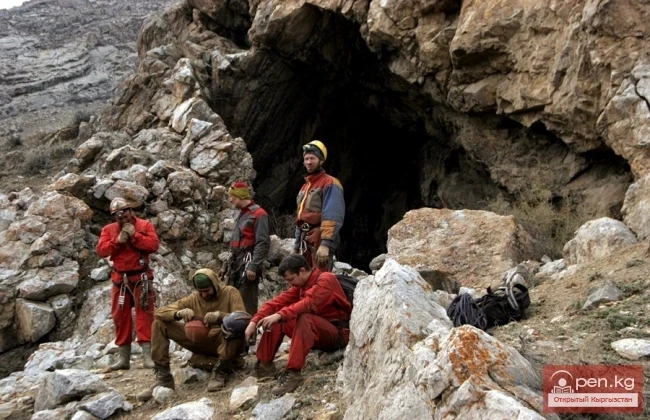
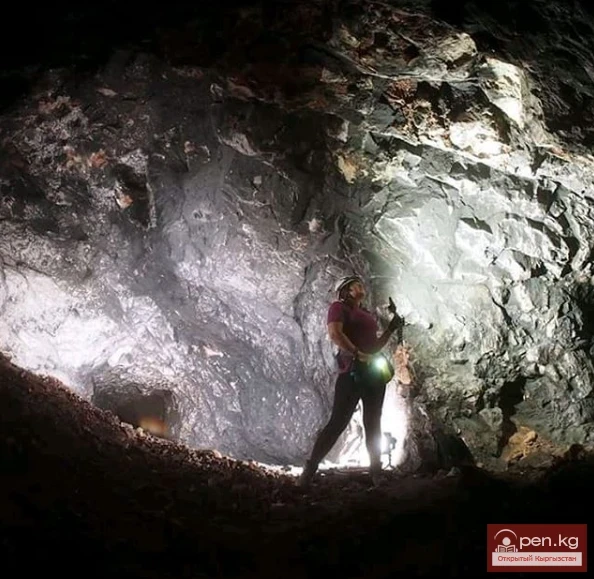
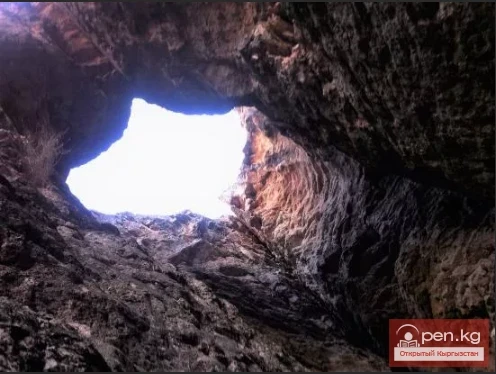
Historian Nasriddin Orozov claims that it is one of the largest and least studied geographical objects in Kyrgyzstan. He noted that in the IX-XI centuries, polymetallic ores, including silver, were mined in this cave. Mines, drifts, and tunnels were created here, but after the work was completed, complex labyrinths remained. The name "Kani-Gut," which translates from Arabic and Persian as "mine of perdition," has become a symbol of this area.
According to Orozov, the first mentions of "Kani-Gut" can be found in the works of Abu Ali ibn Sina (Avicenna, 980-1037). One fragment describes how wise men hid valuable items, including gold, in various corners. For example, a place called Gut is mentioned, located on the western side of Isfara, which attracted many treasure seekers.
There is also a legend that those who descended into the cave could see sleeping camels adorned with pearls, green trees, walls made of silver, as well as huge rivers and lakes. During the Kokand Khanate, the condemned and those who opposed the authorities were exiled here to search for treasures.
Interest in the cave was also shown during the period of Tsarist Russia. Geologist and writer P.S. Nazarov, who visited "Kani-Gut" multiple times, described his impressions:
“Being in this cave evokes amazing sensations. A person who comes out of it looks very pale. Inside, one can find underground cliffs, huge halls, chambers, wells, and labyrinths, as well as an underground river. The air here is always clean and cool, and there are springs with crystal clear water. However, reaching all these beauties is not so easy: narrow passages, slippery areas, and other obstacles require strong nerves.”
From 1918 to 1924, Nazarov lived in Turkestan. In 1953, elder Gyiaz Zholdoshov from the village of Samarkandek descended into the cave with Soviet geologists. He shares memories that they descended using a rope to avoid getting lost in the branching passages. According to the elder, there are ravines in the cave that need to be jumped over, and even an underground river with human skeletons.
According to legend, once a stick belonging to one person fell into this river and was found in the village of Vala-Kandoz near Khujand (formerly Leninabad) in Tajikistan. There are reports that some treasure seekers wandered through the cave for up to three days without finding its end. Nasriddin Orozov concluded that this place holds many secrets and is also referred to as the ancient underground silver city.