Historical sources indicate that one of the streets in the city was previously named after Yaroslav Ivanovich Korolkov, a man whose fate was inextricably linked to Karakol. A major general in the tsarist army, a participant in the war for the liberation of Bulgaria from Ottoman rule, and a graduate of a military academy, Korolkov left a significant mark on both the military and civil history of the region.
After the end of the Russo-Turkish War in 1920, Korolkov, showing initiative, was transferred to a remote garrison on the southern shore of Issyk-Kul — to Karakol, which at that time was just beginning to develop as a city. Here, he headed a mountain battery, but being far from major cities and military districts, he did not limit himself to just military duties. He became an active participant in the life of the region, showing interest in the fate of the local residents.
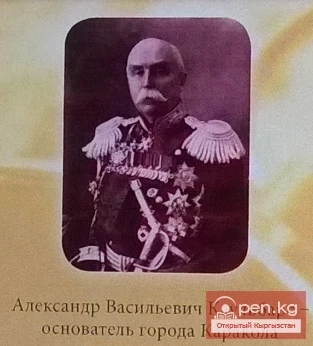
In the late 19th century, life in Karakol was different from the hustle and bustle of the capitals. As noted by one of the founders of the city, Baron Alexander Vasilyevich Kaulbars, Karakol was meant to "bring the light of Russian culture into the depths of the Tian Shan." Korolkov became precisely that person who not only served but also actively contributed to the development of the region, promoting education and public life.
His interests extended beyond ordinary military service: he participated in public initiatives, developed civil infrastructure, and engaged in educational activities. Korolkov became a symbol of a new type of officer — not only a military man but also a civic figure, builder, teacher, and intellectual.
Yaroslav Ivanovich Korolkov (1843-1933) was a colonel and later a major general of artillery. Growing up in an orphanage, he graduated from the Mikhailov Artillery School and participated in the Russo-Turkish War, where he received a named weapon for the defense of Shipka and the Order of St. George of the 4th degree. From 1899 to 1902, he commanded the 1st East Siberian Artillery Brigade and participated in the Chinese campaign of 1900-1901, for which he was awarded a gold weapon.
Upon arriving in Kyrgyzstan, he became the district chief of the Issyk-Kul district and dedicated his life to scientific research and the development of the region.
Korolkov was a pioneer of meteorological observations in this area. On February 1, 1881, he established the first mountain field meteorological station, and on September 1 of the same year — a stationary meteorological station. He conducted expeditions to glaciers, studying the climate and precipitation in the Pre-Issyk-Kul area and the upper reaches of the Jyrgalan River. Among his scientific works, the following can be highlighted:
- "Winds in Przhevalsk"
- "Precipitation in the Issyk-Kul Basin"
- "Climate of Pre-Issyk-Kul"
- "Study of the Glaciers of the Terskey Alatau and the Upper Reaches of the Great Jyrgalan"
- "Climatology and Glaciology"
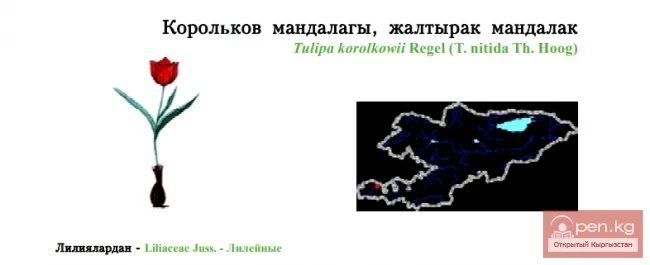
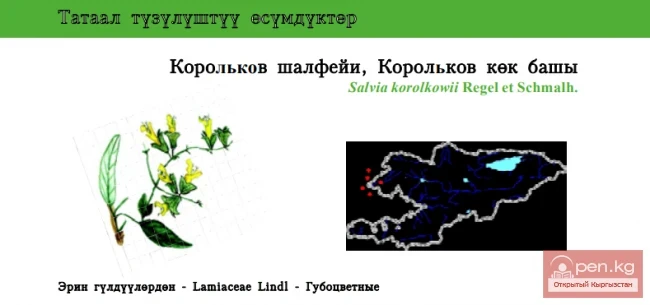
In the field of botany and beekeeping, Korolkov, together with botanist V.I. Lipsky, undertook an expedition to the Tian Shan, collecting botanical and archaeological collections. He sent seeds of the Tian Shan fir to St. Petersburg, for which he received gratitude from the Botanical Garden, and made a significant contribution to the development of beekeeping by teaching local residents modern methods.
Moreover, at his initiative, a brass band and a drama club were established in Karakol, which he led. He also founded a public library and the N.M. Przhevalsky Museum and laid out a city park. Together with his wife, singer Varvara Alexeyevna Korolkova, he organized concerts and literary evenings for the residents of the city and surrounding villages, as well as taught local residents how to build modern irrigation systems.
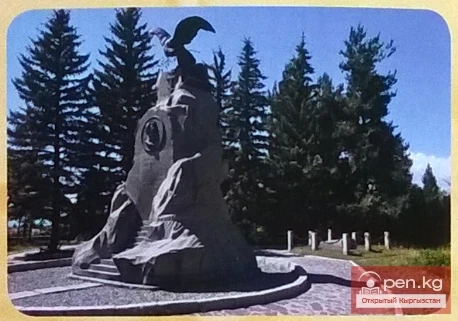
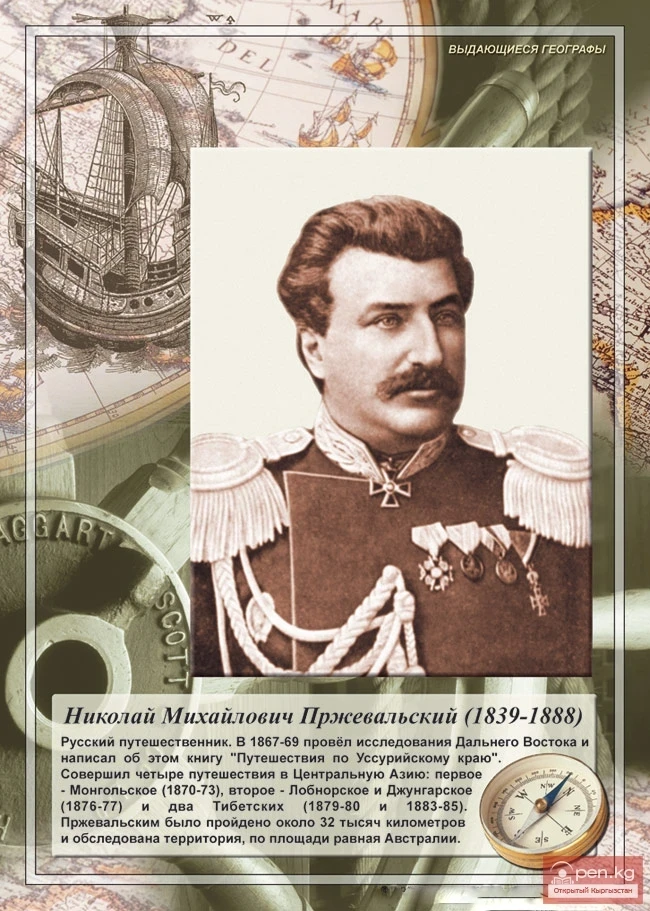
Korolkov assisted in the preparation and supply of expeditions to Asia, in particular, he developed routes for the travels of Pyotr Petrovich Semenov-Tyan-Shansky. At the request of N.M. Przhevalsky, he also dealt with the issues of burying the researcher on the shores of Lake Issyk-Kul.
Yaroslav Korolkov left a significant legacy, transferring his scientific works and laboratories he created, as well as the meteorological station, to the state. He passed away in 1933, leaving a bright mark in the history of the region.