The House of One of the Richest People of Issyk-Kul in the 1900s
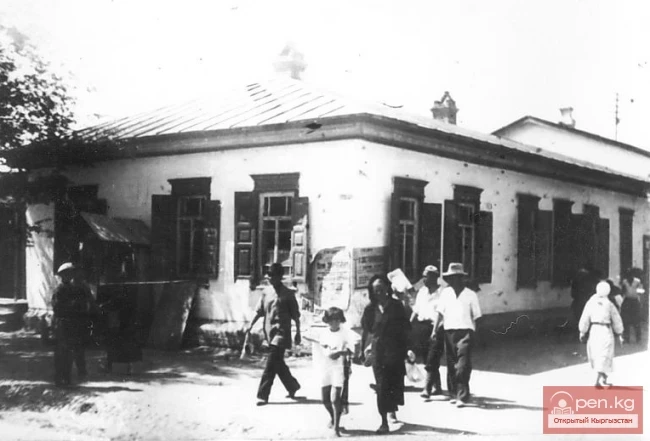
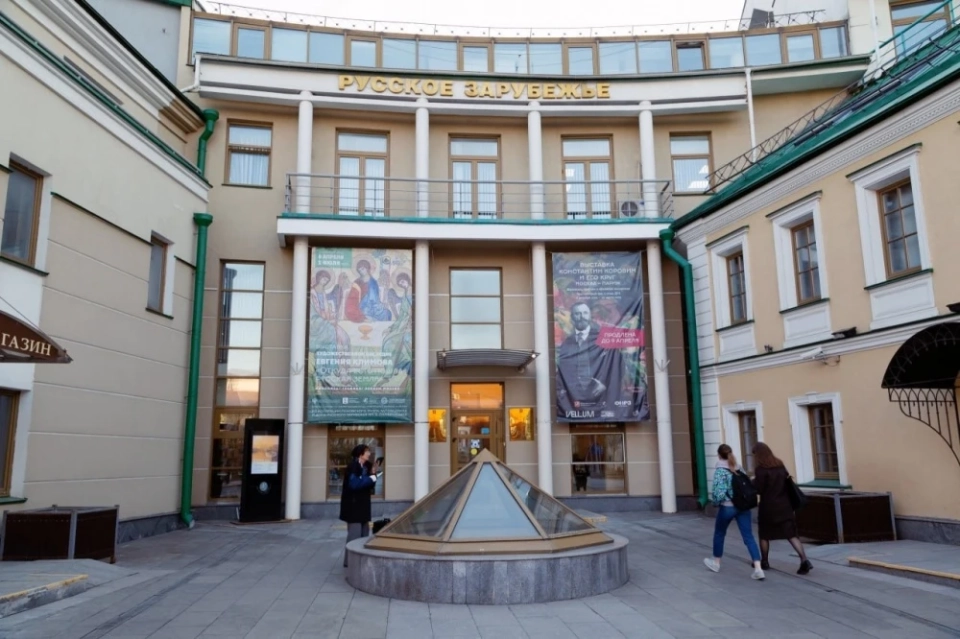
This library was located in a building that previously belonged to merchant I.O. Abramov, who traded in iron goods, paints, and carpets.
According to historical data, on May 14, 1902, in Przhevalsk (now Karakol), at the intersection of Barsov Street (formerly October Street) and Preobrazhensky Street (or Gebze), the reading room of the first public library was opened. The two-story wooden building became a home for books and knowledge.
The initiator of the library's creation was Nikolai Matveevich Barsov — the chief physician of the military hospital and the first elder of Przhevalsk. This graduate of Moscow University was appointed to the Issyk-Kul district of the Semirechye region of the Turkestan Territory.
Barsov served twice as the elder of the city.
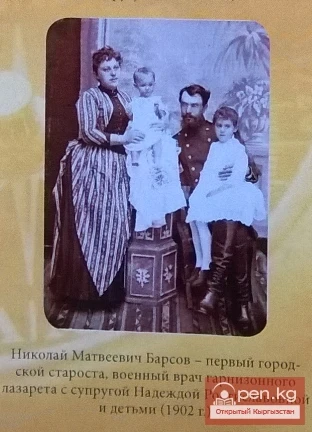
Nikolai Barsov with his wife and children, 1889-1891
// Issyk-Kul Regional State Archive.
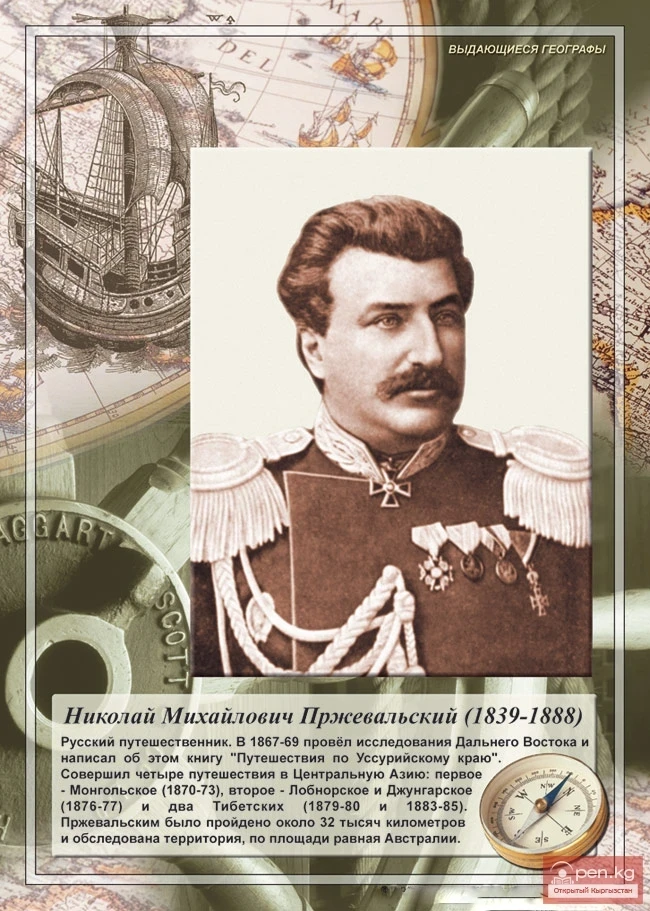
Support for the establishment of the library was provided by notable figures: geographer and traveler N.M. Przhevalsky, Colonel of the Tsarist Army V.I. Roborovsky, and military geographer P.I. Kozlov.
Y.I. Korolkov, P.I. Livatov, and others also made significant contributions to the development of the library.
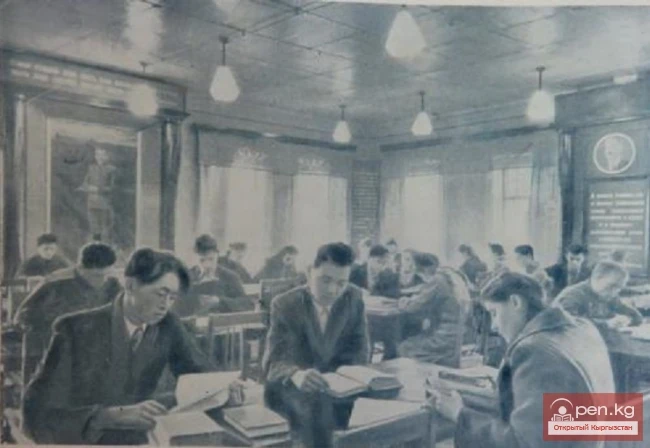
At the time of its opening, the institution had two reading rooms: the first floor was intended for everyone, while the second was for the privileged class. The library started with a collection of 1,000 books, and by 1903, it had been visited by 5,000 people, and a practice of lending books for home use was introduced.
The library subscribed to publications such as "Novoe Vremya," "Birzhevye Vedomosti," "Russkoe Slovo," and "Sibirskiy Vestnik."
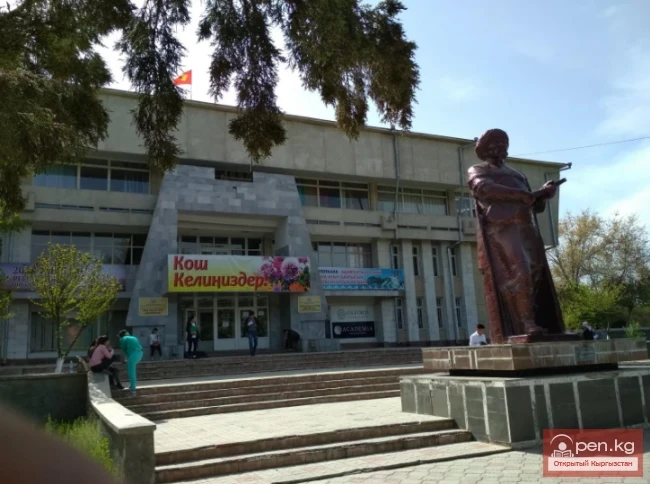
Over time, the building housed the Issyk-Kul State Television and Radio Company.
Thus, the Issyk-Kul Regional Library, opened in 1902, became the oldest library in Kyrgyzstan. On August 4, 1901, the vice-governor of the Semirechye region, Ostashkin, approved the "Charter of the Przhevalsk Public Library - Reading Room."
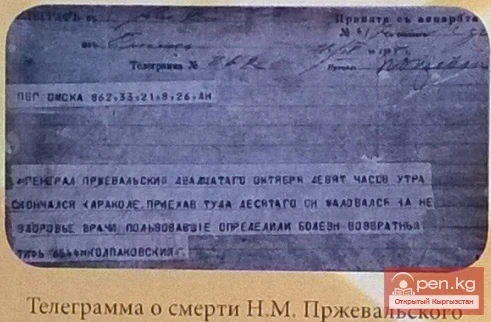
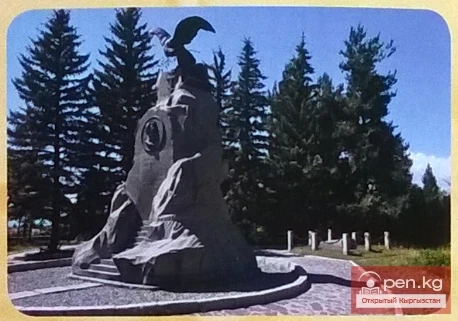
The history of the library is inextricably linked to the development of the city. In 1888, N.M. Przhevalsky, the famous explorer of Asia, died in Karakol while preparing for another expedition.
In his memory, his friends and students, P.K. Kozlov and V.I. Roborovsky, decided to establish a museum and library.
A monetary transfer of 200 rubles was quickly sent to local historian Y.I. Korolkov to support this idea.
In the accompanying letter, Kozlov and Roborovsky requested to organize a fundraising campaign for the creation of a public library. The city mayor, Nikolai Barsov, also actively supported this initiative.
In 1896, the city assembly decided to allocate 300 rubles annually for the needs of the public library. These funds were directed to the savings bank of the local treasury.
From that moment, active appeals from the public, led by physician Barsov, began for the opening of the library.
It was previously reported that by the decree of the emperor on March 7, 1889, Karakol was renamed Przhevalsk.
As Kaulbars noted, "I am proud that our city bears the name of Przhevalsky — the outstanding explorer of Asia."
In 1874, a primary school was opened in Przhevalsk. By 1879, the number of classes had increased to four. A school called "Maktab" began operating in the Tatar mosque, where the basics of the Quran, history, geography, and mathematics were taught.
In 1890, resettlement of residents from the central provinces of Russia and Ukraine began. By 1897, the population had reached over 8,000 people, and by 1919 — 11,610 people.
Nikolai Mikhailovich Barsov became the first elder of the city, elected in 1894. He made a significant contribution to the city's development, initiating the creation of a drama club and the construction of schools and libraries. In 1895, a park was laid in his honor, now named after A. Pushkin.
Military doctor Barsov was an active participant in the opening of the Przhevalsk City Public Library on May 14, 1902, which he initiated.
On March 19, 1908, the coat of arms of the city of Karakol was approved, which was used for some time as the coat of arms of the Issyk-Kul district.
In 1909, the head of the district was V.A. Ivanov, his assistant was A.I. Belyaev, and the elder of the city became E.S. Lokshakov. Residents were actively engaged in agriculture, fishing, and beekeeping. In that year, 5,200 poods of honey were produced in the city, and trade was developing.
In 1913, the first magazine "Przhevalskiy Selskiy Khozyain" was published. In 1918, 7 schools, a women's gymnasium, an educational institution for men, 4 madrasas, and various associations opened in the city. The city became a center for research on Asia for Russian and foreign scholars.
On May 25, 1918, Soviet power was proclaimed in Przhevalsk.
According to the "Siberian Trade and Industrial Yearbook" for 1913, more than 60 industrial enterprises were operating in Karakol and its surroundings, including:
- Tannery factories
- Soap and candle factories
- Rope and cord production
- Sawmills
- Mills
- Wool washing facilities
- Two factories for the production of artificial waters
Merchants, mainly Tatars, significantly contributed to the development of the city by building trading rows on Karavannaya and Toktogul streets, as well as mosques and other buildings.
Read also:
Library Network of the City of Osh
Libraries of Osh Before the revolution, there was one private library in the city of Osh, which...
Governor's House of 1871, Where the Wealthiest People of Issyk-Kul Gathered
In Karakol, the administrative center of the Issyk-Kul region, one can still see many buildings...
The National Library of Kyrgyzstan and the Scientific and Technical Library of Russia Signed a Cooperation Agreement
The National Library named after Alikula Osmonov and the State Public Scientific and Technical...
Organization of City Libraries in the City of Frunze. Documents No. 90 - No. 91 (1934)
Building of the Krym Hotel, which for a long time was the Frunze Library EXTRACT FROM THE PROTOCOL...
House on Issyk-Kul, Where Wealthy People Lived in the 1900s
On Borobai Bi Street, 43 in Karakol, located in the Issyk-Kul region, stands a house that is over...
By the end of the year, it is planned to increase the electronic library of books in the Kyrgyz language to 500, - Ch. Saadanbekov
The electronic library of books in the Kyrgyz language will soon change its website and format....
Building in the city of Karakol, where the headquarters of the revolutionary troops was located
In Karakol, the administrative center of the Issyk-Kul region, one can find numerous buildings...
The building in Karakol where the journey of Zholdosh Jusaev began — a renowned linguist and university rector
In the Issyk-Kul region, in the city of Karakol, there is an ancient building of the pedagogical...
Chronicle of the City of Karakol
Outstanding People of Karakol The chronicle of the city of Karakol preserves the names of...
For one of the affluent people of Issyk-Kul in the 1900s, a house was built — how it looks today
On J. Abdrakhmanov Street, 99 in Karakol, located in the Issyk-Kul region, there stands a...
Karacol - The Last Harbor of N. M. Przhevalsky
Nikolai Mikhailovich Przhevalsky. The first explorer of the nature of Central Asia. The residents...
NURGASIEV Samybek Bakasovich
NURGASIEV Samybek Bakasovich...
Two Old Cars Crashed in a Traffic Accident: Witness Requests to Install a Traffic Light or Speed Bump at the Intersection Where Accidents Are Frequent
Yesterday, October 29, in the Issyk-Kul region, in the city of Karakol, a traffic accident occurred...
Renaming Karakol to Przhevalsk
City in Honor of N.M. Przhevalsky Starting from 1875, the growth rate of the city significantly...
After the strong earthquake in 1887, a wooden house was built in Karakol, which has survived to this day.
In Karakol, located in the Issyk-Kul region, there stands a building constructed after the...
A New Cultural Center Worth 66 Million Soms Opens in Sulukta
In the Batken region, in the city of Sulyukt, the construction of a new cultural center has been...
Report of the Political Enlightenment of the Kyrgyz Autonomous Region. Document No. 62 (March 1926)
FROM THE REPORT OF THE POLITICAL ENLIGHTENMENT OF THE KYRGYZ AUTONOMOUS REGION ON THE WORK OF...
Commander of the Troops of the Turkestan Military District
Adjutant General of the Russian Army Konstantin Petrovich Kaufman The name of another military...
Centuries-Old Buildings: The Mosque in Karakol Built Without Nails
In the Issyk-Kul region, in the city of Karakol, there is a significant Dungan mosque. The building...
"Bars" Became the Champion of Kyrgyzstan in Football
The "Bars" team from Issyk-Kul became the champion of Kyrgyzstan in football for the 2025...
The Development of Art During the Patriotic War in Frunze
During the war, the capital was the center of scientific thought in the republic, and the science...
"The Hunter's House" in Karakol: The History of the Building Associated with Przhevalsky
In Karakol, the building that currently serves as the Issyk-Kul Regional Center for Children's...
Conducting Children's Book Week. Document No. 183 (April 1950)
In the reading room of the Chernyshovsky Library FROM THE REPORT OF THE CHAIRMAN OF THE CULTURE...
Staff Captain Arrived at Issyk-Kul and Established the First Horse Breeding Farm in Central Asia. Archive Photographs
In Karakol, on Masaliev Street, formerly known as Fuchik, there is a racetrack covering 44...
House with Decorative Carving in Karakol, Belonging to a Member of the Local Intelligentsia
In Karakol, located in the Issyk-Kul region, on Alyshebaeva Street (formerly known as Lenin), there...
A Snow Leopard Encountered in the Mountains of Issyk-Kul
Employees of the Karakol Nature Park, managed by the Presidential Administration, captured a video...
GKNB: The building of the art gallery has been transferred to state ownership
Recently, a building that was previously used as an art gallery was transferred to the Naryn...
Issyk-Kul Regional Musical and Drama Theater named after Djantoshev
The Issyk-Kul Regional Musical and Drama Theater named after K. Jantoshov is currently the only...
Nikolai Mikhailovich PRZHEVALSKY
Nikolai Mikhailovich PRZHEVALSKY (1839—1888) was a Russian scientist and naturalist who explored...
The house of the initiator of the construction of the famous Dungan mosque has been preserved on Issyk-Kul — currently, 10 families live there.
In the Issyk-Kul region, in the city of Karakol, there is a house where Mahadji Ibrahim lived — the...
In 2024, more than 58% of published books will be in Kyrgyz.
In 2024, 1,020 titles of books will be published in Kyrgyzstan, with a total circulation of 1,617...
260 children attend the most unusual kindergarten on Issyk-Kul
In Karakol, located in the Issyk-Kul region, there is a historic building that has turned 120 years...
The new National Bank building has a seismic resistance level of up to 12 points, - Deputy Head Attokurov
On October 28, a ceremonial opening of the new building of the National Bank of the Kyrgyz Republic...
House in Karakol, where at one time animals were rescued and the army was supplied, and at another investigations were conducted
The building located at 110 H. Karasaev Street in Karakol, Issyk-Kul Region, has been recognized as...
A Village in Jeti-Oguz Named After a Hero of the Soviet Union
In the Jeti-Oguz district of the Issyk-Kul region, there is the village of Konkino, as reported by...
Reports of the Chief of the Pishpek District. Documents No. 15 - No. 18 (1891 - 1894)
REPORT OF SURVEYOR DMITRIEV TO THE MILITARY GOVERNOR OF THE SEMIRECHYE REGION ON ALLOCATED PLOTS...
Residents of Tyup District Elect Deputies of the Jogorku Kenesh
In the Tyup district of the Issyk-Kul region, 41 polling stations have opened, where citizens are...
In Karakol, a serial mobile phone thief was detained
In Karakol, a suspect has been detained in connection with 29 cases of theft from a mobile...
Centuries-Old Buildings: A 19th Century Stone House in Karakol — A Monument of Pre-Revolutionary Architecture
In Karakol, located in the Issyk-Kul region, there is a unique stone house built in the late 19th...
Letter to Stalin. Document No. 107 (November 1936)
LETTER FROM THE KIRGHIZ REGIONAL COMMITTEE OF THE VKP (b) AND THE COUNCIL OF PEOPLE'S...
The House of the Russian Abroad named after Solzhenitsyn has turned 30 years old.
Today is a significant date — 30 years ago, the House of Russian Abroad named after A....
Centuries-Old Buildings: The Boyar's House in Karakol, Built Over 120 Years Ago
In Karakol, located in the Issyk-Kul region, there is a building that was erected over a hundred...
Hotel Aliya
Hotel "Aliya", city of Balakchy! General description Located on the shores of the...
Population of Kyrgyzstan as of January 1, 2013
Population of Kyrgyzstan Thanks to the fundamental changes that occurred in Kyrgyzstan after the...