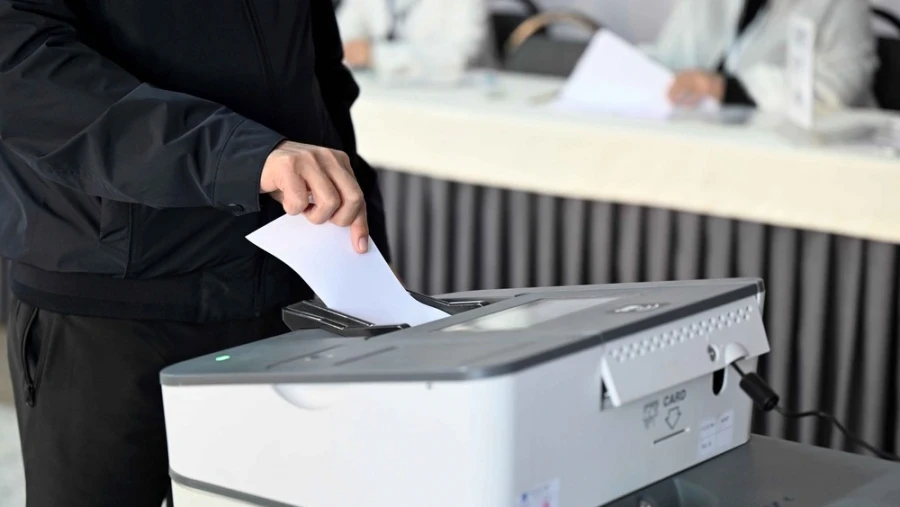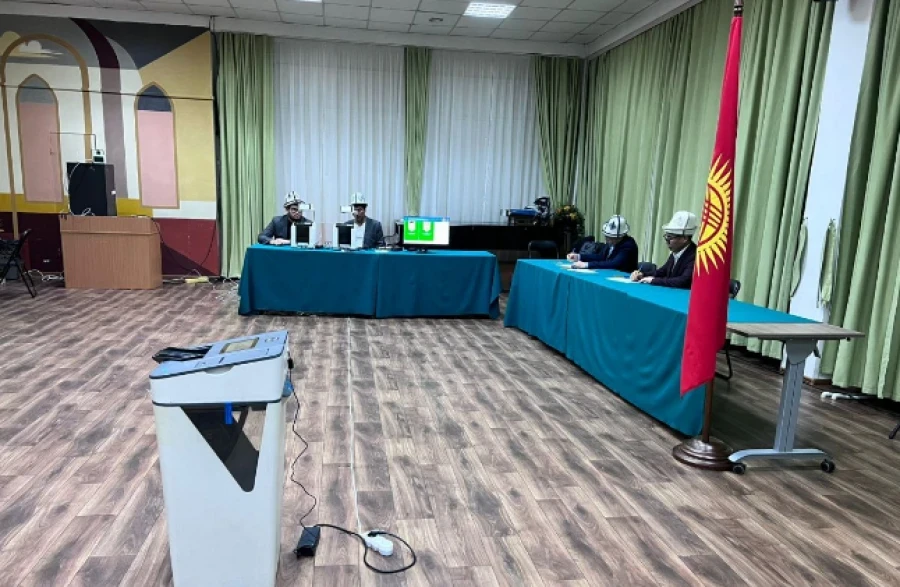
Recently, a documentary film titled "President" was successfully released in Kyrgyzstan, which served as a sort of report by Sadyr Japarov on the work done and plans for the future. Elections to the Jogorku Kenesh also took place, demonstrating the increased political maturity of society. Foreign observers noted significant transformations and impressive growth in all sectors of the country's economy.
At first glance, this was a great moment for optimism and confidence that Kyrgyzstan is on the right path to improving the lives of its citizens, with only a bright future ahead without obstacles.
However, the new year 2026 began unexpectedly, especially against the backdrop of a government that seeks to consider the needs and desires of the people. The year started with a transport collapse that puzzled many.
One of the new solutions was the licensing of taxi drivers. This is undoubtedly an important and necessary measure, although it was postponed from November of last year to February of this year. In Kyrgyzstan, it often happens that certain laws are created and deadlines for their implementation are set, which are then endlessly postponed. Why does this happen? Because before introducing new requirements, officials should consider their practical implementation. Are they feasible, or are they initially unachievable?
Similar problems arose with the licensing of taxi drivers. The changes made in November put many drivers in a difficult position, as they needed to gather documents by December 1 and stand in long lines, which deprived them of the opportunity to work.
Moreover, taxi drivers were required to provide a certificate of no criminal record, which raises questions: what does criminal record have to do with passenger safety?
The situation is reminiscent of the confusion among teachers undergoing medical examinations: why check them for sexually transmitted diseases if they do not have direct contact with students? "You don't understand," teachers explained. "Imagine, you're teaching a class, and suddenly you have a seizure!"
With taxi drivers, the situation is similar: what if the driver accidentally shows a tattoo on their forearm or starts playing chanson music? How could that affect the passengers?
In reality, such rules should be developed with consideration for the actual living conditions. A taxi driver should have a good knowledge of traffic rules, be attentive, have good vision and mental health, and avoid problems with alcohol and drugs, focusing on conscientious work.
Furthermore, the process of obtaining a license should be simple, without long queues and unnecessary expenses, so that it becomes a benefit for both drivers and their passengers.
Nevertheless, another innovation concerns the replacement of old indefinite driver's licenses, which may have indeed been necessary. The president's chief of staff, Kanaybek Tumanbaev, explained that the old licenses are not digitized and are not recognized in neighboring countries, and they have weak security features. He announced that the replacement of old-style licenses would begin in 2026.
However, in practice, things did not go as expected. Drivers who did not receive sufficient information about the changes assumed that they needed to replace their licenses starting January 1. Those who did not manage to do so were left with no chances.
The excitement was fueled by officials who set a time frame: for one month, the replacement of licenses would be free. After that period, payment would be required.
People readily respond to the word "free," not realizing that the cost of replacing a license is actually not that high and is not burdensome for most drivers. It should be remembered that licenses could also be replaced in March or July when the queues are significantly shorter.
Moreover, the "medical certificate" for replacing indefinite licenses ultimately turned out to be unnecessary, but many drivers had already spent a lot of time in queues, risking losing their jobs and experiencing stress.
In summer and autumn, there were concerns about electricity shortages, creating an atmosphere of panic among the population. It was said that there might be no electricity, which also contributed to rising tensions. By mid-January, the situation normalized, but such actions could have led to more serious consequences.
Now similar actions are fueling panic around the replacement of old-style driver's licenses, leading to overcrowding in medical service centers and long lines at the auto registration centers.
A separate topic remains digitalization. As always, it was promised that obtaining licenses through the "Tunduk" app would be easy, but in practice, it turned out to be complicated and inconvenient.
Kanaikei (name changed), a driver with nearly twenty years of experience, shared her experience: "I got my first license in 2007, but it was lost in 2015. The new license issued that same year expired in 2025. Now I was told that the driving certificate would be automatically sent to 'Tunduk.' I went to all the specialists, and the next day the certificate appeared in the app."
However, when she logged into "Tunduk," she found that her lost license from 2007 was digitized, but her current license was missing. She tried to apply for a replacement through the app, but the system reported: "Applicant not found."
As a result, she had to go to the auto registration center, where a long queue awaited her. Specialists suggested that everyone apply for a replacement through "Tunduk," creating a new queue. Many faced the same problems as she did: "Applicant not found," "wrong photo," and other errors.
Operators worked without days off, and each visitor took at least half an hour. The equipment often froze, and the queue moved slowly.
When her turn finally came, it turned out that changes needed to be made to the old application, which took a lot of time. Ultimately, obtaining a new license dragged on for several days, whereas it used to take just a couple of hours.
It is hard to say how many drivers in Kyrgyzstan faced such a stressful situation at the end of December and the beginning of January, but it can be assumed that it is a significant number, considering there are 1.2 million passenger cars in the country.
The question arises: why conduct such mass events inefficiently and unprofessionally? Why should ordinary citizens suffer due to the lack of experience of officials? How can we prevent useful initiatives from turning into public disasters that cause social discontent?
Should the licensing of taxi drivers and the replacement of driver's licenses really be controlled at the highest level? Or is someone deliberately setting up traps?