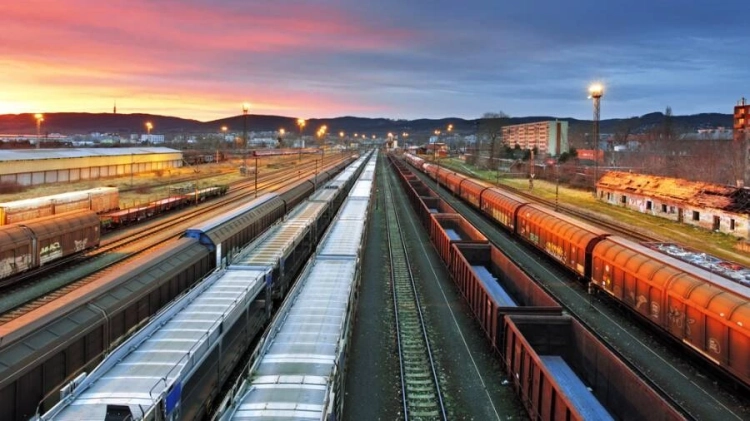
As a result of a long-term study conducted by biologists, data on snake capture incidents over a period of 22 years was collected, which allowed for an explanation of the appearance of rare venomous reptiles in atypical arid regions of the Indian state of Goa. The research showed that the king cobras of the Western Ghats, known as Ophiophagus kaalinga, use railway tracks as a sort of corridor, moving in freight cars from forests to the coast, as reported by some media outlets.
The Western Ghats king cobra is an endemic species that prefers the moist mountain forests of India. These snakes are highly dependent on climatic conditions, requiring cool temperatures, high humidity, and abundant vegetation for survival. It was previously believed that their distribution was limited to mountainous areas, as lowland regions are extremely unfavorable for them. However, over the past two decades, there has been an increase in the number of sightings of these large snakes in port cities and at train stations, which is beyond their usual habitat.
A group of researchers from India and the UK set out to study the reasons why this vulnerable species finds itself in conditions unfavorable for its existence. Unlike most road infrastructure, which typically serves as a barrier to wildlife, here transportation routes have become a link between isolated patches of wilderness and cities. The results of this study were published in the journal Biotropica.
The scientists analyzed archival data from the ARSG animal rescue service, covering the period from 2002 to 2024, and identified 47 documented cases with precise geographic coordinates where king cobras were found. Using the MaxEnt algorithm, a map of potential habitats was created based on climatic parameters (temperature, precipitation) and satellite images of vegetation.
The resulting model clearly delineated the habitat range: king cobras should be located in the interior forests of the state. However, more than 10% of the 47 recorded cases occurred in so-called "red zones," where the chances of survival for the species are extremely low. Statistical analysis confirmed that the conditions in these locations differ significantly from normal ones. All anomalous locations were situated within 200-330 meters of railway tracks.
The researchers were able to reconstruct the mechanism by which the snakes move. In mountainous areas such as Castle Rock, the railway runs through dense forests. Snakes climb into stationary freight trains in search of shelter or food, hunting rodents. As a result, when the train departs, they become trapped and travel a distance of 80 to 120 kilometers, ending up on the coast or in industrial areas.
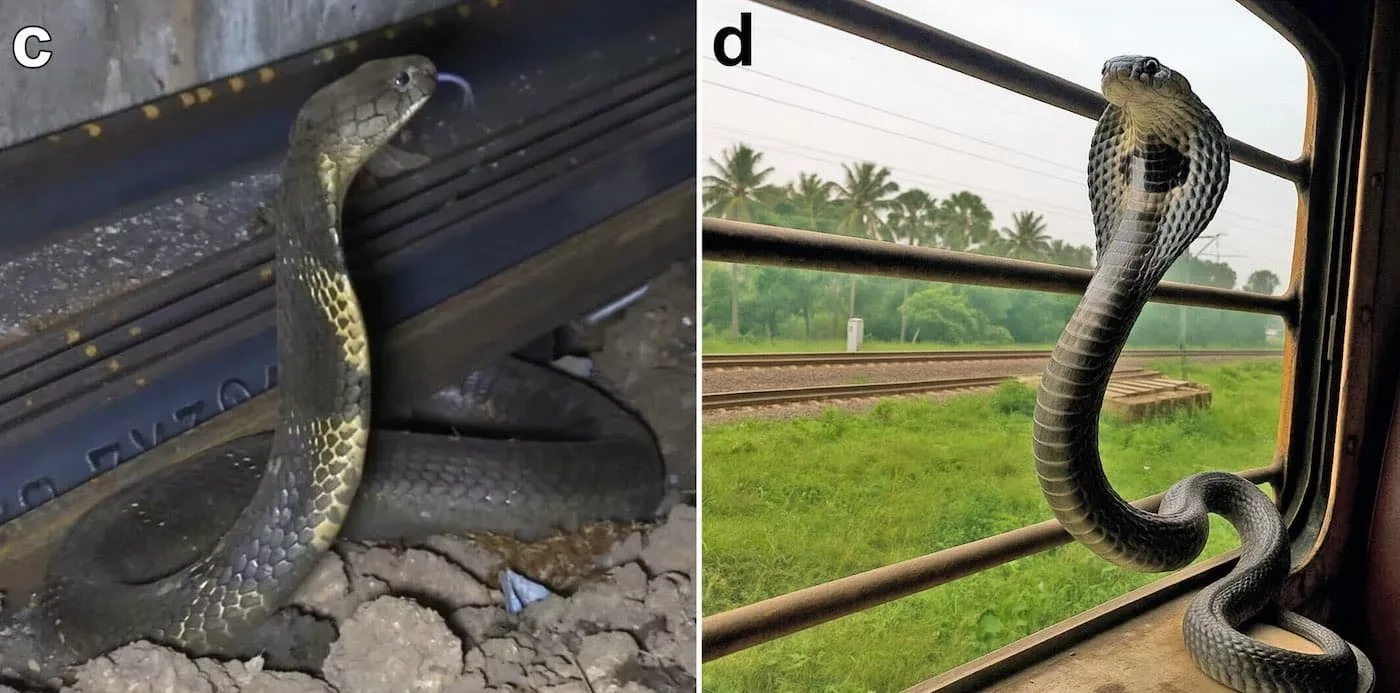
Observations confirmed the hypothesis: one of the "passengers" was found under the tracks at the Chandor station, and in another case, witnesses photographed a cobra of another species — Naja naja — that was right on the window of a passenger car.
This work has indeed documented a new type of interaction between humans and wildlife, termed "passive anthropogenic dispersion" of predators. Although the number of recorded cases is only five, for a secretive and rare species, this represents a significant portion of the population that regularly finds itself in dangerous situations. The scientists emphasize that, so far, the evidence is correlational — direct radio tracking of the snakes has not been conducted, but alternative explanations for the appearance of this species in arid ports are lacking.
This discovery raises serious concerns. First, snakes that find themselves in an unnatural environment are likely to die due to a lack of moisture and food. Second, this poses a danger to humans: a king cobra bite can be fatal, and local hospitals often lack antivenom for this species.
The authors of the study proposed an interesting solution to the problem: not to limit themselves to monitoring but to use genetic analysis of snakes caught in cities to accurately determine their related populations and return them back to the forests. This will help prevent genetic contamination and the death of rare individuals.