- Kyrgyzstan has a huge hydropower potential of 142.5 billion kWh per year, which places us first in Central Asia. However, only 13% has been realized. It's like a person who has gold asking for a loan for bread — this is our energy reality.
- Kubatbek Kalievich, what is behind this paradox?
- It all comes down to tariffs. In 2024, the average electricity price for industry in Kyrgyzstan was 4.35 cents per kWh. In Kazakhstan, it is 7.5 cents, in Russia — 7.75, and in China — up to 8.75 cents. Investors will not invest in new power plants if the sale of electricity is lower than the cost of its production. The math is not in our favor here.
— Nevertheless, low tariffs are beneficial for people. This is a social aspect …
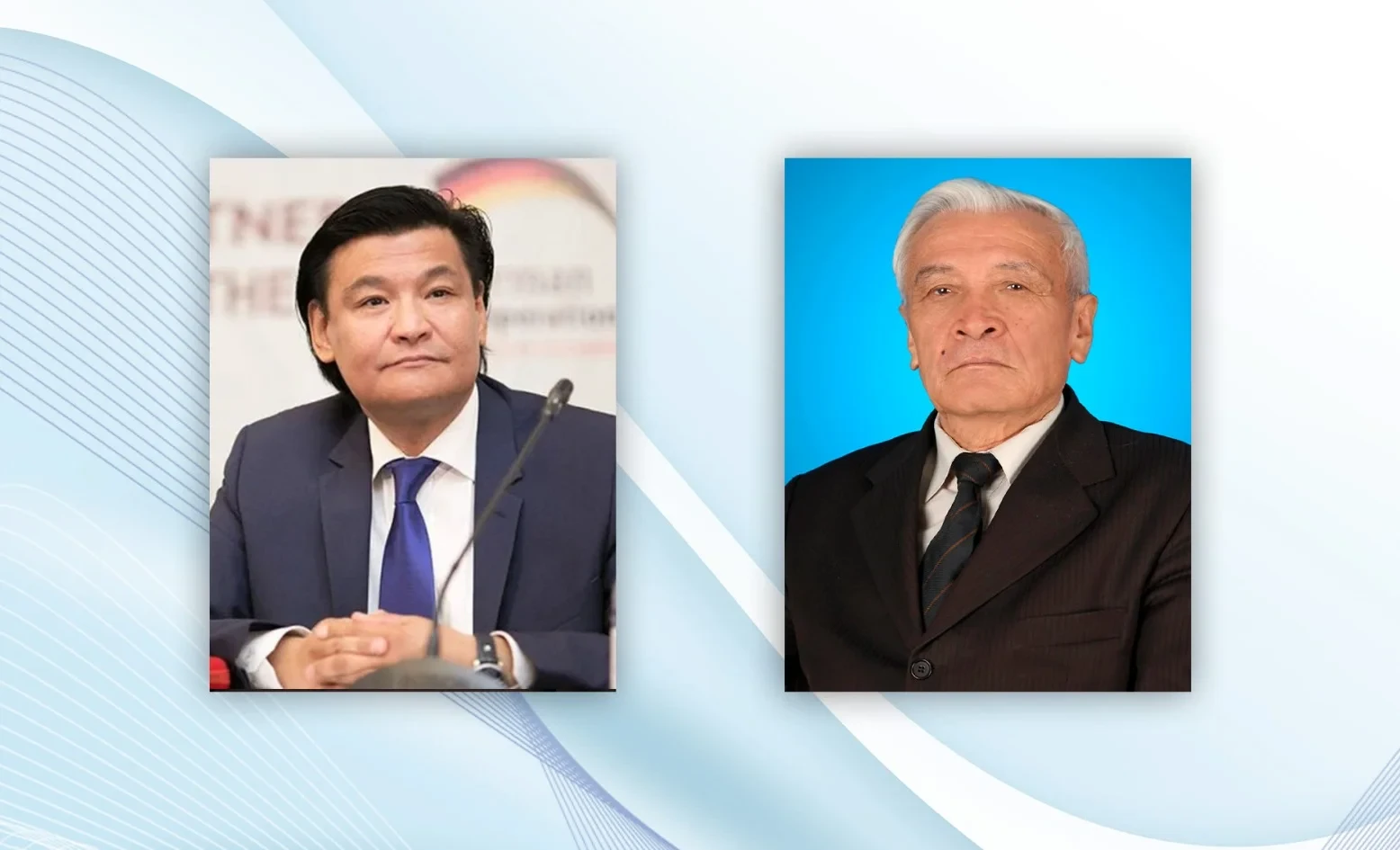
Kubatbek Rahimov: This is just an illusion. Think of a store that sells bread below its cost. People are happy until that store closes. In 2024, the cost of electricity was 2.42 soms per kWh, while the average tariff was only 2.11 soms. This creates hidden losses of about 450 million dollars a year with a consumption of 15 billion kWh. The state covers these losses, which means we, the citizens.
Kalyi Rahimov: I want to add that this is not just about money — it is also about the wear and tear of equipment. The Kurpsai Hydroelectric Power Station, commissioned in 1981, should have been replaced a long time ago. The Toktogul HPP has also been in operation since Soviet times. We continue to use outdated equipment without creating new ones. This is not saving — it is resource depletion.
- You proposed the concept of a "tariff basket." Can you explain what this means in simple terms?
Kubatbek Rahimov: There is a financial mechanism called a currency board, which limits arbitrary money printing by tying the currency to a basket of reserve currencies. We propose a similar approach to tariffs. The "tariff basket" will represent a weighted average of the tariffs of our neighbors: Kazakhstan, Russia, China, Uzbekistan, and Tajikistan. The expected tariff is about 7.6 cents per kWh. Our price should not deviate significantly downward by more than 20-25%, considering our advantages in hydropower.
- How are our tariffs and trade related to neighboring countries?
Kubatbek Rahimov: The connection is direct. If our electricity price is significantly lower, foreign investors will place energy-intensive production in our country, using our resources and taking away profits. For example, a factory with a capacity of 100 MW can save up to 21 million dollars a year by using our tariff instead of Kazakhstan's. Over 20 years, this amounts to 420 million dollars — our natural rent that we pass on to foreign businesses.
Kalyi Rahimov: Technically, low tariffs contribute to irrational consumption — this includes mining, outdated equipment, and poorly insulated houses. As a result, the load on the networks increases, but there is no funding for their development. This is a vicious circle.
— Raising tariffs may hit the poor. How can we avoid social tension?
Kubatbek Rahimov: This is one of the most important questions. Currently, subsidies are not targeted: wealthy families with large houses receive more cheap electricity than the poor in small apartments. This is a loss-making system. The optimal option is to raise tariffs and introduce targeted protection. The first 100-150 kWh per month should be sold at a preferential rate for everyone, and for each unit above that — at market price. In Kyrgyzstan, there is already a tool — the "Үй-булого комок" tariff, which should be developed rather than ignored.
Kalyi Rahimov: Cheap tariffs today will lead to consequences tomorrow. Emergency outages cost the economy much more than raising tariffs: enterprises stop, products spoil, and people are left without heat. True concern for the poor is a reliable energy system, not the illusion of cheap electricity.
— If we have the advantage of cheap hydropower, why can't we maintain low tariffs?
Kalyi Rahimov: This advantage exists only for already built and depreciated stations. Building "Kambar-Ata-1" with a capacity of 1860 MW will require 5-7 billion dollars. No bank will provide such funds if electricity is sold at 4 cents per kWh.
Kubatbek Rahimov: The leveled cost of a new hydropower plant is 8.5-11 cents, a solar station — 5-6.5 cents, and a thermal power station at Kara-Keche — 5.5-7.5 cents. All these figures exceed the current tariff. Without raising tariffs, no project will be profitable. Therefore, projects are either not implemented or dragged out for decades. This is what we are witnessing.
— The documentation for the Upper Naryn Cascade is 80% ready. Why has the project been frozen since 2016?
Kalyi Rahimov: We failed to reach an agreement with the investor. The contract with RusHydro was terminated, and arbitration in The Hague demands compensation of about 37 million dollars. The tender for a new investor did not take place. The project with a capacity of 237.7 MW and an annual production of 942 million kWh is simply stagnant. At the same time, we continue to import billions of kWh from Russia and Kazakhstan.
Kubatbek Rahimov: If the cascade operated under the "basket" tariff, the annual revenue would be about 72 million dollars. Over 20 years, this could bring in 1.4 billion dollars. This is unfulfilled national wealth. A new investor will not come until tariffs ensure profitability. This is not a question of politics — it is a question of math.
— CASA-1000 — export to Afghanistan and Pakistan. How is this related to tariffs?
Kalyi Rahimov: CASA-1000 implies the export of up to 1300 MW of summer surplus hydropower. The project includes a 500 kV Datka–Hodjent line of 477 km, a converter station, and a line to Pakistan of 750 km. The project cost is between 1.16 and 1.2 billion dollars, funded by the World Bank and EBRD. To participate in the project, it is necessary to reconstruct the Kurpsai HPP — increasing its capacity from 800 to 960 MW at a cost of 150 million dollars.
Kubatbek Rahimov: The key point: Pakistan and Afghanistan are ready to pay the market price for our summer electricity. The export tariff under CASA-1000 is higher than our internal subsidized tariff. The market clearly indicates: your electricity is more expensive than what you sell on the domestic market. This is the best proof that current tariffs are undervalued.
— How to raise tariffs without causing social discontent?
Kubatbek Rahimov: We need to act gradually, transparently, and addressably. Gradually — the government already has a plan to raise tariffs by 2035, which must be implemented without freezing in an election year. Transparently — each increase should be accompanied by an explanation of where the money goes. People are more willing to accept price increases when they understand what they are paying for. Addressably — providing a preferential consumption norm for the low-income, rather than cheap electricity for everyone.
Kalyi Rahimov: It is important to reduce losses in the networks from 15% to 11-12% — this will allow us to virtually introduce about 600 MW without building new stations. The second priority is to modernize existing hydropower plants. The Toktogul HPP added 240 MW by replacing units. This is faster and cheaper than new construction.
— How is the tariff issue related to the EAEU?
Kubatbek Rahimov: The EAEU agreement implies the creation of a common electricity market. This is a move towards a unified tariff formation system. The "tariff basket" concept is precisely about this: our tariffs should be comparable to those of our partners. It is impossible to keep tariffs twice lower than Kazakhstan's and still be an equal participant in the common market. It is better to do this consciously and on our terms.
— If in ten years we achieve success, what will Kyrgyzstan's energy sector look like?
Kalyi Rahimov: Kyrgyzstan will become an exporting country. By 2035, electricity consumption will grow to 29.7 billion kWh. If we put "Kambar-Ata" into operation, a 1200 MW thermal power station at Kara-Keche, as well as solar and wind installations, we will close the deficit and move to export. The energy sector could become the second most important export sector after gold. But this is only possible with correct tariffs; otherwise, we will be left with beautiful mountains and dark apartments.
Kubatbek Rahimov: Kyrgyzstan has the potential to become a "green hub" of Central Asia. We have hydropower, solar, and wind resources — everything necessary for a modern energy transition. The "tariff basket" concept, as a legislatively approved principle, will signal to the market: we have a stable and justified energy policy. Come, build, earn, and we will earn too. Cheap electricity is a deception. A fair tariff is the path to real development.