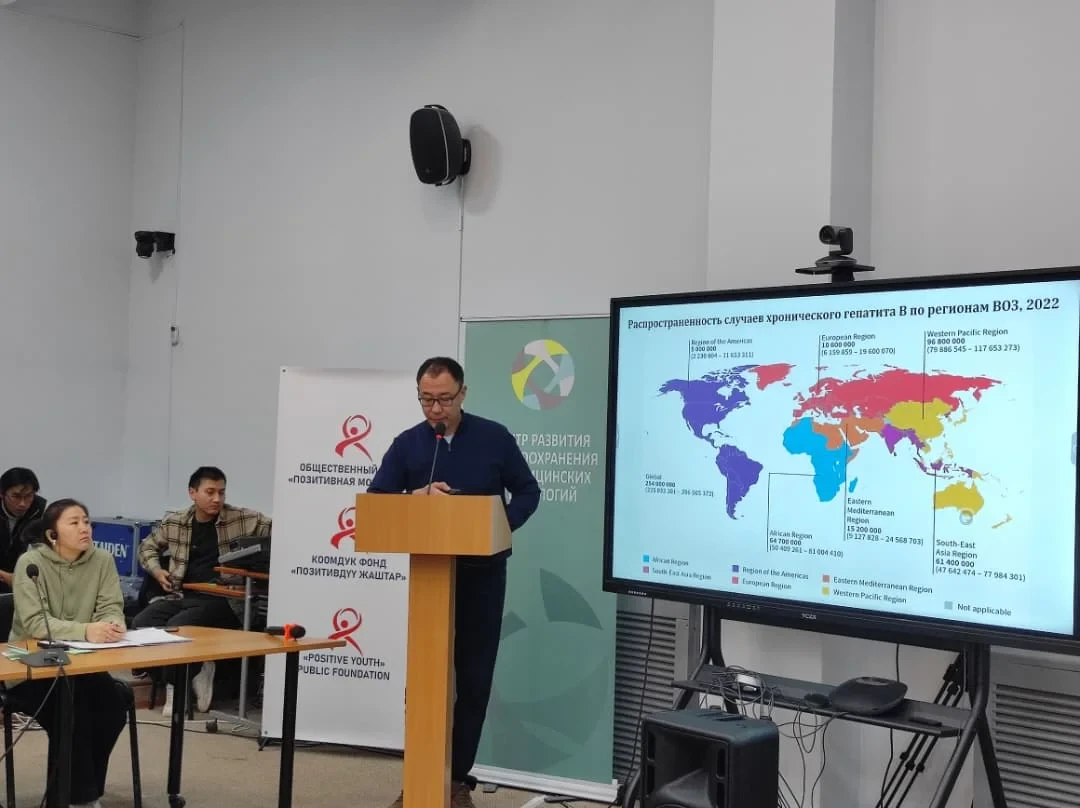
At the Republican Center for Health Promotion and Mass Communication, important information about tuberculosis, its symptoms, and treatment methods was shared.
Tuberculosis is an infectious disease caused by the tuberculosis bacillus, known as Koch's bacillus. Although this disease most commonly affects the lungs, it can also impact other organs. The infection is transmitted through the air, and one can become infected from a person with an active form of the disease who is not undergoing treatment. When a person coughs or sneezes, the infected individual releases bacilli into the air, which can lead to the infection of others. However, with effective treatment, a patient typically stops being a source of infection after just a few weeks of therapy.
Anyone can contract tuberculosis, regardless of age, gender, or social status. It is important to understand the difference between being infected and having the disease itself.
According to the World Health Organization (WHO), approximately 23-25% of the world's population is infected with the tuberculosis bacillus, but only 5-10% of them will develop the disease during their lifetime, especially when the immune system is weakened. Tuberculosis is most often diagnosed in people of working age, highlighting its social significance.
Risk factors include prolonged interaction with a person suffering from an active form of tuberculosis without treatment, especially in poorly ventilated spaces, as well as overcrowding and poor ventilation. The likelihood of contracting the disease also increases with a weakened immune system due to other illnesses, poor nutrition, stress, climate change, smoking, alcohol abuse, and drug use. People working or living in closed institutions, healthcare workers, and individuals with comorbidities such as HIV, diabetes, chronic lung diseases, and cancer are at higher risk.
It is important to note that tuberculosis is not inherited, nor is it transmitted through handshakes or shared items such as dishes and bedding.
The main symptom of tuberculosis is a cough that can last for varying periods. Other symptoms may include general malaise, weakness, elevated temperature (often in the evening up to 37-37.5 °C), night sweats, decreased appetite, and weight loss. In later stages, symptoms may include shortness of breath, chest pain, and coughing up blood.
Experts strongly recommend consulting a healthcare professional at a Family Medicine Center, a group of family doctors, or a rural health post if such symptoms appear. Early examination can help detect the disease at an initial stage or rule it out. Diagnosis of tuberculosis may involve sputum tests, the molecular-genetic method Xpert MTB/RIF, fluorography, or chest X-rays. For children, a skin test called Diaskintest is available.
Treatment for tuberculosis is only possible with the use of anti-tuberculosis medications. The disease is curable if therapy is started in a timely manner and the patient strictly adheres to the medication regimen. In Kyrgyzstan, tuberculosis treatment is provided free of charge.
However, interrupting treatment or irregular medication intake can lead to the development of drug-resistant tuberculosis caused by bacilli that are insensitive to standard medications. This type of tuberculosis is also treatable but requires a longer course and constant medical supervision.
Healthcare workers emphasize the issue of stigma and discrimination, which can lead to people with tuberculosis seeking help too late or refusing treatment. Reducing stigma and discrimination is an important step in the successful fight against tuberculosis and encourages earlier medical consultations. Understanding that a patient undergoing treatment does not pose a danger to others helps families and society provide support without fear.
Doctors also remind us of common myths about the disease.
Tuberculosis can affect not only low-income individuals; the disease can impact anyone. Infection does not always lead to illness, and tuberculosis itself is not a source of shame. The disease is not inherited and cannot be treated with folk remedies; effective treatment is only achieved through the use of anti-tuberculosis medications.
Experts emphasize that knowledge of the symptoms and timely consultation with a doctor can help detect the disease at an early stage and successfully treat it.
Adelya Klycheva