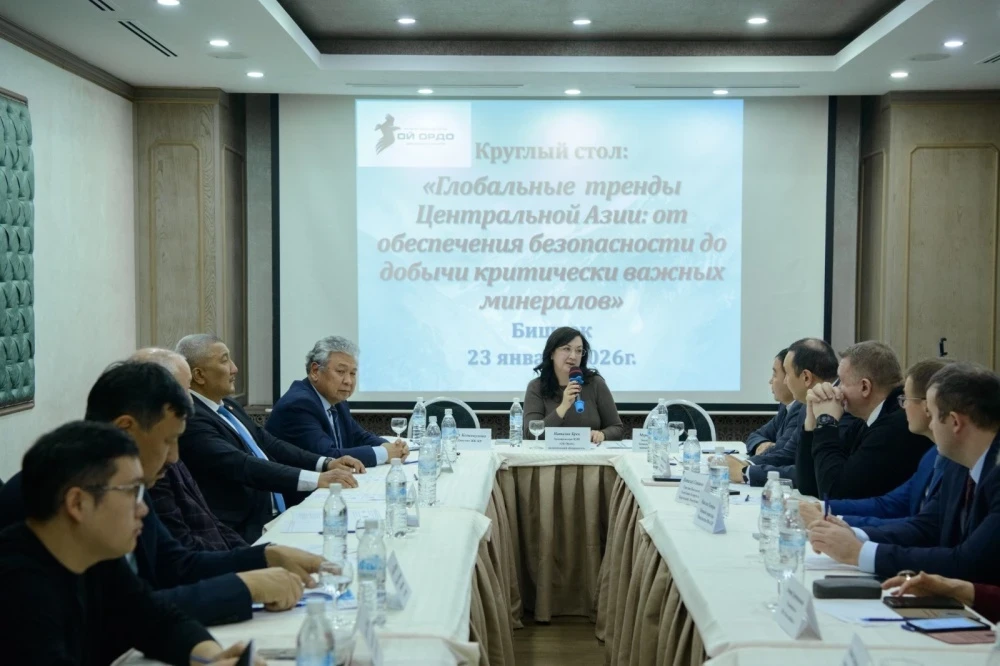
At a briefing in Bishkek, experts shared information about mental health funding, current programs, and support measures for specialists.
Psychiatrist Boris Li from the Family Medicine Center No. 6 noted that in Kyrgyzstan, only 0.1% to 0.4% of the healthcare budget is allocated to mental health. In comparison, in low- and middle-income countries, this figure ranges from 1% to 2%, while in developed countries it reaches 5% or more.
“Is there a question of whether the mental health of an Italian is more important than that of a Kyrgyz? I disagree with this. Citizens of Kyrgyzstan also deserve quality assistance to maintain their mental health,” said Boris Li.
Acting Director of the Republican Center for Psychiatry and Narcology, Zhanibek Ajibekov, reported that a state program for mental health protection is being implemented in the country for the years 2018–2030. He emphasized that the plan has already been developed and work is progressing.
Head of the Primary Healthcare Department of the Ministry of Health, Nurgul Ibraeva, added that mental health has been included in the list of major non-communicable diseases contributing to high morbidity and disability rates among the population.
She noted that low salary levels have long negatively affected the number of psychiatric specialists.
“Salary is a key factor that keeps specialists in place. In this regard, a support program for psychiatrists and psychologists has been developed, and a multidisciplinary team has been introduced with planned incentive payments,” she added.
Erkingul Djusheeva, a representative of the Mandatory Health Insurance Fund, explained that to improve the quality and accessibility of care for patients with mental disorders at the outpatient level, the Ministry of Health has approved an order to implement a funding mechanism for such cases.
According to her, the document includes incentives for primary healthcare workers and specialists in multidisciplinary teams for identifying patients, monitoring them, and ensuring compliance with recommendations.
“An electronic medical record has been created for accounting and monitoring patients, in which psychiatrists and family doctors document the observation and treatment process. For this work, family doctors and nurses receive incentive payments of 6,000 soms. The multidisciplinary team includes a psychiatrist, psychologist, and nurses, who receive 12,000 soms for managing one patient over the course of a year,” she specified.
Zhanibek Ajibekov added that inpatient treatment for one patient costs the state about 50,000 soms, while the costs for multidisciplinary teams amount to around 1,000 soms, which helps reduce the number of hospitalizations.
Currently, such teams operate in 17 regions of the country. Initially, this was a pilot project that is planned to be expanded to all family medicine centers, but the process is slowing down due to a lack of personnel and funding.
Boris Li also noted that mental disorders create a significant economic burden.
“People with mental disorders often remain economically inactive due to temporary or permanent disability, costing the state about 0.4% of GDP. At the same time, according to the World Health Organization, every som invested in mental health returns nine soms in economic benefits,” he concluded.