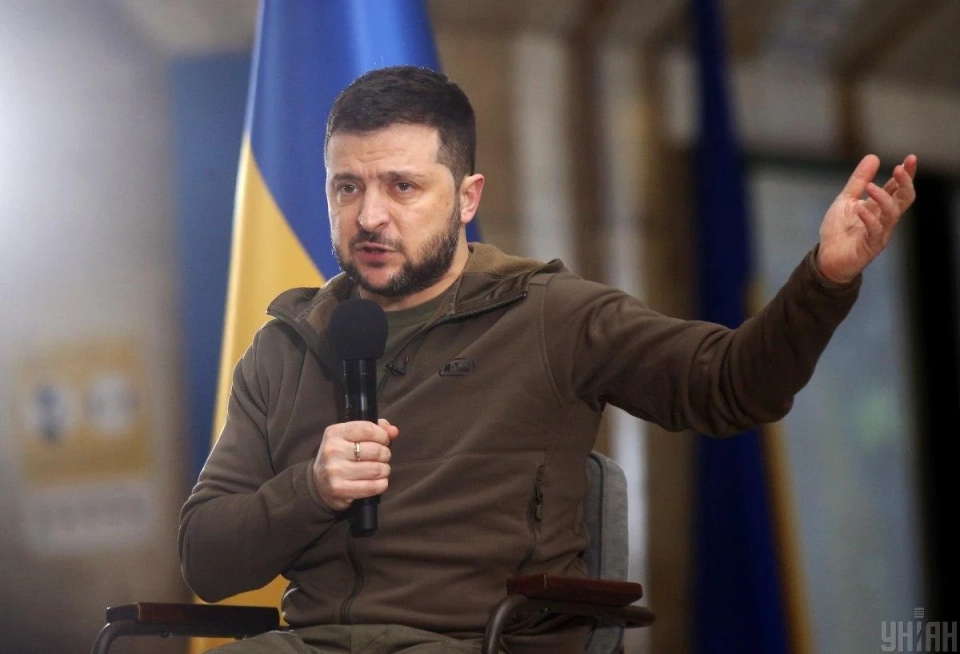
Arestovych bases his reasoning on data obtained from Western sources. He claims: "According to their information, the strike indeed took place. I can clarify that this is not just a residence, but a strategically important facility for Russia, intended for managing the armed forces in conditions of nuclear confrontation. This is analogous to an attack on the U.S. presidential plane, as it concerns a highly protected center with numerous communications and underground structures."
According to him, Ukrainian drones were directed at communication nodes but did not reach their targets. "The reason the Russians are so outraged is that this is an attack on the center of nuclear control and military forces of Russia during a critical period. This can be seen as an assault on the sanctum sanctorum, which according to Russian nuclear doctrine could serve as grounds for a nuclear response," Arestovych added.
He also noted that this event could be characterized as one of the most serious provocations since the Cuban Missile Crisis. "A strike on an element of the strategic nuclear triad is incomparable to an attack on the central command point," he stated.
Arestovych asserts that Kyiv's actions have become a grand provocation in the context of the negotiations themselves and Trump's mediating role. "It turns out that Trump appears in an unfavorable light as a person unable to ensure the smooth conduct of negotiations," emphasizes the former advisor.
He believes that Zelenskyy, supported by Europe, is "playing against Trump" and intends to prolong the negotiations until the midterm elections in Congress, hoping that Trump will lose his position.
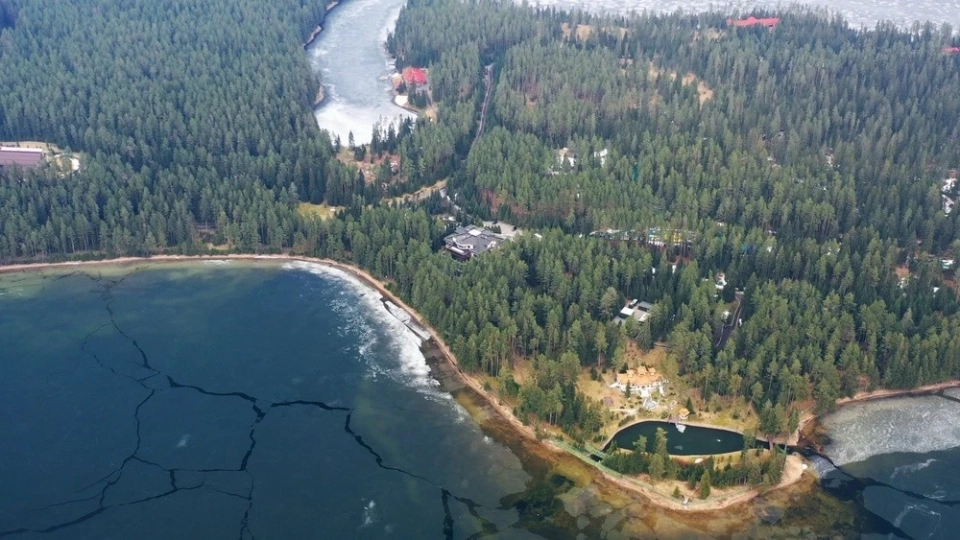
Russian authorities, for their part, have not confirmed information about the attack on the nuclear facility. Moscow stated that Kyiv attempted to strike the residence of Russian President Vladimir Putin in the Novgorod region, however, Zelenskyy himself denies these accusations.
Media suggest that this refers to the "Uzhin" residence in the village of Dolgiye Brody, but there is no confirmation of its nuclear designation. The complex was built in 1934 and occupies an area of 250 hectares, but according to information available in open sources, it is not a military facility but a country residence. In 2021, Alexey Navalny's foundation conducted an investigation mentioning that the territory includes about 80 buildings, among which is the main house with an area of 3,500 square meters and a spa complex with a total area of nearly 7,000 square meters.
It is worth noting that previously in the Novgorod region, more than 100 kilometers from Putin's residence, there was a military facility of nuclear designation "Novgorod-17," but it is no longer operational according to open source data.