The update of the list occurred in accordance with the president's directive, announced in his address to the nation on September 2, 2024.
In this address, the president set the task of scaling successful practices of economic diversification from the city of Sarani to other mono-cities in the country, which was also noted by the ministry.
To accomplish this task, a comprehensive study of the socio-economic condition of mono-cities was conducted, covering 78 key indicators. Among them are the dynamics of industrial production, investment levels, entrepreneurship development, and employment structure.
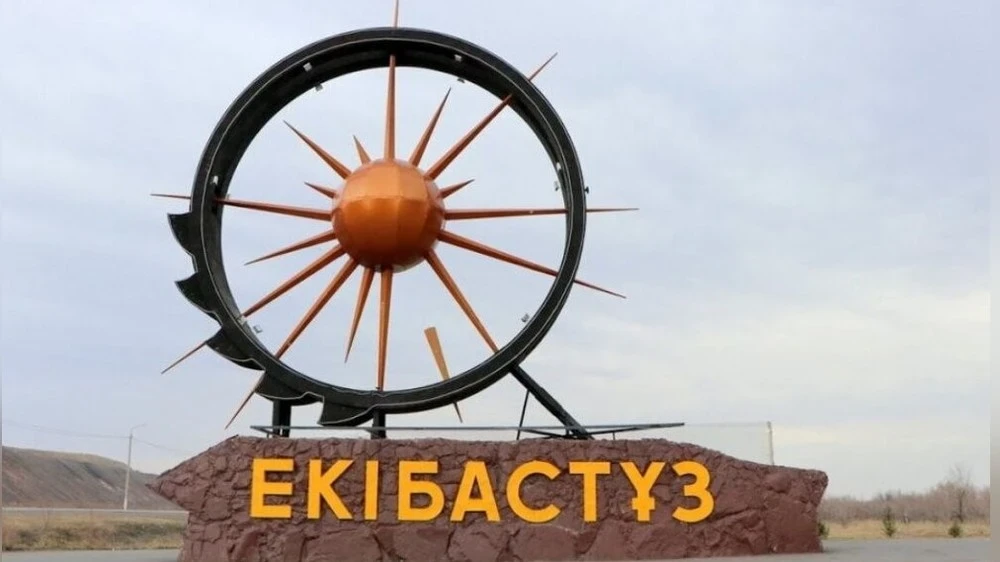
The ministry noted that, based on the analysis, Ekibastuz demonstrates positive changes in diversifying its economy and is beginning to move beyond a mono-profile structure. The city has a more balanced sectoral structure, stable growth in industry, and a high level of investment activity.
According to the ministry, in 2025, the volume of industrial production in Ekibastuz amounted to 1,629.4 billion tenge, which is 28.1% more compared to 2024. Investments in fixed assets increased to 429.8 billion tenge, which is 1.2 times higher than the previous year's figure. Additionally, the population has become employed in various sectors of the economy, indicating a reduction in dependence on the single city-forming enterprise and the loss of signs of mono-functionality.
Considering the above positive economic indicators, the decision was made to exclude Ekibastuz from the list of mono-cities.
Now, the updated list includes 19 mono-cities: Abai, Aksai, Aksu, Altai, Balkhash, Zhanaozen, Zhitikara, Lisakovsk, Karazhal, Kentau, Kulsary, Kurchatov, Ridder, Rudny, Satpayev, Stepnogorsk, Temirtau, Shakhtinsk, and Kromtau.