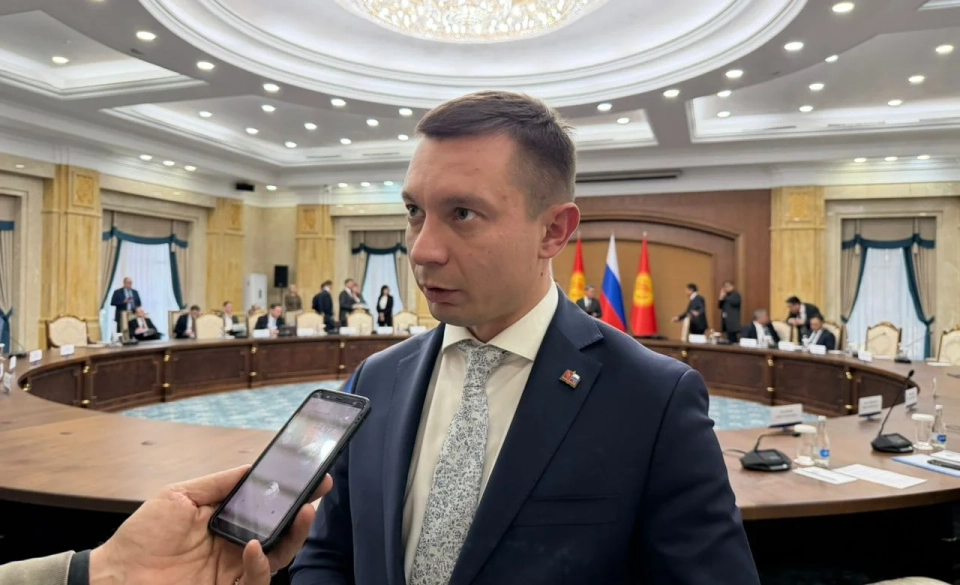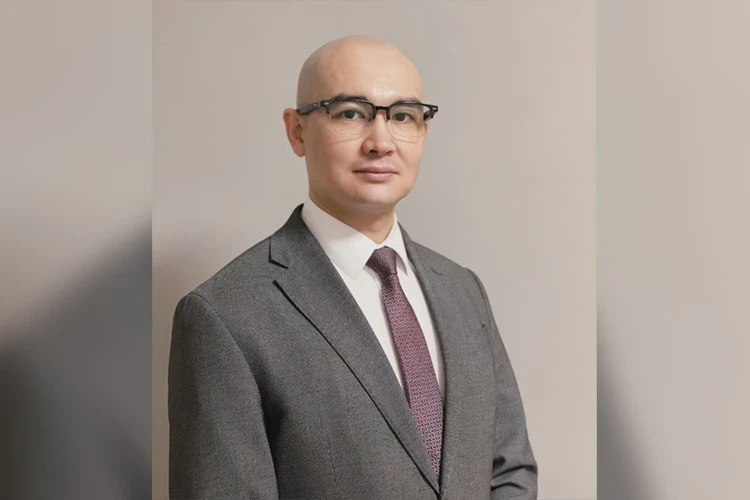
He participated in unique SIRIUS experiments that simulate a flight to Mars and supervised the medical selection of the first astronauts from the UAE and India.
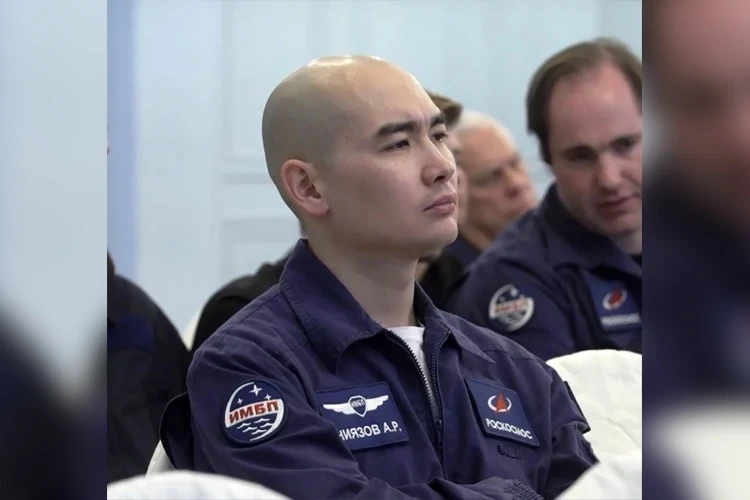
In an interview with 24.kg, Niyazov shared important aspects of preparing for long space flights, discussed his experience, and the connections between the highlands of Kyrgyzstan and astronauts.
Arslan Niyazov
— How did you start your journey in medicine? What significance did your studies at KRSU have for your career?
— During my studies, I worked in a laboratory at the Department of Physiological Disciplines of the Medical Faculty, participated in clubs at various departments, including medical psychology and psychiatry, and also worked a bit in emergency medicine. After graduating from KRSU, I completed my residency in therapy at the Russian Peoples' Friendship University (RUDN).
The knowledge I gained at the medical faculty of KRSU, along with my practical experience in emergency medicine, has been very helpful to me in my career.
— When did you move to Moscow and what prompted you to take that step?
— In 2010, immediately after graduating from KRSU, I was sent to the residency at RUDN.
I studied at the Department of Hospital Therapy at City Clinical Hospital No. 53. Professor Pavel Ogurtsov, the head of the department, unfortunately passed away during COVID-19; he also led the RUDN Liver Study Center. I started my career in this institution as a researcher and then became a physician-therapist-hepatologist, working with patients with liver diseases and participating in international clinical studies.
— When did you become interested in space medicine?
— I started thinking about it in 2014, and in 2015, I began working at the Institute of Medical and Biological Problems of the Russian Academy of Sciences (IMBP) — a key institution for the medical and biological support of space flights. Initially, I worked there part-time, and in 2017, I transitioned to this work full-time.
This can be considered both a "downshifting" and a pursuit of something more significant.
Today, Arslan Niyazov:
— How have you adapted to the specifics of space medicine?
— On one hand, the adaptation has gone quite smoothly, but on the other hand, I continue to adapt even after ten years.
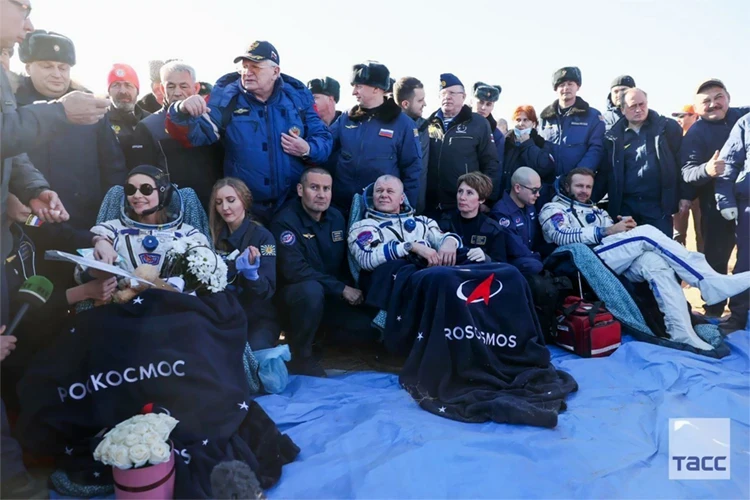
— What were your emotions from your first participation in search and rescue operations?
— My first work in search and rescue operations took place on June 11, 2015 — it was the landing of the crew of the International Space Station (ISS) — Anton Shkaplerov, Samantha Cristoforetti, and Terry Virts on the "Soyuz TMA-15M" spacecraft. It was very exciting.
— Which of the space experiments has been the most significant for you?
— Speaking of ground experiments, "Luna-2015" and "Immersion-2016" were among the first I participated in. However, the most significant for me was the SIRIUS project, where I was the chief physician.
As for experiments in space, it was "Algometry," which studied changes in pain among astronauts during flights aboard the ISS. The experiment has been completed, and we obtained interesting results that we will publish soon.
— What are you currently doing in the preparation of astronauts?
— My work covers several areas: developing methods for providing medical assistance and medical support programs for space missions, conducting research in space medicine, medical support for spacewalks, participation in search and rescue operations, as well as in the medical support of ground experiments and joint projects. I also participated in the medical selection of the first astronauts from the UAE and the first Indian astronaut team.
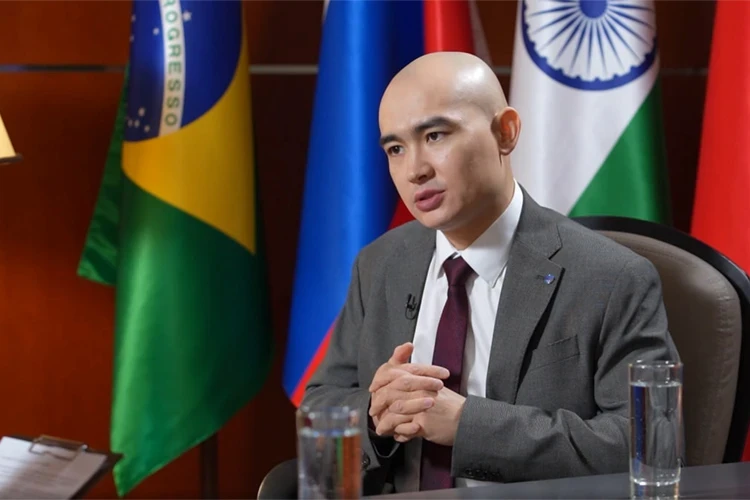
— What health risks for astronauts do you consider the most serious?
— The most serious effects are those of microgravity — primarily, the weakening of the cardiovascular system and muscle atrophy. For long flights, such as to the Moon or Mars, radiation exposure will be critical.
It is important to distinguish between long flights, which can be orbital (Russian astronauts often participate in year-long missions), and long-distance flights, where the lack of a quick evacuation option for the injured becomes a serious problem.
— How do you think astronaut training will change in the next 10-20 years?
— Training will become more complex, with an increase in the number of requirements for education and skills. Prospective research will focus on radiation exposure and psychophysiological aspects.
— Have you had situations where quick decisions affecting the crew's life were necessary?
— Fortunately, such situations have not arisen.
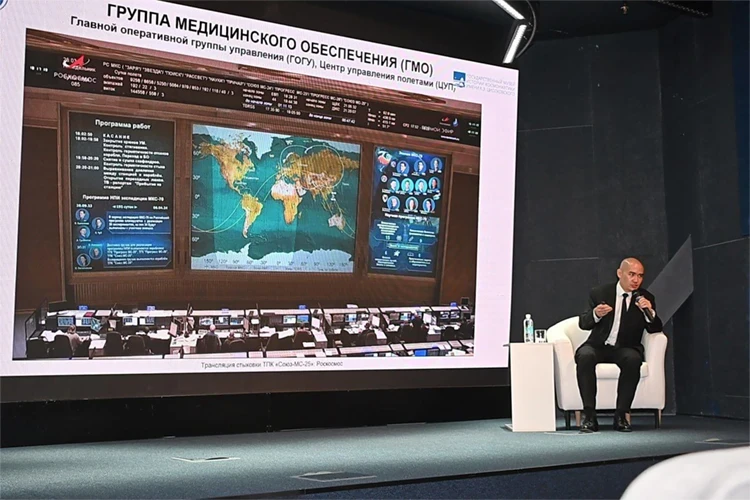
— What role did you play in the SIRIUS project?
— I was the responsible physician, organizing the medical support for the entire project and directly accompanying the crew members. I supervised the duty teams that worked around the clock, ensuring safety and compliance with scientific methodologies.
— How does SIRIUS differ from other similar experiments?
— It was a joint project of IMBP, Roscosmos, and NASA, conducted from 2017 to 2024, consisting of four phases: SIRIUS-17 (17 days), SIRIUS-19 (4 months), SIRIUS-21 (8 months), and SIRIUS-23 (1 year). No other similar study could provide experiments of such duration. Previously, the Mars 500 experiment was conducted with a maximum isolation of 520 days. The hermetic object of SIRIUS maintains an internal isolated environment.
SIRIUS became the first experiment involving both men and women in one crew, during which up to 70 separate studies were conducted, including participation from more than 10 countries.
— What stresses do participants in long-term isolation experience?
— Mainly psychological stresses: prolonged isolation, monotony, limited communication with the outside world, emergency situations, sleep deprivation, and more — all of this can lead to chronic stress.
— What results from the latest SIRIUS missions do you consider key for future lunar programs?
— The results relate to interactions between crew members of different genders and nationalities, the impact on the microbiome, as well as the development of medical support issues.
— Have unforeseen situations occurred during the experiments?
— Emergency situations have occurred, but in most cases, they were successfully resolved.
— Would you like to go to space yourself? What are your chances of that?
— I would like to, but the chances are slim. I participated in astronaut selection in 2018, but I did not pass due to health reasons.
— What advice would you give to the youth of Kyrgyzstan dreaming of science, medicine, or space?
— Don't be afraid to follow your dreams.
— Are there many specialists from Kyrgyzstan in the space field? Do you see potential for increasing their numbers?
— There are not many specialists from Kyrgyzstan in the space field. Notable figures include astronauts Salizhan Sharipov and Sergey Korsakov, who is part of the astronaut corps. Also, Stefania Fedyay, a psychiatrist who graduated from KRSU, works at IMBP and participates in the medical support of space flights.
— Do you plan to implement any projects in Kyrgyzstan in this field?
— It would be interesting to organize something in Kyrgyzstan. During the Soviet era, astronauts underwent training and rehabilitation in high-altitude conditions in the republic.
— What moment in your career has been the most inspiring for you?
— When I saw my name in the credits of the film "The Challenge" (that's a joke).