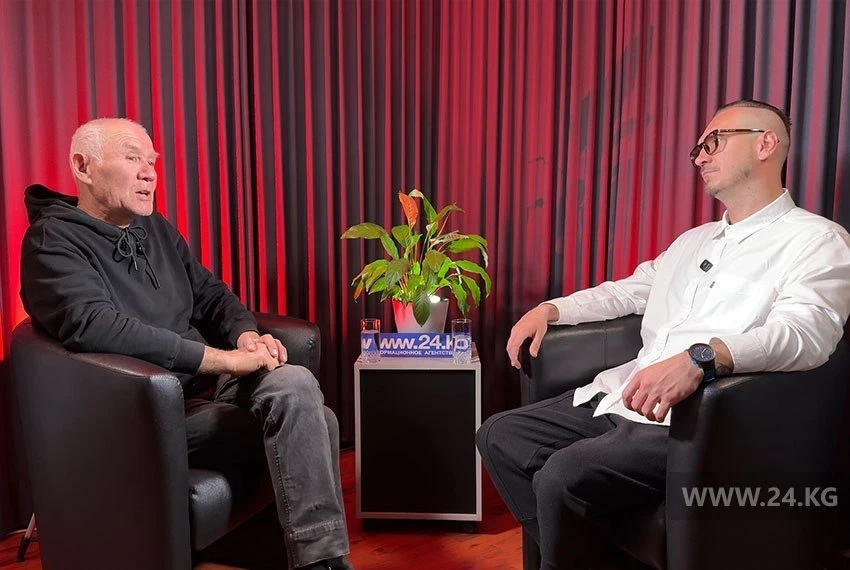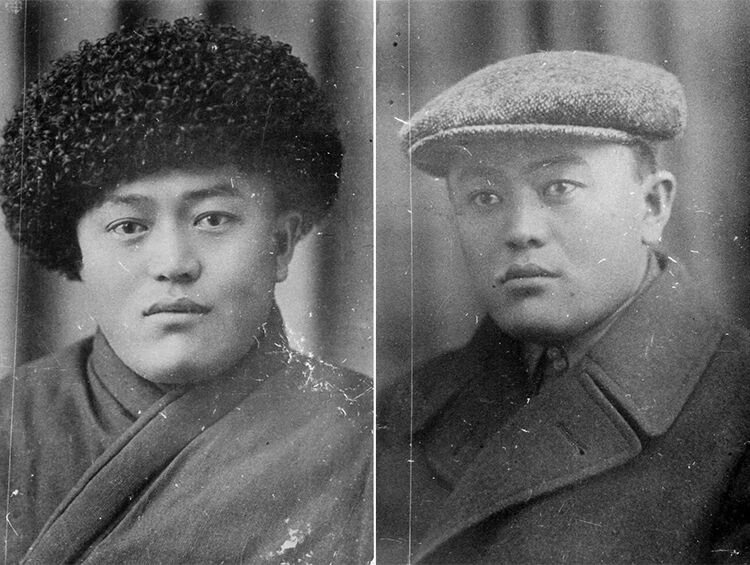
Omurbek Tekebaev shares his unexpected discoveries in the field of Eurasian history.
— Omurbek Chirkeshovich, on your Facebook page you wrote that you have completed the first volume of a large-scale scientific study dedicated to the history of the Eurasian steppe. The authors are you, the ambassador of Kyrgyzstan to Germany, and Kuban Choroев, the chairman of the “Ancient Nomadic Civilization” foundation. Can you briefly tell us about the main idea of your book? What new aspects do you cover that have not been addressed in historical science before?
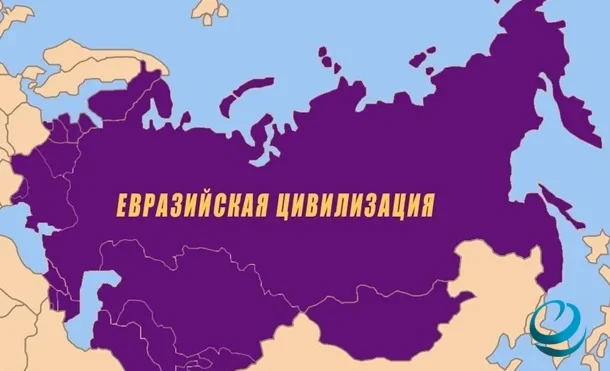
— The main idea is that the Eurasian steppe is not just a periphery, but one of the key centers of history.
Public opinion often associates history with China, Europe, or the Middle East, while the steppe is perceived as something secondary — nomads, barbarians, and so on.
We propose a different view: the steppe is a system that has connected various civilizations for many centuries and developed complex forms of power. It is not a chaos of migrations, but rather a systematic model.
— But you are a politician and diplomat, with an education in physics and law, not in history or archaeology. Why did you decide to study the history of Eurasia?
— This is precisely what sparked my interest. I am a physicist and lawyer, and my co-author is an economist, which, strangely enough, turned out to be our advantage.
We are not limited by the framework of a single scientific school and view the problem as a holistic system. My many years of research in public administration showed that the history of the steppe lacks explanations for its functioning. We collected facts and tried to create a model.
— This is indeed an ambitious task. You are essentially trying to rewrite the role of nomads in world history. Doesn’t that seem like too bold a step?
— Yes, it is ambitious, but science moves not only based on facts but also on hypotheses. We do not claim that everything was exactly like this; we suggest that such an explanation may encompass more facts than existing theories. If our hypothesis withstands criticism, it will become part of science. If not, we have approached the truth through error.
— Many may notice that this resembles journalism more than a scientific approach.
— This reaction is quite expected. It is important to distinguish between language and content.
We intentionally used accessible language, but behind this is serious work involving archaeology, archaeogenetics, spatial studies, and written sources. We are not fantasizing; we are correlating various data.
— But who verified the accuracy of your data from archaeology and genetics?
— We do not replace specialists and do not create new data. We rely on already published studies. Our principle is simple: every conclusion must be supported by several independent sources. If archaeology, genetics, and written sources converge, it is no longer a coincidence.
— You may be accused of idealizing nomads and creating a new myth.
— We do not idealize. The nomadic civilization is not a “heroic legend,” but one of the forms of a complex society, with strengths and weaknesses. We are not creating myths; rather, we are trying to debunk the old myth of “barbarians on the periphery.”
— So, is your research science or just a hypothesis?
— It is a hypothesis. But any science begins with a hypothesis. The scientific approach allows for verification and criticism. Our model is open for discussion, and we are ready for criticism.
— What is your methodology? How does it differ from the classical one?
— Classical methodology starts with the text. We do the opposite: we start with facts. First, we consider archaeological data, then genetics, space, and only then written sources. This is important, as in the period under study, there were either no texts or they did not reflect the reality of the steppe.
— What conclusions have you reached?
— First, the steppe is a center, not a periphery. Second, its history is not chaos, but an institutional continuum, meaning a reproducing system. Third, steppe empires arise systematically when three factors combine: environment, institutions, and resources such as horses, metal, and dynasty.
— You also touch upon the issue of language. This is quite a sensitive topic.
— Yes, and we approach this very cautiously. We start not with words, but with human interactions. If people communicate for a long time, they develop a common language. Hence arises the hypothesis of a deeper linguistic continuity in the steppe than is usually assumed.
— How can this affect Kyrgyzstan? Is this already ideology?
— No, this is not ideology. It is more related to self-understanding. If you perceive yourself as a periphery, that’s how you live. If you understand that you are part of a larger historical process, it changes your perception.
It is important that we are not proposing an ideology, but providing material for reflection.
— In conclusion, what uncomfortable question would you ask yourself at the end of our conversation?
— A very simple one: does our model really explain more than the existing ones? If so, it will develop. If not, it needs to be revised. That is the essence of science. We do not seek to rewrite history, but to understand why it was written this way and what has gone unnoticed in it.