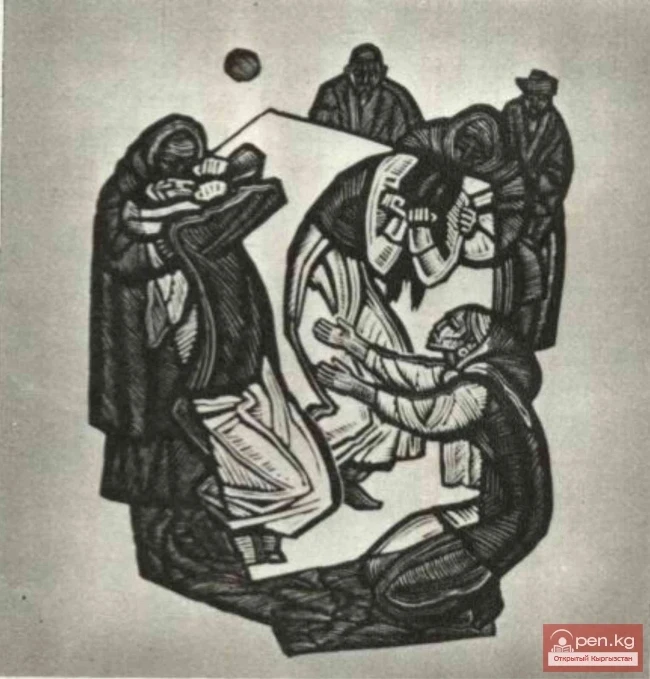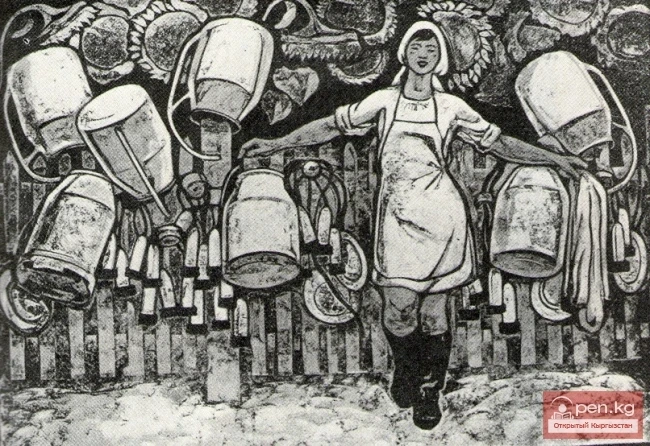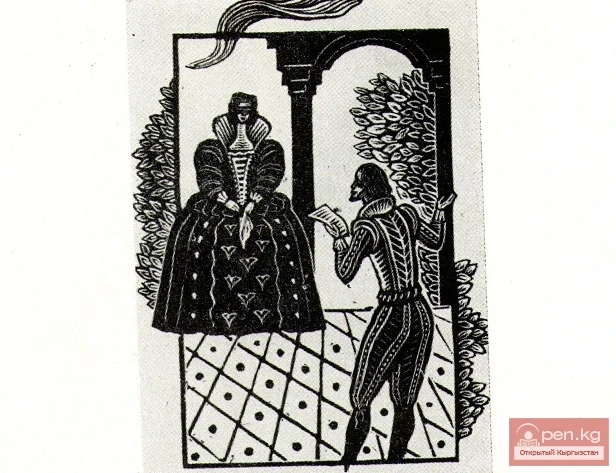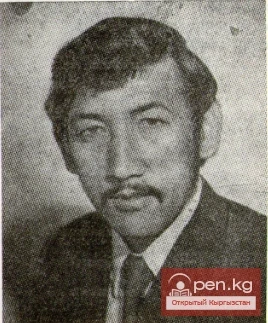
The talent of Evgeny Gennadievich Kuzovkin is most fully revealed in black-and-white linocut. Even his early works from the 1960s captivated with their poetic vision, decorative elegance, and originality of artistic style” (A. Moldokhmatova). The lyrical line of the artist's creativity continues in the engravings “Noon” (1967), “Rainbow” (1968), “Red Horsemen” (1968).
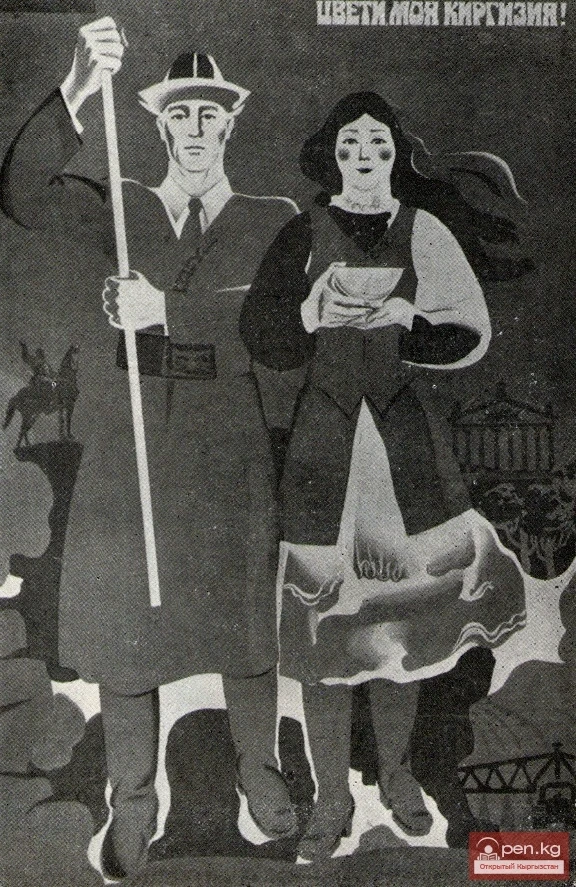
In his further development, Kuzovkin maintained an interest in socially significant themes, evolving stylistically, influenced by the engravings of I. Golitsyn and G. Zakharov, while also embracing tendencies of decorative art.
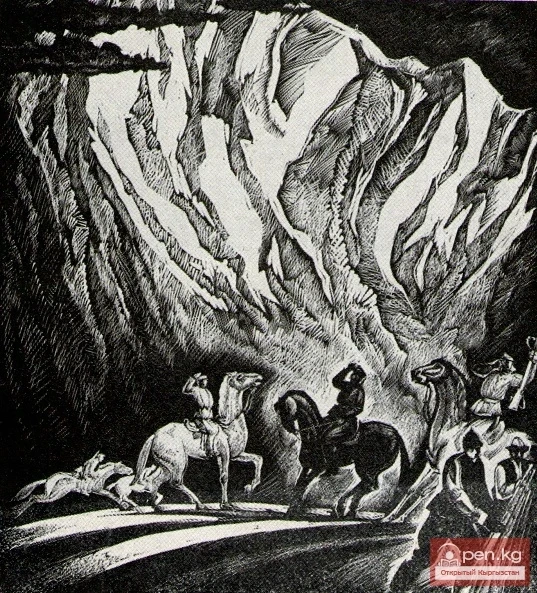
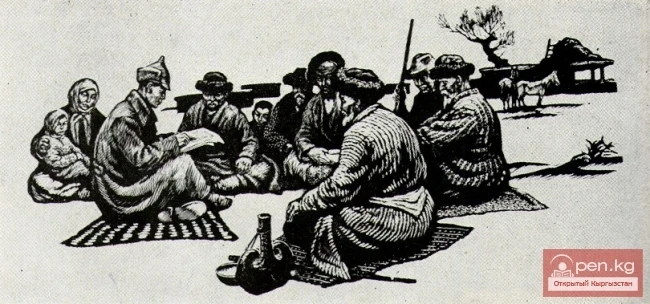
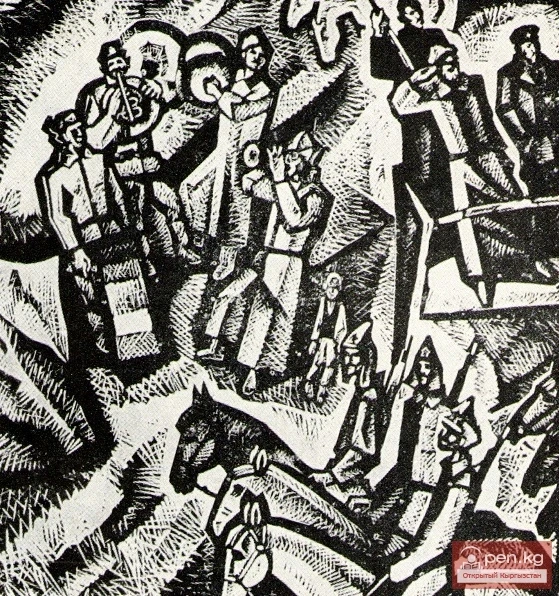
The events of the revolutionary years and the establishment of Soviet power in Kyrgyzstan are dedicated to various engravings that differ in their imagery and formal structure but are close in their ideological and emotional content, such as “Anxiety” (1968), “Sorrow” (1968), “Red Horsemen” (1968), “The First Squad” (1969). Even within these works created in close temporal proximity, the evolution of the artist's creative search is noticeable. The engraving “Red Horsemen” is filled with a bright folkloric and lyrical mood. It is crafted with light, flowing strokes and flexible, melodic lines. Like a dream, like a resurrection of memories from past years, elegant Budyonny horsemen glide across the horizon, greeting a young boy with gentle gestures. A different image and created with different means is found in the engraving “The First Squad.” Here, the graphic form is denser, harsher, and more realistically expressive. The solemnity of the composition, the character of the weighty drawing, and the rhythmic cadence of the figures of the red volunteers and their fellow villagers express the pathos of revolutionary times, the mobilization of human will during great social changes. The theme of the struggle during the revolutionary and early post-revolutionary years is revisited by the artist in the triptychs “Red Starred” (“The Commissioners Lie Down,” “To the First Revolutionary,” drawing 192, “Burned by Fire,” 1977) and the 1930s (“Production Brigade,” “Anxious Youth. Dedication to Komsomol Members,” “Bread Has Arrived,” 1984).
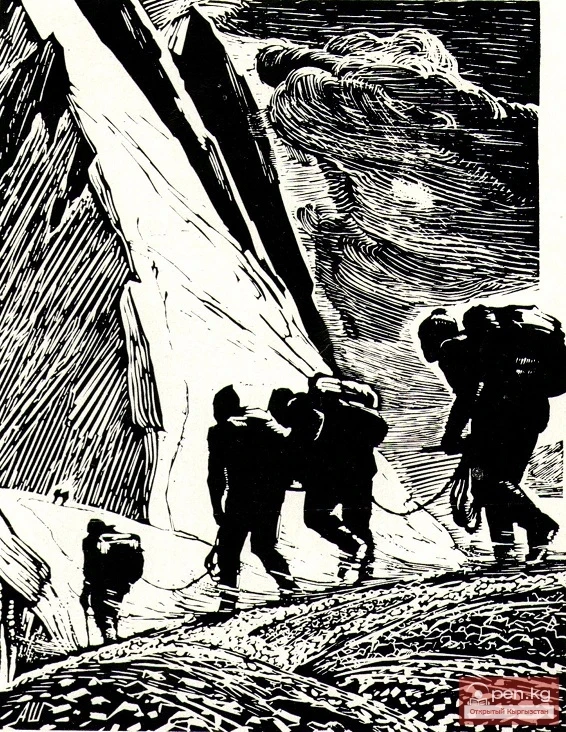
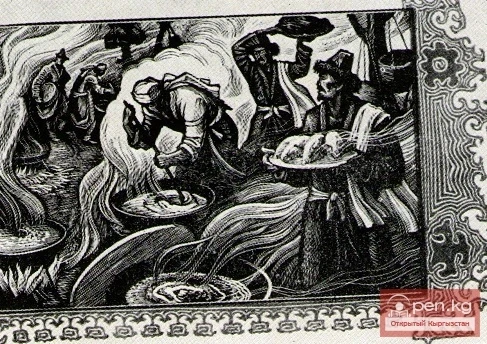
The series of five sheets “Issyk-Kul and Its People” is interesting for its unique compositional direction and “hard” integrity of graphic form. Here, the engraver's mastery is evident, showcasing his sense of unity and cohesion of all elements as if viewed from a bird's-eye perspective, along with an appreciation for the decorative properties of the material. The image is distinctly carved. The strength of the chisel's pressure, the traces of the relief touches on the board, and the resilient, concise drawing are palpable.
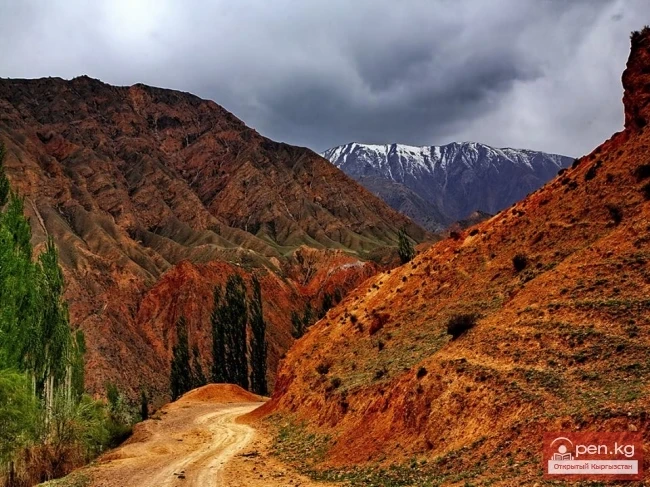
The theme of the Motherland, the formation and development of a person in unity with nature and folk life resonates uniquely in the series of engravings on cardboard “Breath of the Earth” (1972). This represents both an exploration of new techniques and a new approach to mastering Kyrgyz material, as well as an artistic understanding of the epic environment of the mountainous region, its sunlight, and color richness. The complex color palette of flowing pale golden, greenish-blue, brown, and lilac hues gives the engravings a “fresco-like” quality, creating an actively engaging space on the sheets.
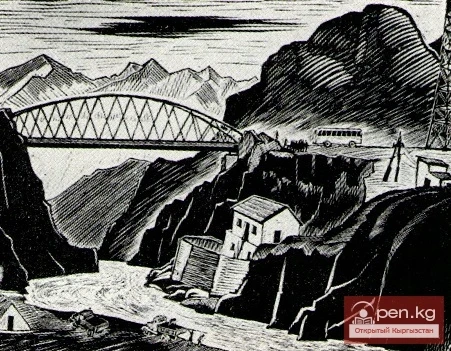
The theme of the construction of the Toktogul Hydroelectric Power Station has firmly entered Kuzovkin's work, developing over the last decade. It is embodied in the series “Builders of Kara-Kul” (“Rainbow at the Entrance Portal,” “Construction of Kara-Kul,” “Warm Evening,” “Spring is Coming,” 1973), “Toktogul Residents” (“The Flow of Time,” “Voice of Naryn,” “Cranes are Flying,” “In the Kingdom of Neptune,” 1974); the triptych “Toktogul Hydroelectric Power Station is Being Built” (“Installers,” “Excavation,” “At the Entrance Portal,” 1975), and the triptych “Toktogul Hydroelectric Power Station” (“The Flow of Time,” “Cranes' Wedge,” “Morning,” 1981). Here, various stages of construction are widely depicted, conveying the artist's admiration for the sublime beauty of the mountain nature, the intense labor of the builders, and the grandeur of human creation.
Kuzovkin has repeatedly explored themes related to the events of the Great Patriotic War in his engravings, uniquely revealing its anti-humanistic essence (“Apples of 41,” 1975), paying tribute to the heroes who fell in battles for the independence of the homeland (diptych “Heroic Deed.” Dedicated to the Hero of the Soviet Union D. Shopokov, 1981; “Heroic Deed” and “To the Defenders of Moscow”).
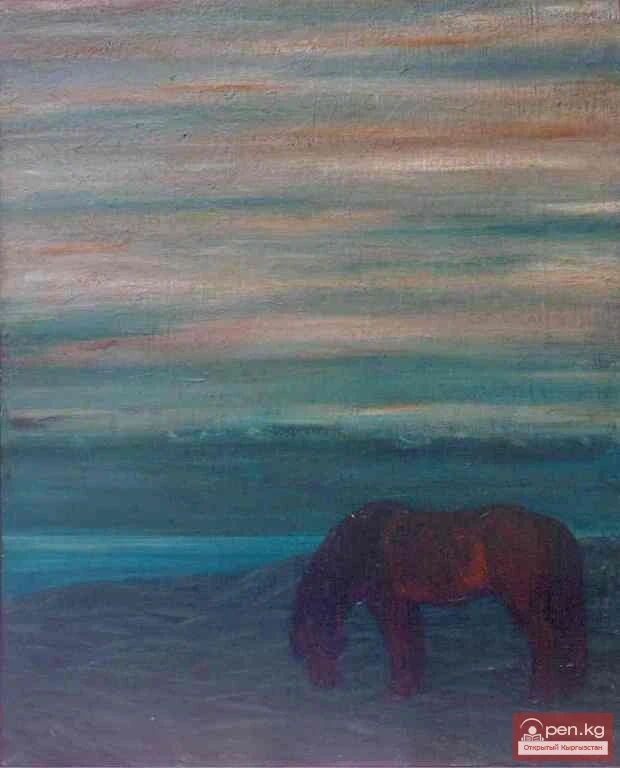
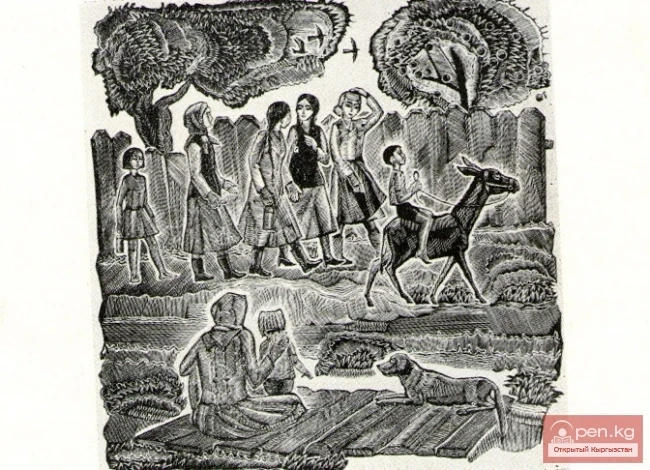
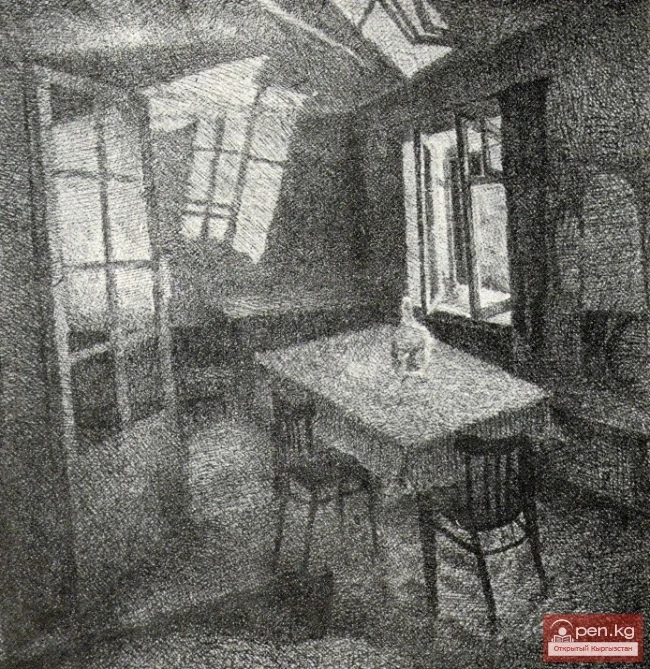
His numerous genre and landscape prints, marked by a heightened interest in the problems of graphic form, are diverse in thematic aspects and shades of emotional experiences, inspired by everyday life, childhood memories, music, and Kyrgyz nature. Among them are the triptych “Song of the Foothills” (1968), the engraving “Arena” (1970), the triptych “Jockeys. A Day at the Racetrack” (1970), the series of triptychs “Preludes of Autumn” (1976), “In Weekdays and Holidays” (1977), “Barefoot Childhood” (1979), “Spring Motifs” (1979), the cycle “Winter Preludes” (1980), and the series of woodcuts “People of the Mountain Region. The Golden Fleece” (1980). They provide a broad gradation of the artist's thematic interests, his poetic associations, and his search for expressiveness in graphic language.