To resume their activities, enterprises have begun transitioning to a "white" business model with full documentation. Currently, producers are accepting these conditions and actively striving for legalization. However, the realization that dependence on a single market is a strategic mistake has come to everyone.
Dependence on a Single Market — A Key Mistake
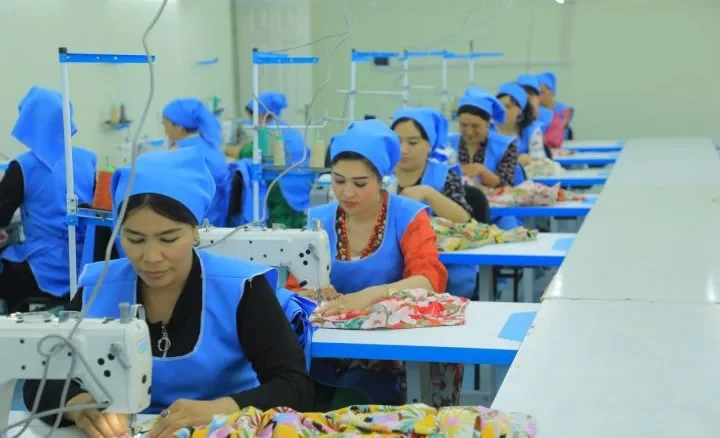
Dilaramkan Duyshbayeva, head of the Association of Tailors of Kyrgyzstan, notes that for many years the sewing industry successfully collaborated with Russian partners, but the current difficulties at the border are forcing them to seek new opportunities. "As an association, we are exploring alternative markets while simultaneously addressing issues at the border with Russia," she says.According to her, the need for diversification was evident earlier, but the current situation has made this issue particularly urgent. People continue to work despite the closure of workshops. A recent forum in Singapore highlighted the importance of diversification, where successful companies operate with multiple international certifications. "Their approach, combining environmental aspects and material safety, is exactly the transparent and competitive model we aspire to. Meanwhile, we are still focusing on obtaining just one certificate," Duyshbayeva shares.
Examples of successful entrepreneurs show that alternative paths are possible. Some Kyrgyz entrepreneurs are already working with Poland, sourcing raw materials in Central Asia, sewing in Ukraine, and selling there as well.
"There are also clients from Latvia who buy goods at 'Dordoi' and deliver them to Europe via Moscow. These successful examples demonstrate that it is worth exploring and adapting various options," she concludes.
Eastern Vector: Interest in Arab Countries
One of the most promising directions for the sewing industry is the Arab countries. Talantbek Ernazarov, an international expert on Halal certification, believes this is an optimal market."We view Arab countries as new avenues for cooperation. Firstly, logistics in this region is more understandable. Secondly, Kyrgyzstan has good relations with Arab states. Finally, our tailors already have experience in creating quality products that are in demand in this region, such as shawls and long dresses," he explains.
Moreover, Ernazarov emphasizes the importance of the developing channel — tourism: "Currently, many tourists from Arab countries are coming to Kyrgyzstan, and we have started to communicate with them more actively, which opens up new commercial opportunities."
The expert highlights the strategic necessity of diversification: "We cannot rely solely on one market. If one closes, we need to have several alternatives in mind. The population of Arab countries is large, and the demand for products is stable, so I consider this market very promising for us."
The crisis related to the Russian direction requires Kyrgyz tailors to rethink their business model. The focus is now shifting to creating a transparent and diverse business. Working with documents, studying international standards, seeking partners in various countries — from Arab states to the USA, as well as mastering digital platforms are becoming key areas of development.
The industry, going through a challenging period, aims not just to recover but to become more resilient, competitive, and integrated into the global economy.