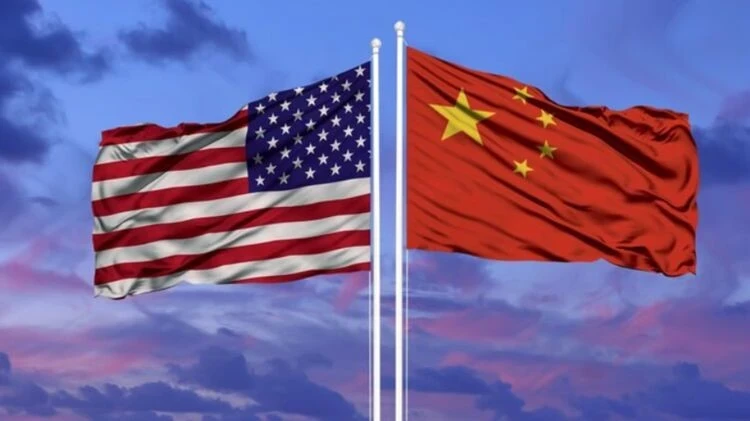
The lunar race of 2026 is taking on new forms as the United States faces technical challenges and funding constraints, while China confidently moves towards its goal of landing taikonauts on the Moon by 2030. This is the first time in decades that U.S. leadership in space is under threat.
U.S. Technical Issues
NASA has announced the postponement of the astronaut landing for the Artemis III mission to mid-2027. Additionally, the Artemis II mission, which will be the first crewed mission to the Moon in half a century, has been delayed from February to April 2026 due to unforeseen issues with the Orion capsule, including anomalies in the heat shield and deficiencies in the life support system.
SpaceX is also facing significant difficulties in developing the lunar module Starship HLS. Key tests for in-space refueling have been moved from 2025 to 2026, and acting NASA administrator Sean Duffy acknowledged that "SpaceX is behind" the planned schedule.
Furthermore, the Trump administration proposed a 24% budget cut for NASA and to cancel the SLS and Orion programs after the completion of Artemis III, creating a conflict between ambitious goals and actual financial capabilities.
China: Steady Progress
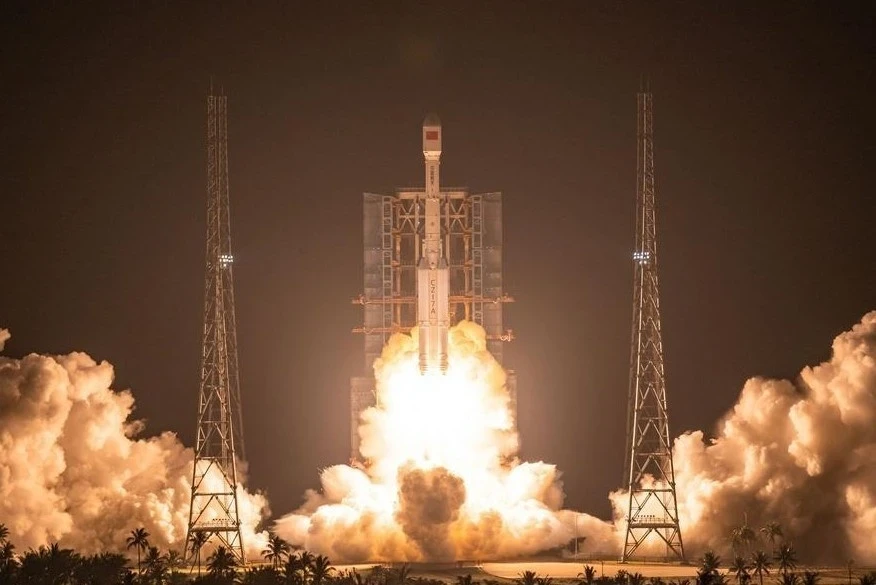
In contrast to the U.S., China's space exploration program demonstrates consistency and stability. The China Manned Space Agency has confirmed its commitment to achieving a landing by 2030. All key components, such as the Long March 10 rocket, the Mengzhou spacecraft, and the Lanyue lunar module, have been successfully developed.
China conducted successful ground tests of the Long March 10 rocket in August 2025, which is capable of delivering 70 tons to low Earth orbit. China's strategy involves using two rockets for separate launches of the crew and the lunar module, providing a more reliable approach compared to the complex in-space refueling scheme of Starship.
China has already demonstrated its capabilities: in 2024, the Chang'e 6 mission successfully delivered the first samples from the far side of the Moon. Robotic tests of the lunar module are scheduled for 2027-2028.
Comparison of Ambitions and Reality
Amid technical difficulties, President Trump signed an executive order titled "Ensuring American Dominance in Space," which set the goal of returning to the Moon by 2028 and a plan to deploy a nuclear reactor on the Moon by 2030. The new head of NASA, Jared Isaacman, characterized this plan as "the most significant space policy since Kennedy."
The administration aims to attract $50 billion in investments in the space sector by 2028. However, experts point to significant technical hurdles— the U.S. still lacks operational nuclear facilities in space, while the USSR had already launched them in the 1970s.
Technological Advantage and Its Drawbacks
Despite this, the U.S. maintains a technological edge in several areas. Space advocate Vitaly Egorov notes: "NASA has the super-heavy SLS rocket, which has undergone flight testing. The Chinese do not have anything like that yet." SpaceX has completed 49 stages of development for Starship HLS and is demonstrating significant progress in reusable technologies.
Nevertheless, the Chinese program offers greater predictability and stability in funding. Former NASA director Michael Griffin criticizes American approaches as "technically unrealistic" due to their excessive complexity. In response, NASA is revising the Artemis III architecture and considering collaboration with Blue Origin as an alternative to SpaceX.
The Future of the Lunar Race
2026 will be a decisive year for both space programs. SpaceX must demonstrate the feasibility of in-space refueling; otherwise, the implementation of Artemis III will be at risk. At the same time, China plans test flights of the Long March 10 and could get ahead of schedule if the tests are successful.
It is most likely that China will be able to land on the Moon in 2029-2030, ahead of the U.S. by one to two years. The U.S. program will find itself in a contradiction between high-profile political statements and actual technical capabilities. Even a successful Artemis II in 2026 does not guarantee that the landing will take place in 2027.
The outcome of the new lunar race will depend not only on technical capabilities but also on political will and funding stability. In this aspect, China demonstrates significant advantages compared to the U.S., which has yet to find a balance between ambitious plans and budgetary constraints.
Analysis from an AI Perspective
The current lunar race is significantly different from the U.S.-USSR rivalry of the 1960s, when space served as an arena for ideological competition. Today, the stakes are much higher: control over lunar resources could determine the energy future of humanity for decades to come. Helium-3, rare earth metals, and water ice are turning the Moon from a symbolic prize into a strategic asset worth trillions of dollars.
Historical analysis reveals an interesting pattern: countries with advanced space programs often fail due to overconfidence and bureaucracy. The U.S. underestimated the capabilities of the Soviet Union in the late 1950s, viewing its early satellites as "propaganda stunts." China's governance model, based on the principle of "one party - one solution," may prove more effective for long-term space projects than the American system, where priorities change every four years. Perhaps the real intrigue lies not in who lands first but in who will create a sustainable lunar infrastructure?
Source: hashtelegraph.com