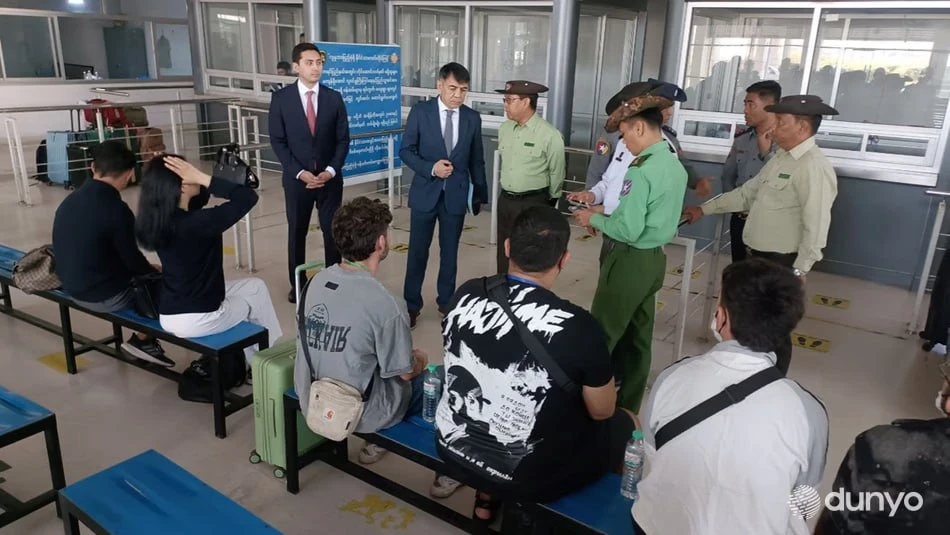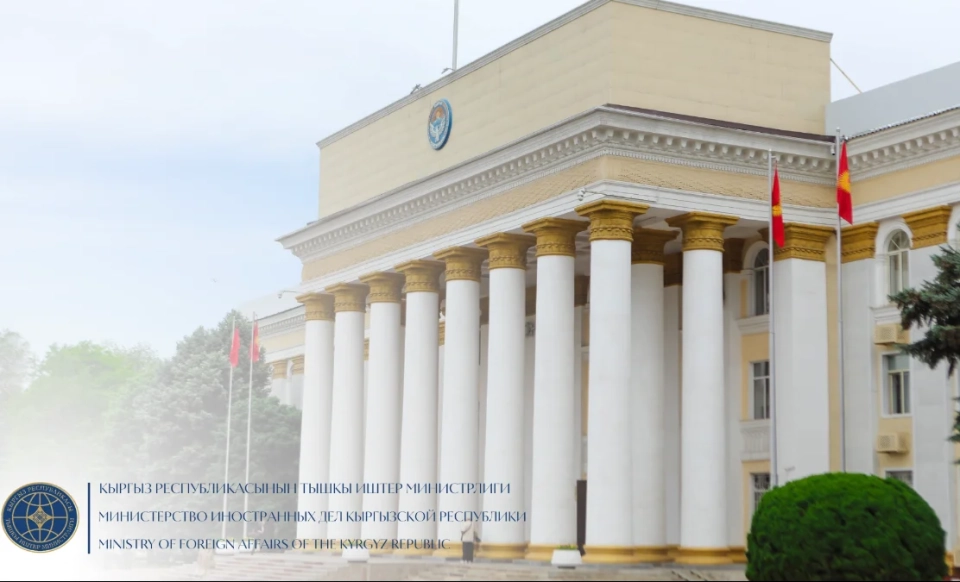
On December 10, 2025, the evacuation of a citizen of the Kyrgyz Republic from Myanmar took place, organized by the Ministry of Foreign Affairs together with the Embassy of Kyrgyzstan in Malaysia and the Honorary Consulate in Thailand.
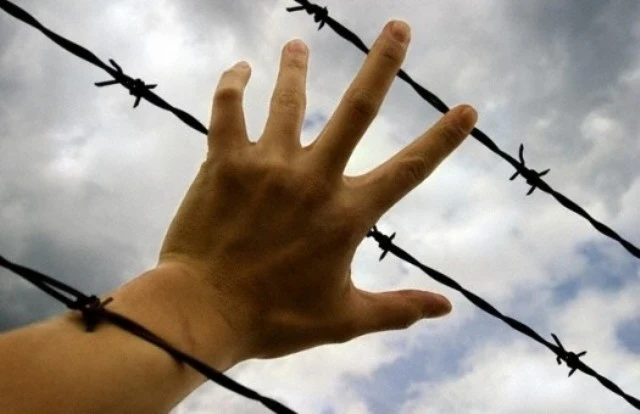
According to available information, the citizen became a victim of a fraudulent scheme related to labor migration and ended up imprisoned in a military camp in Myanmar, having trusted false promises of high-paying employment.
Throughout 2025, the Ministry of Foreign Affairs successfully organized the return of 12 citizens of Kyrgyzstan from Myanmar. In connection with the evacuation, the law enforcement agencies of the country intensified their efforts to curb illegal migration channels and combat fraudulent schemes.
The Ministry of Foreign Affairs of the Kyrgyz Republic expresses gratitude to the competent authorities of Myanmar and Thailand, as well as to the Embassy of Kazakhstan and the Consulate General of Uzbekistan in Bangkok for their assistance in the safe return of the citizen to her homeland.
Considering the increase in cases of Kyrgyz citizens being involved in human trafficking schemes in Southeast Asia, the ministry once again urges compatriots to exercise special caution and vigilance when choosing job offers abroad, especially through unofficial channels.
In case of doubts or questions, it is recommended to immediately contact the diplomatic representations and consular institutions of the Kyrgyz Republic for consultations and support, as stated in the message from the Ministry of Foreign Affairs.
Considering the increase in cases of Kyrgyz citizens being involved in human trafficking schemes in Southeast Asia, the ministry once again urges compatriots to exercise special caution and vigilance when choosing job offers abroad, especially through unofficial channels.
In case of doubts or questions, it is recommended to immediately contact the diplomatic representations and consular institutions of the Kyrgyz Republic for consultations and support, as stated in the message from the Ministry of Foreign Affairs.
It was previously reported that citizens of Kazakhstan, Kyrgyzstan, and Uzbekistan were freed from slavery in Myanmar.
Initially, they sought to find work in Thailand, according to information from Kun.uz.
It is reported that at least some citizens of Uzbekistan responded to advertisements for high-paying vacancies in Thailand and were transported there on free buses. However, upon arrival, they were deceitfully sent to Myanmar, where they became victims of human traffickers.
“The freed individuals told diplomats that they were forced to work in fraudulent call centers. Those who refused to participate in illegal activities were subjected to violence and threats,” notes Kun.uz.
Some of the victims managed to contact the Consulate General of Uzbekistan in Bangkok, during which it became clear that citizens of Kazakhstan and Kyrgyzstan were also being held in Myanmar. Thanks to the joint efforts of the diplomatic missions of Kazakhstan and Uzbekistan with the authorities of Thailand and Myanmar, all the victims were able to return to their homeland.
Myanmar, engulfed in civil war, has become one of the largest centers of digital crime. In recent years, hundreds of thousands of foreigners who responded to enticing offers of high-paying jobs have been kidnapped and forcibly drawn into fraudulent call centers.
These scam complexes are rapidly expanding along the border with Thailand, bringing their organizers billions of dollars annually.
They lure foreigners through social media, offering vacancies in Thai companies in the fields of IT, logistics, hospitality, education, digital marketing, and online sales.
Typically, such advertisements contain inflated salaries and brief job descriptions. Verifying the legitimacy of the company can be difficult.
Job seekers are often provided with tickets to Bangkok, sometimes even obtaining a visa or promising to reimburse its cost upon arrival.
Upon arrival, they are taken to Mae Sot, a city in northwestern Thailand, from where they are smuggled into Myanmar across the Moei River. Fraudulent complexes can be seen from the shore, guarded by antennas that create interference for GPS.
On-site, disoriented individuals have their passports and phones taken away and are given instructions on scam schemes. The most common among them are “pig butchering” and “romantic” scams. The goal is to establish trusting relationships with potential victims and convince them to invest in fictitious cryptocurrency projects. To carry out their schemes, the perpetrators use generative AI technologies and data acquired on the dark web.
According to estimates by UNODC, “pig butchering” schemes in Southeast Asia generate more income than drug trafficking. For example, a single KK Park generates tens of millions of dollars per month.
A September report by the analytical company Chainalysis for 2024 recorded a shift by criminals from Ponzi schemes to “pig butchering.” In the U.S., $4.4 billion of the $5.6 billion in losses from cryptocurrency fraud in 2023 was attributed to this type of scam. Experts established a connection between the largest cryptocurrency wallet associated with this scheme and the KK Park complex.
Cryptocurrencies have become the primary tool for payments and transactions. Some workers specialize in meme coins: they manage branded accounts and operate bots. The minimal investment required to start and the possibility of conducting a rug pull make such schemes ideal for criminal profit.
Other cyberattacks include real estate fraud and online store scams, hacks of financial services, and other lucrative targets.
The target audience for such scam schemes often includes residents of Western countries: those working night shifts of 17-18 hours a day. Each worker has a set profit quota: one former employee was quoted a figure of $5,000 per week, another $10,000 per month.
If the plan is not met or the worker refuses to work, the center managers apply physical punishments, including torture and complete isolation in a dark room without food. Unruly victims may be resold to other scam complexes.
Most centers do not accept ransom; in others, the prices for release vary: KK Park — from $1,500 to $3,000, Apollo — from $4,000 to $6,000. However, even the transfer of this amount does not guarantee freedom.
According to human rights defenders, each complex is managed by a director, most often an ethnic Chinese, but there are also joint operations with Thais. The premises are rented by 30 to 40 different companies with their own hierarchy: bosses, supervisors, and teams of subordinates, totaling from 50 to 250 people.
The victims of such criminal schemes include residents of Southeast Asia (China, Taiwan, Indonesia, and others), Africa (mainly Kenya and Nigeria), and there have been increasing cases of involving citizens from Western and, less frequently, post-Soviet countries.