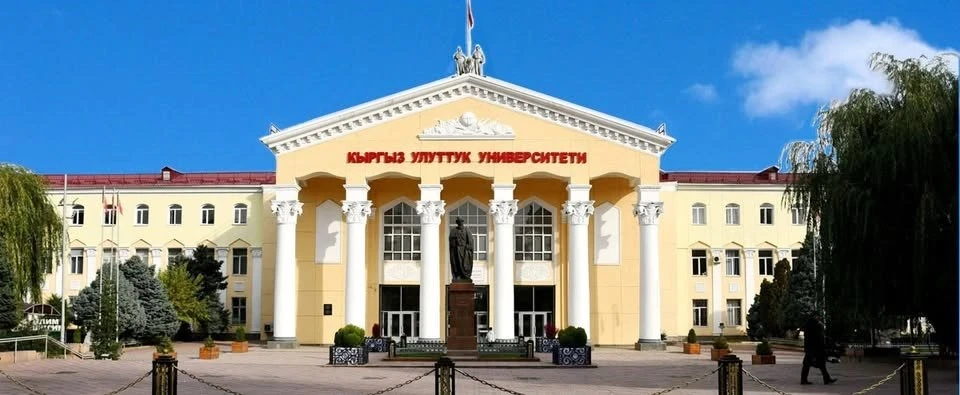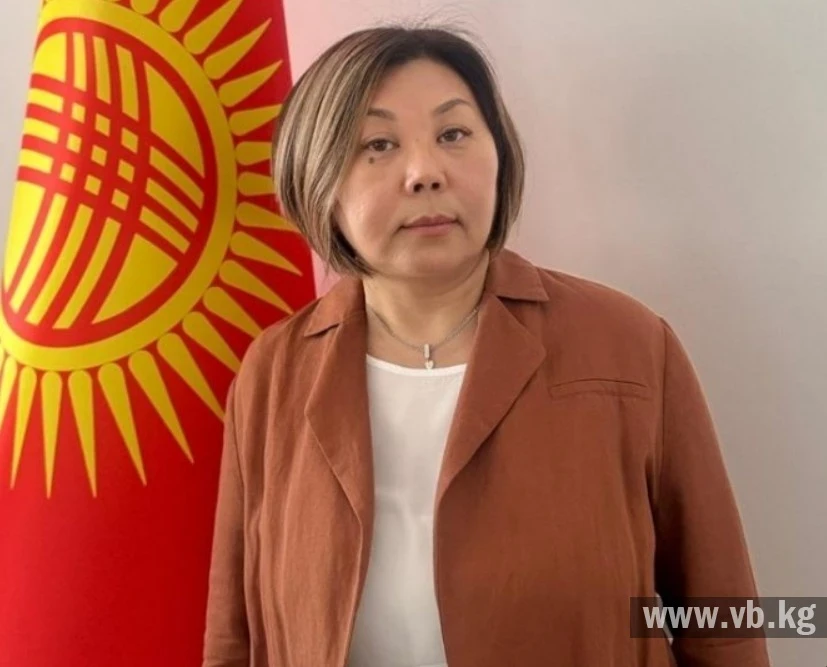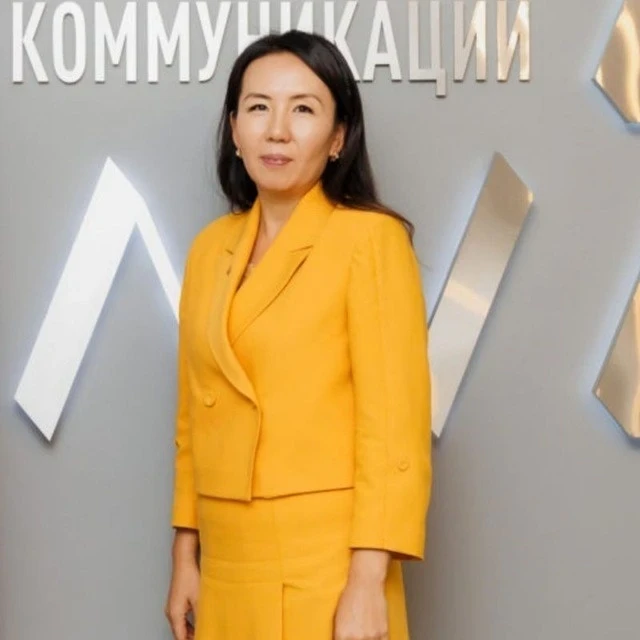
The preservation of historical truth about the Great Patriotic War remains a crucial task both in the academic community and in public memory. Despite a decrease in the number of researchers engaged in this topic in Kyrgyzstan compared to the Soviet era, educators and scholars continue to work actively: they study archival materials, rely on serious scientific works, and educate young people, striving to protect them from distortions arising in the context of the modern information flow. Nuriza Kadyralieva, an associate professor at the Department of History of Kyrgyzstan at the Institute of History and Regional Studies of the Jusup Balasagyn Kyrgyz National University, spoke to VB.KG about the role of historians, the changing perception of the war among young people, issues of distortion, and personal family stories that remind us of the price of Victory.
- How do you assess the current state of research on the Great Patriotic War in Kyrgyzstan?
- During the Soviet period, the topic of the war was one of the most popular for study. We had many researchers, scientific schools were established, and books and archival collections were published. After gaining independence, the situation changed: the number of researchers decreased, but work continued. Among the outstanding scholars are Suyun Kerimbaev, Orozbek Sagynbaev, and Jorobekov Turatbekovich. It is also worth noting Narynbek Alymkulov, whose work on the war was published posthumously in 2025 and represents an important contribution based on the latest data.
These researchers create the necessary foundation. They maintain academic objectivity and prevent distortions and political bias. In the context of changes in society and an aggressive information environment, such work becomes especially important.
Without the continuation of systematic research, a gap may arise between real facts and how young people perceive history.
- You mentioned that the attitude of young people towards the war has changed. What exactly are you observing?
- This has become noticeable in recent years. Young people live in a digital space, receiving information from forums and social networks. Sometimes you can hear opinions that the participation of the peoples of Central Asia in the war was "optional," or that the residents of the republic should not have defended "a foreign state." This is a significant distortion caused by a lack of deep knowledge.
Modern teachers, who grew up in the Soviet era, are gradually leaving, and they were the ones who passed down stories of their ancestors, personal family tales, and respect for veterans to the children. Today's youth is surrounded by a completely different cultural environment, focused on speed and superficial discussions, which facilitates the spread of distorted opinions.
Sometimes students engage in arguments online, relying on the statements of "armchair experts" who are themselves unfamiliar with the facts but are confident in their correctness. We, as educators, try to shield students from such interpretations and bring them back to sources and scientific research.
- What facts about Kyrgyzstan's participation in the war do you consider the most significant?
- It is important to understand that at that time the country was a unified whole. The republic was part of a common state, and participation was conscious and patriotic. In the first days of the war, 270 applications from those wishing to become volunteers were received in Frunze. A total of about 360,000 people were drafted from Kyrgyzstan. We have 76 Heroes of the Soviet Union, about 150,000 awarded with orders and medals, and 21 people became Knights of the Order of Glory of three degrees.
The feats of Cholponbay Tuleberdiev, the fighters of the 316th Rifle Division, Duishenkul Shopokov, Ivan Panfilov, Dair Asanov, Nikolai Dmitriev, Ismailbek Taranchiev, Evdokia Pasko, and many others demonstrate the true patriotism of Kyrgyzstanis on the fronts of the Great Patriotic War. 1,395 women also went to the front, contributing to Victory as nurses, surgeons, snipers, and radio operators. Captain of the medical service Rafa Aydarbekova performed about 800 surgical operations.
- Why do you think it is important to preserve the memory of the war today?
- Understanding the scale of those events allows us to appreciate the peace we live in. Today, many countries are in a tense political situation. Leaders making important decisions often lack personal experience of war and do not understand its consequences. The generations that experienced the war understood that peace is a fragile environment that must be preserved by all available means, including through diplomacy.
When young people do not realize what war is, they easily succumb to radical opinions and provocations. Our task is to explain that war is a tragedy for millions, with destroyed families and fates that cannot be restored. It is labor, pain, and sacrifice. Only in this way can a conscious attitude towards peace be formed.
- What sources do you rely on in your work?
- We use fundamental research by Kyrgyz historians and archival documents. For example, the Archive Service published a large collection of materials on the wartime defense industry in 2025, which is an important basis. In universities, we use textbooks where facts are presented briefly and objectively. However, we understand that young people turn to the internet, so we teach them to work with primary sources, verify information, and not trust unverified forums and comments.
- Do you have personal family connections to the topic of the war? What can you tell about it?
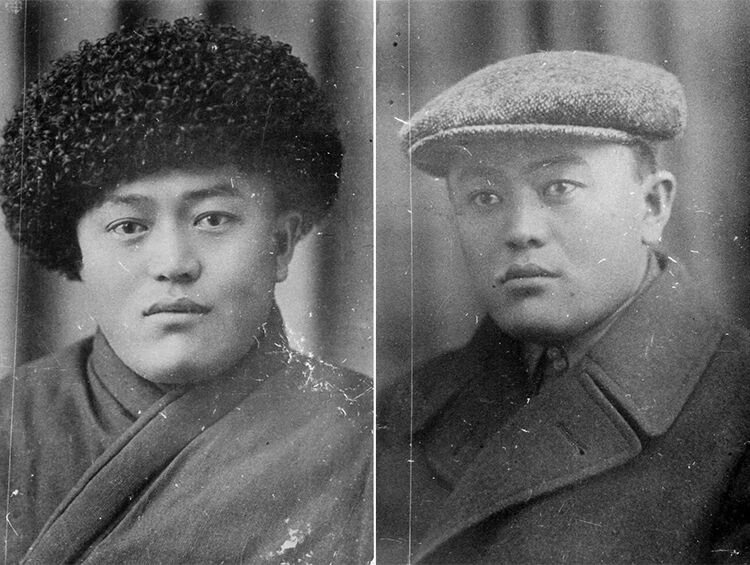
- Yes, this is a very close topic for me. My grandfather fought and then ended up in Korea. He had a family and a daughter there. He rarely shared his memories because they were painful. Upon returning, he realized that there was nowhere to go back to: his mother had died, his father had married another woman, and his younger siblings were still children. He recalled this with sadness and pain.
Such stories were common in many families. Some went as volunteers, some wanted to stay, and some lost everything. It is these personal stories that help us understand that war is not an abstraction, but the fates of people.