This cave is shrouded in legends. Locals say that a spring flows within it, whose water has healing properties: warm in winter and cool in summer. There are also suggestions about the presence of minerals in the cave.
However, one side of the cave is closed off, raising questions about where the water comes from. The flow remains unchanged at any time of the year. Previously, livestock, as well as locals and tourists, could enter, which led to pollution. Now the entrance is fenced off and locked.
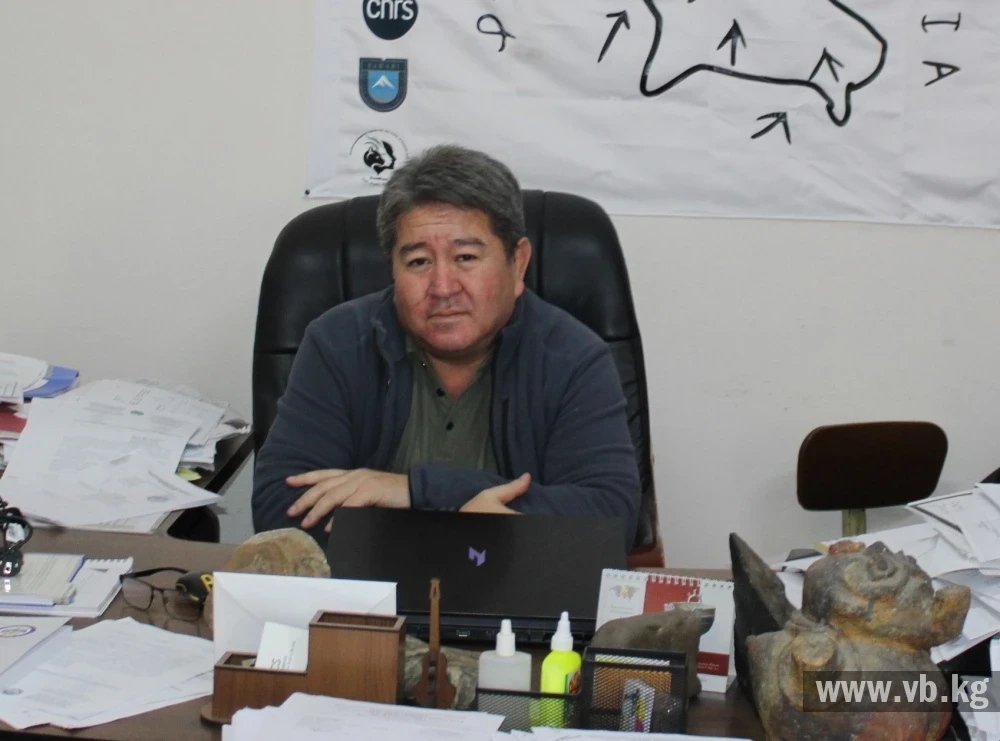
Teacher Raimkul Kasymov, a resident of Kara-Koktu, spoke about the cave, highlighting its potential significance as a tourist attraction. "In my childhood, my father worked here as a guard. Rumors about the cave are often distorted. For example, there is a myth about a tree at the entrance, next to which an old man with a sword sits. I often observed researchers from Russia and China coming here. They talked about gold but did not confirm their words. During World War II, Russian scientists allegedly mined uranium here. In the last ten years, a group of scientists laid tracks and installed lighting while conducting research. They discovered minerals, but no further work was done. Our geologists have not come. Perhaps due to the presence of mercury or uranium, locals believe that the water from the spring helps with healing. For example, it is used for washing wounds, but the effect is only local, as the water cools down at home," explains Kasymov.
The length of the cave is about 3 km, but after 2 km it is blocked by a collapse, making further movement impossible. There is a suggestion that a lake is hidden behind the blockage.
Kasymov also shares his experience when he managed to drive into the cave on a tractor. "We wanted to explore this place. One day, after driving a tractor into the field, we decided to try to go into the cave. At first, it seemed that the tractor wouldn't make it, but we took the risk and turned on the headlights. After driving about 2 km, we encountered the blockage and had to turn back. If the entrance is closed, the water will still find a way out through other openings, which could lead to the washing away of the road in the Aravan district. In spring, nature around blooms, attracting tourists and researchers who set up tents," he adds.