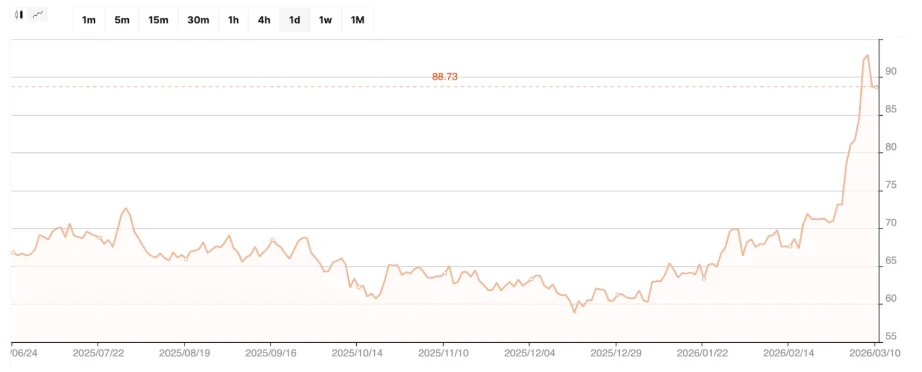
The price index, according to FAO, reached 128.5 points in March, which is 2.4% higher than in February and 1% above the level recorded a year ago.
The grain price index increased by 1.5% compared to the previous month, driven by a 4.3% rise in wheat prices. This increase is attributed to worsening crop forecasts in the United States due to drought and a projected reduction in planting areas in Australia caused by rising mineral fertilizer costs.
Corn prices showed a slight increase, as sufficient global supply volumes offset concerns about fertilizer availability and provided support from rising ethanol demand amid increasing energy prices.
The rice price index decreased by 3% in March due to the end of the harvesting campaign, weakening import demand, and falling currency exchange rates against the US dollar.
Vegetable oil prices rose by 5.1% since February and by 13.2% compared to last year's figures. The increase in palm, soybean, sunflower, and rapeseed oil prices is linked to rising crude oil prices, which created expectations of increased demand for biofuels.
The meat price index increased by 1%, mainly due to a significant rise in pork prices in Europe amid increased seasonal demand and rising global beef prices, especially in Brazil, where export opportunities are limited due to reduced cattle supply. At the same time, prices for lamb and poultry decreased, partly due to logistical issues hindering access to Middle Eastern markets.
The dairy product price index increased by 1.2%, mainly due to rising prices for skim milk powder due to seasonal supply reductions in Oceania. While international cheese prices continued to fall in the European Union due to increased production and weak export demand, the opposite trend is observed in Oceania.
The sugar price index rose by 7.2% in March. Expectations that Brazil, the largest sugar exporter, will use more sugarcane for ethanol production in response to rising global crude oil prices outweighed positive forecasts for global supply supported by good harvest rates in India and Thailand.
Wheat Forecast
FAO also presented updated forecasts for global wheat and corn production for 2026, which are expected to decline slightly compared to the high levels of the previous year but will still remain above the average of the last five years.
Considering that most of the world's wheat crop has already been sown, FAO forecasts its volume at 820 million tons, which is 1.7% less than last year.
Adverse weather conditions and falling prices are expected to negatively impact wheat production in the EU, Russia, and the USA, while India is expected to have a record harvest.
Improved rainfall should positively affect yields and overall production volume in Iran, Turkey, and North African countries.
However, the escalation of the conflict in the Middle East, rising energy and fertilizer prices, disruptions in supply chains, and the shift of some farmers to less fertilizer-demanding crops create additional uncertainty in wheat and corn forecasts, according to the new short-term review of grain supply and demand.