Just think about it, humanity is facing new threats related to climate change, and this is not the only problem.
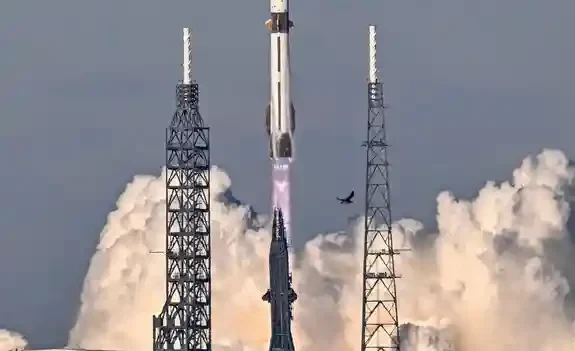
With the increasing number of satellites and space debris in low Earth orbit, a group of researchers expresses concern that this area of space may become a source of dangerous debris threatening spacecraft attempting to ascend there, as well as releasing hazardous particles onto Earth.
In their study, which has yet to be peer-reviewed, scientists build on a concept proposed by Donald Kessler from NASA. He described a scenario where even minor collisions between satellites could trigger a chain reaction, where the resulting debris leads to new collisions, thereby creating even more debris. In the most pessimistic scenario, such a whirlwind could isolate us on the planet and delay space exploration for many decades.
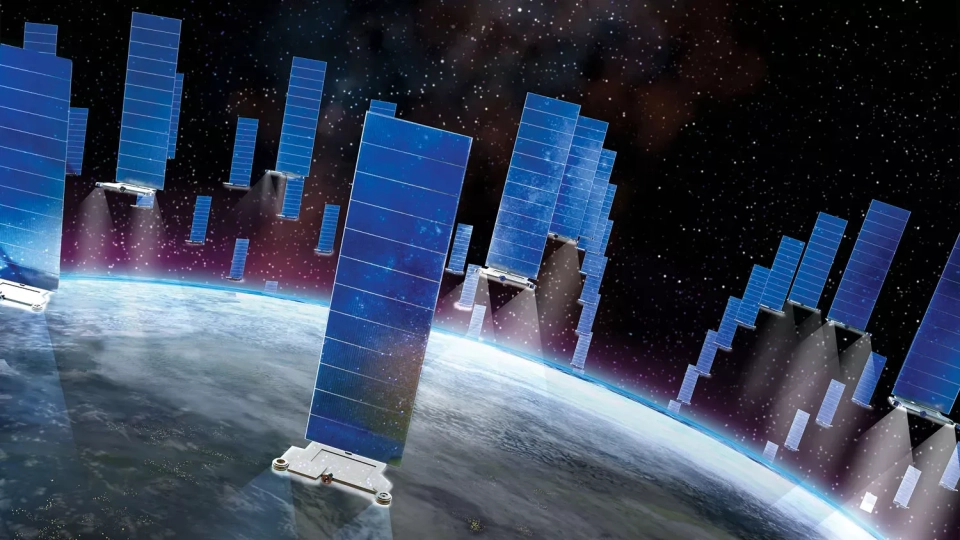
Considering that a record number of satellites are being launched into low Earth orbit, this scenario, known as the "Kessler syndrome," is becoming increasingly likely. For example, SpaceX, led by Elon Musk, is already planning to create a "mega-constellation" of over 9,000 disposable satellites, while Amazon and China also intend to launch their own similar projects.
Initially, Kessler suggested that catastrophic consequences would unfold over a long period. However, new research adds a troubling aspect: what would happen if a powerful solar storm triggered this scenario? Such flares can generate electromagnetic waves capable of disrupting power grids and communications, and a strong storm could disable satellites, rendering them useless and stripping them of the ability to adjust their course.
This raises serious concerns. Due to the vast number of satellites, SpaceX is forced to constantly perform maneuvers to prevent collisions — over 300,000 such maneuvers were recorded last year.
To analyze this situation, researchers have developed a new indicator called the CRASH clock, which shows how much time it would take for a catastrophic collision if satellites lose navigation during a crisis, such as during a solar storm.
According to the researchers' calculations, satellites could come within less than one kilometer of each other approximately every 36 seconds in low Earth orbit, which is extremely risky in space.
Based on this, the short CRASH period is just 5.5 days, meaning humanity would have a very limited time to respond if a solar storm were to actually occur. In such a case, if we were struck by an event similar to the famous Carrington event of 1859, which destroyed telegraph networks and could cause global power outages today, we would face much more serious problems requiring attention.