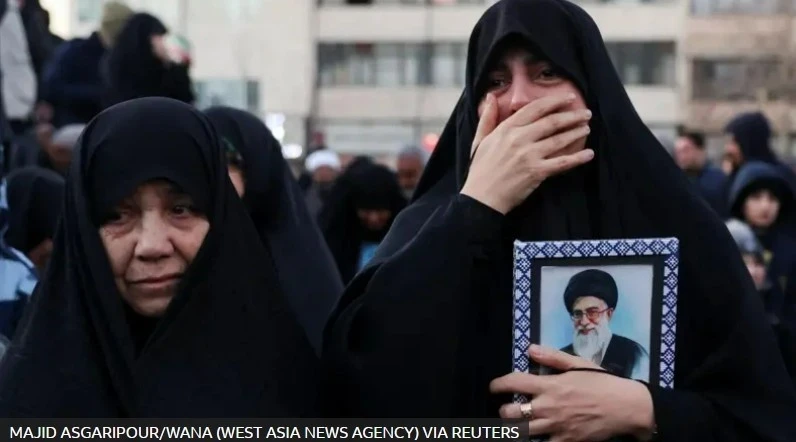
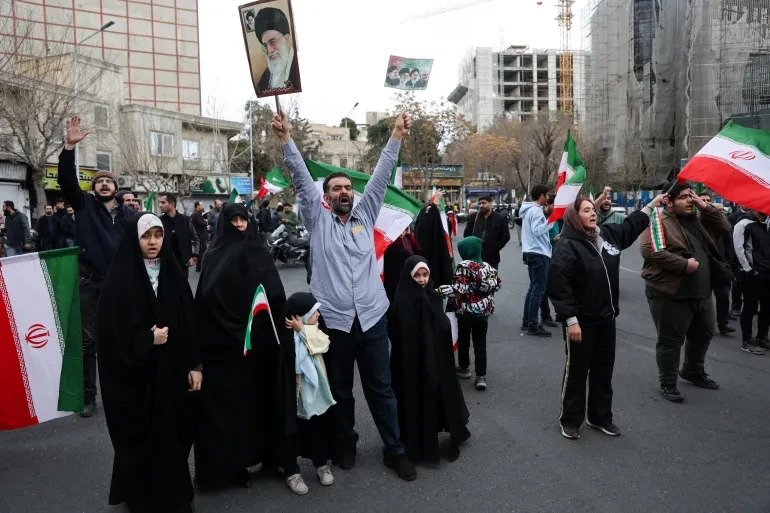
The Council of Experts of Iran has decided to appoint Mojtaba, the son of Ali Khamenei, as the new Supreme Leader of the country. Previously, U.S. President Donald Trump claimed that the selection of Iran's spiritual leader should involve his participation.
In an official statement broadcast on Iranian television, it was reported that the meeting took place under conditions of war and threats. Council members noted that even after the attack on the secretariat office and the death of several staff members, the process of selecting a new leader was not interrupted.
“The Council of Experts, recognizing the importance of the Supreme Leader in the conditions of the hiddenness of the Holy Master and the significance of leadership in the Islamic Republic, pays tribute to 47 years of wise governance, based on the principles of dignity, independence, and the strength of the leaders of the revolution. In honor of the memory of these divine and popular leaders, and after careful consideration, in accordance with religious duty and faith, Ayatollah Seyed Mojtaba Hosseini Khamenei was unanimously elected as the third leader of the sacred system of the Islamic Republic of Iran at today’s meeting,” the statement said.
Against the backdrop of these events, the position of the Islamic Revolutionary Guard Corps (IRGC) in the Iranian political system has become stronger. Immediately after the announcement of the new leader, the IRGC confirmed its full loyalty.
“The Islamic Revolutionary Guard Corps is ready to fully obey and sacrifice its efforts for the directives of the Supreme Leader of the Islamic Revolution, Ayatollah Seyed Mojtaba Khamenei,” their statement noted.
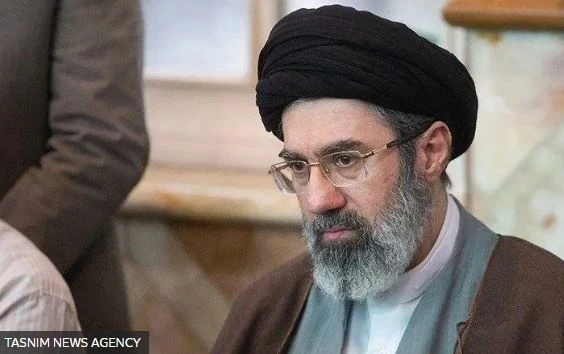
Mojtaba Khamenei is known as one of the most enigmatic figures in Iranian leadership.
He was born on September 8, 1969, in Mashhad and is the second of six children of Ali Khamenei. His wife is Zahra Haddad, the daughter of the well-known conservative politician Gholam-Ali Haddad-Adel, who served as the speaker of parliament.
Mojtaba belongs to a generation that grew up in the early years after the Islamic Revolution. According to Iranian media, at the age of 17, he underwent short-term military service during the Iran-Iraq War and, by some accounts, had connections with the volunteer forces known as "Basij".
Unlike his father, Mojtaba rarely appears in public, does not hold government positions, and does not give interviews. Only a few photographs and video recordings featuring him are available in the public domain.
After finishing school, he continued his religious education in Qom, one of the main centers of Shia theology, entering relatively late—around the age of 30.
As of now, he is considered a mid-ranking cleric, which raises disputes among religious circles in Iran regarding his ability to occupy the highest position.
The name of Mojtaba Khamenei became widely known during the presidential elections of 2005 when the conservative Mahmoud Ahmadinejad won.
At that time, the reformist candidate Mehdi Karroubi accused him of interfering in the elections with the help of the IRGC and "Basij", claiming that religious organizations allocated funds to support Ahmadinejad.
In U.S. diplomatic cables published by WikiLeaks, Mojtaba was characterized as a person with significant influence in the power structure, a sort of "power behind the robes". In 2019, the U.S. Department of the Treasury placed him on the sanctions list.
Meanwhile...
The leader of the Shia in Iraq, Ayatollah Sistani, issued a fatwa for collective jihad to defend the Islamic Revolution in Iran, reports the IRGC.
“The Great Ayatollah Seyed Ali Sistani, one of the highest Shia religious authorities in Iraq, responded to a religious request from one of his followers, emphasizing the obligation of collective jihad to protect the Islamic Revolution of Iran.”
The record "The Council of Experts of Iran appointed Ali Khamenei's son Mojtaba as the new Supreme Leader of the country" first appeared on the K-News website.