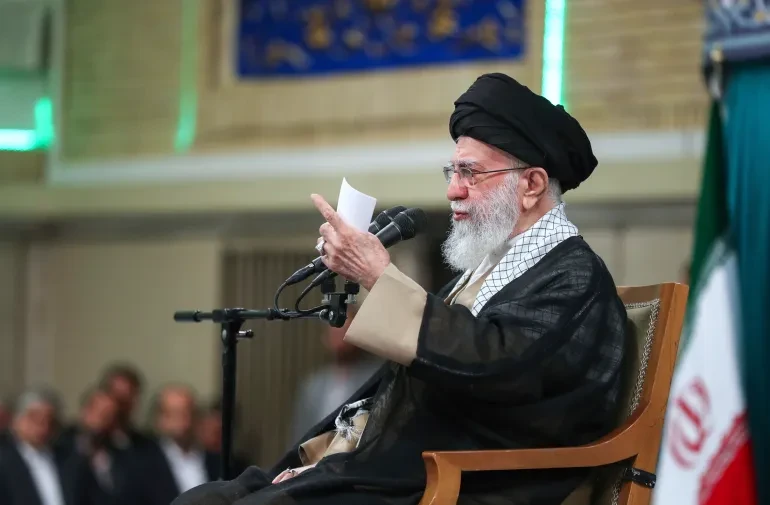
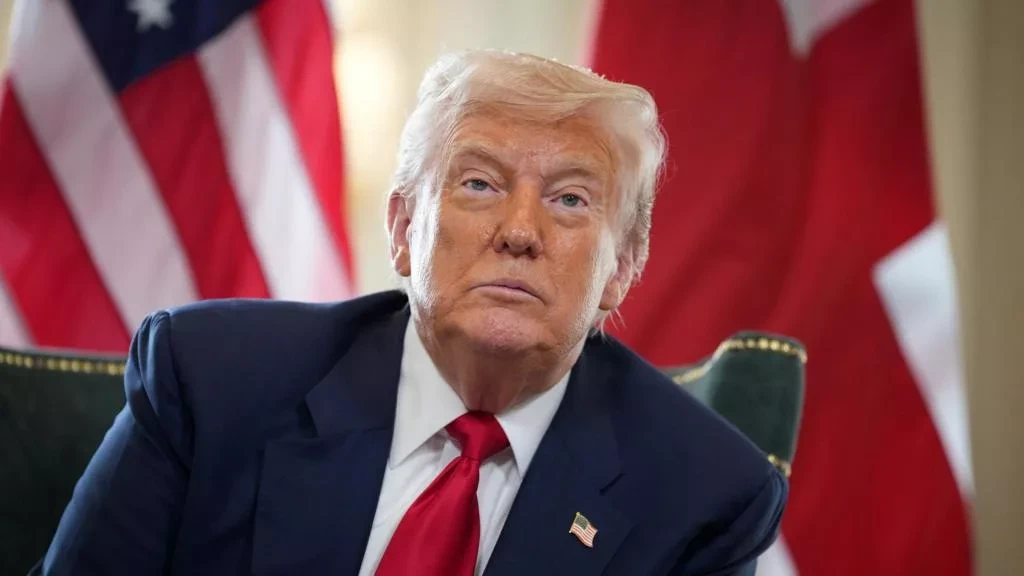
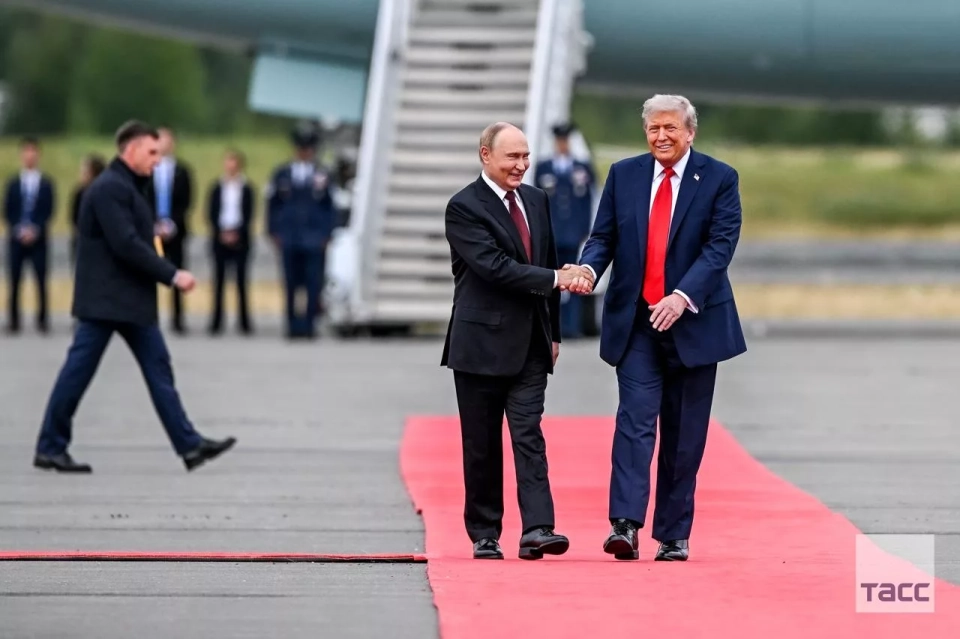
Donald Trump expressed his "discontent" with Iran's appointment of Mojtaba Khamenei as the new Supreme Leader, as reported by Fox News.
Host Brian Kilmeade shared that after the announcement of the new leader's election, he discussed the situation with Trump, who noted: "I am not satisfied."
Kilmeade did not provide further clarification on this matter.
Earlier, Trump had already expressed his doubts regarding Khamenei's candidacy when information emerged that he was the most likely contender for the position of Supreme Leader of Iran.
The American president emphasized the need to consider the opinion of the United States when choosing an Iranian leader, especially in the context of the ongoing confrontation with Tehran, while Israel warned that the new leader would become a target for its actions.
The Chinese Ministry of Foreign Affairs also commented on the appointment, stating that it is an internal matter for Iran. Spokesperson Zhao Lijian said at a press conference: "This is a decision by the Iranian side, based on its constitution."
Yesterday, Chinese Foreign Minister Wang Yi called for respect for Iran's sovereignty and warned against external attempts to change its political system. He added that "attempts to organize a 'color' revolution or change the government will not be supported by the population."
Pro-Iranian groups in Iraq reacted to Khamenei's appointment
The Shiite political party and paramilitary group "Badr" stated that the new leadership represents a "blessed continuation of the path of the Islamic revolution."
The "Asaib Ahl al-Haq" faction noted that Khamenei's election signifies "continuity" and "strengthening the role of the Islamic Republic as a key element in the axis of resistance," while "Kata'ib Hezbollah" emphasized that this reflects a deep understanding of the "existential challenges facing the country."
According to official data, over 1,255 people have died and more than 12,000 have been injured in Iran in nine days
Iran's Deputy Minister of Health Ali Jafariyan, in an interview with Al Jazeera, spoke about the tragic consequences over the past nine days:
- The number of injured has exceeded 12,000, and the number of dead is 1,255.
- The ages of the victims ranged from eight months to 88 years.
- Among the dead were 200 women.
- 168 children died in an elementary school in Minab.
- As a result of the incidents, 55 medical workers were injured, 11 of whom died, including four doctors, two nurses, and three paramedics.
Israeli military officials again urged residents of the southern suburbs of Beirut to leave their homes, warning of possible strikes on buildings associated with the financial association "Al-Qard al-Hasan," which they believe funds Hezbollah's activities.
"I again urge residents of the southern suburbs to evacuate, following the published routes," said Israeli army spokesperson Avichai Adraee in a message on X.
"Staying in this area means putting yourself in danger," he added.
In Bahrain, sirens were activated and people were urged to seek shelter
The Ministry of Interior of Bahrain reported the activation of sirens.
"Citizens and residents are strongly advised to remain calm and head to the nearest safe location," the brief statement said.
Iran threatens to confiscate property from its citizens abroad who oppose the government
The Iranian Attorney General made a statement saying that "the property of Iranians abroad who cooperate with the enemy will be confiscated in accordance with the law," as reported by the IRIB news agency.
This statement references Article 1 of the law on tightening penalties for espionage and cooperation with the Zionist regime [Israel] and hostile countries, adopted in October of this year.
Bahrain's Bapco Energies declares force majeure
According to state media, the Bahraini company Bapco Energies has declared force majeure in its operations.
Force majeure is a clause in a contract that relieves the parties from liability for non-fulfillment of obligations in the event of unforeseen circumstances.
This statement was made after thick smoke rose over the Bapco refinery in the country.
Witnesses reported to Reuters that the plant was shrouded in smoke after the government reported injuries and damage from an attack by an Iranian drone in the Sitra area.
Bapco is a key oil refinery in Bahrain and an important facility in its energy sector.
Oil prices reached nearly $120 per barrel before slightly decreasing amid rising conflict with Iran, threatening oil production and transportation in the Middle East and impacting financial markets.
The price of a barrel of Brent crude, the international standard, rose to $119.50 but then fell to $112.98. The price of West Texas Intermediate crude, the light oil produced in the U.S., reached $119.48 per barrel but then dropped to $110.17.
According to independent research firm Rystad Energy, about 15 million barrels of oil are transported daily through the Strait of Hormuz, accounting for approximately 20 percent of global supplies.
Threats from Iran in the form of missile and drone attacks have significantly complicated tanker movements through the strait, which borders Iran and is used to transport oil and gas from Saudi Arabia, Kuwait, Iraq, Qatar, Bahrain, the UAE, and Iran itself.
Due to tank overflow from reduced export capabilities, Iraq, Kuwait, and the UAE have cut oil production. Iran, Israel, and the U.S. have also attacked oil and gas facilities since the conflict began, exacerbating supply issues.
The record of Trump being "dissatisfied" with Mojtaba Khamenei's election. What else is happening in Iran? first appeared on K-News.