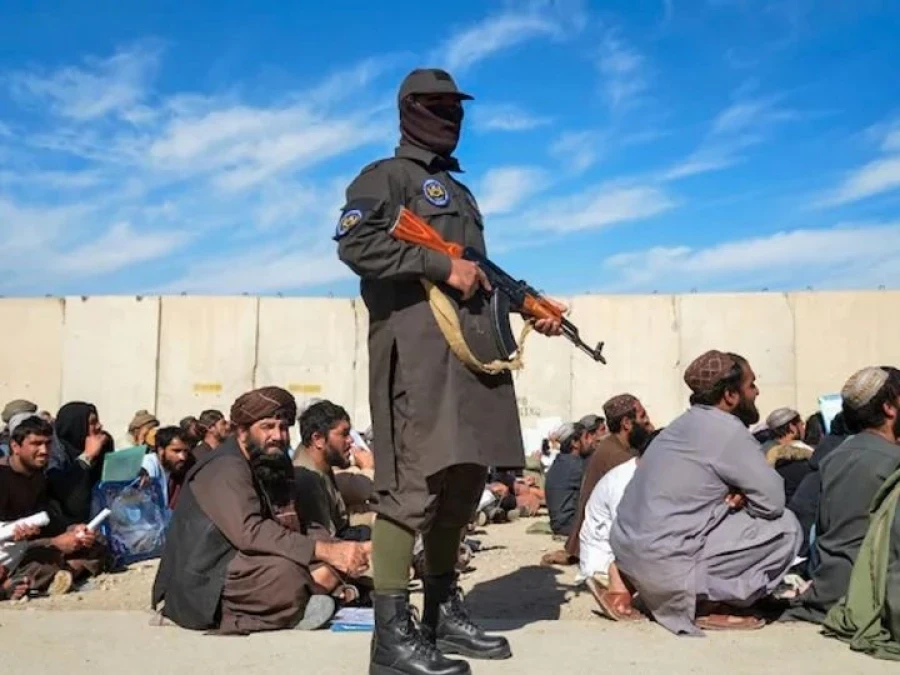
The code lacks rights to defense, silence, and compensation for damages
The human rights organization Rawadari has published the text of the "Criminal Code of the Taliban Courts," signed by Mullah Hibatullah, which has been distributed among judicial authorities in the provinces, as reported by The Insider.
The document includes three sections, 10 chapters, and 119 articles, and according to human rights defenders, it categorically violates international human rights standards and principles of fair trial. The code lacks rights such as the right to an attorney, the right to remain silent, and the right to compensation for damages. It also does not establish minimum and maximum penalties, and the main methods of proving guilt are confessions and witness testimonies, which, according to Rawadari, significantly increases the risk of torture.
The code legalizes discrimination against religious minorities. Article 2 recognizes only followers of the Hanafi school as Muslims, while adherents of other sects and beliefs are referred to as "innovators." Given that the country is home to Shia, Ismailis, followers of the "Ahl al-Hadith" movement, Sikhs, and Hindus, this creates conditions for mass repression. Article 14 allows for the killing of those who "defend false beliefs" or call others to them with the imam's sanction. Article 17 prescribes a punishment of two years in prison for "mocking" Islamic prescriptions, without specifying what exactly is meant by this, and Article 26 prohibits Hanafis from changing their school under the threat of two years in prison — which, as human rights defenders emphasize, primarily affects Salafists and followers of "Ahl al-Hadith."
The document also introduces a class division of society. According to Article 9, the punishment for the same crime varies depending on social status: a religious scholar will receive only a "recommendation," a member of the "nobility" — a summons to court, the "middle class" — a prison term, and the "lower class" — imprisonment with corporal punishment. Additionally, several articles mention the word "slave": Article 15 extends punishments to "slaves," and Article 4 allows for the application of corporal punishment by the "master." Rawadari points out that the very existence of the category "slave" in a legal document violates the international ban on slavery.
The code also persecutes dissent and criticism of the Taliban. Article 19 establishes punishment for committing an "allowed action" that the Taliban leader has declared forbidden, as well as for criticizing it — this, according to Rawadari, could lead to criminal prosecution for disagreeing with the ban on women's education. For "insulting Taliban leaders," Article 23 may impose 20 lashes and six months in prison. Article 24 obliges all citizens to inform on regime opponents — for concealing information, up to two years of imprisonment is provided. Article 2 defines a "rebel" as a person whose "harm is public and cannot be corrected otherwise than by killing," and Article 4 allows any Muslim to punish a "sinner" caught in the act.
Human rights defenders also emphasize norms concerning violence against women and children. Article 30 prohibits teachers from only those forms of physical violence against children that lead to fractures, skin damage, or bruises, while other forms of violence, including psychological and sexual, are not mentioned. Article 32 establishes a punishment for a husband for beating his wife with a stick, resulting in serious injuries, of only 15 days of imprisonment — and only if the wife can prove it in court. Meanwhile, Article 34 provides for three months in prison for a woman who leaves for her parents without her husband's permission, as well as for those relatives who do not send her back.
It is worth noting that in July 2025, the International Criminal Court issued arrest warrants for the leaders of the "Taliban" — supreme leader Hibatullah Akhundzada and the chief judge of the "Islamic Emirate of Afghanistan," Abdul Hakim Haqqani. The court ruling is related to their involvement in crimes "against humanity, including gender-based persecution against girls, women, and others who do not fit into the Taliban's gender policy."
Photo www