As reported by MiddleAsianNews, the Water Resources Management of Mongolia, which is part of the country's government, has signed an agreement with the Indian firm Kalpataru Projects International Limited (KPIL) to implement significant water infrastructure projects in Mongolia.
As part of this agreement, preparatory work has begun on the important project "Tuul Water Supply Dam".
In the first stage, specialists conducted a study to select the optimal location, analyzing geological and topographical characteristics, as well as potential reservoir volumes. As a result of the comparative analysis, the third site was found to be the most suitable. Detailed surveys and design work will now begin at this site.
At a meeting with stakeholders in January, officials emphasized the importance of accelerating the technical and economic justification and coordinating the subsequent stages of development.
The implementation of this project occurs against the backdrop of growing concerns about water security in Ulaanbaatar. Currently, the capital provides centralized water supply of about 200,000 cubic meters of water per day, primarily for domestic needs, while the remaining portion is used for industrial and energy needs. At present, the city is entirely dependent on underground sources as its only source of water.
However, the rapid population growth, urban expansion, and industrial development are increasing the demand for water. At the same time, climate change, uneven precipitation, and increasing aridity are limiting the natural replenishment of groundwater reserves, raising concerns about the sustainability of the water supply system. Dependence on a single source makes it vulnerable.
The Tuul dam project aims to create a new source of surface water, which will allow for the diversification of water supply.
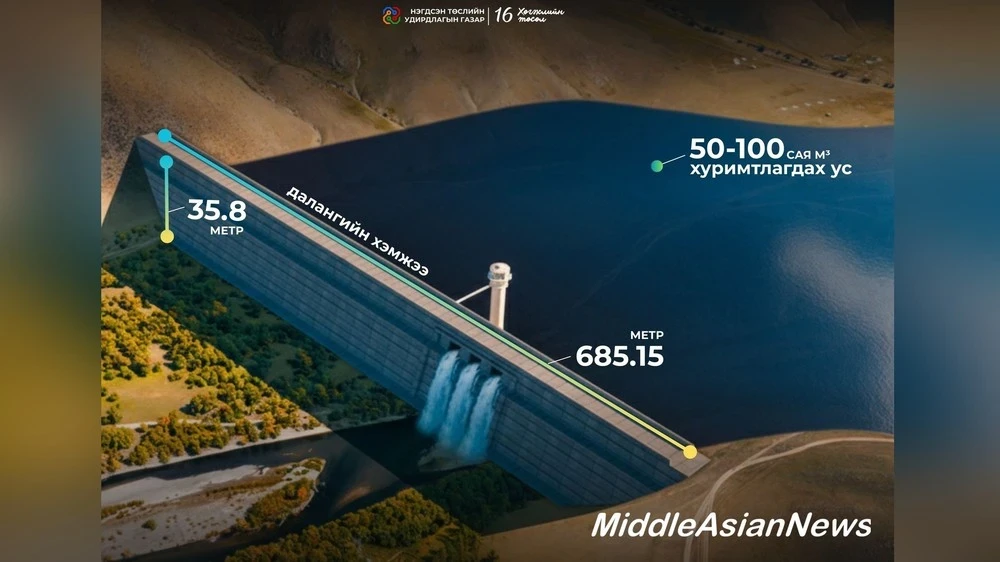
According to preliminary data, the reservoir will cover an area of 5,569 hectares and will have a volume of 50 to 100 million cubic meters. The planned length of the dam will be 685.15 meters, height — 35.8 meters, and sediment depth — 19.84 meters. These parameters should meet the growing long-term demand for water in Ulaanbaatar.
Once completed, the project will allow for the regulation of surface water use, reduce dependence on underground sources, and improve flood protection. Additionally, it is expected to increase water availability for industry and energy, creating a more sustainable and reliable water resource management system for the capital.
Kalpataru Projects International Limited (KPIL) is one of the leading Indian construction companies, whose shares are traded on the stock market. It implements various projects worldwide in areas such as power generation, building construction, water supply, irrigation, railways, oil and gas pipelines, and urban infrastructure in more than 75 countries.
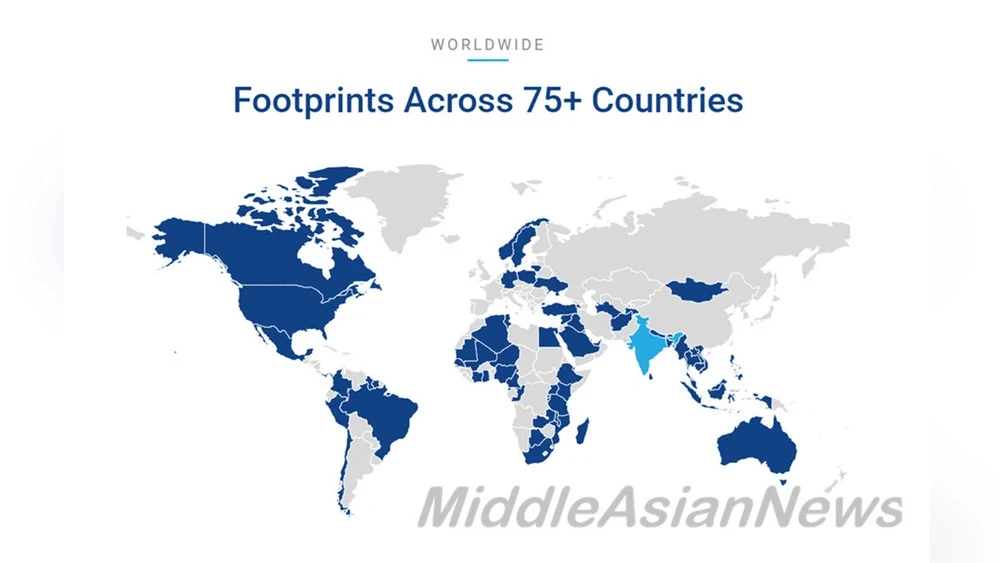
Since its establishment in 1981, the company has established itself as one of the largest players in the field of engineering, procurement, and construction (EPC), creating sustainable value for various stakeholders and executing projects worth over $14 billion in sectors such as power generation, construction, water supply, and irrigation, as well as urban mobility. Currently, KPIL is implementing more than 300 projects in 30 countries and is strengthening its presence in Sweden and Brazil through acquisitions of local companies.
The company has developed modern manufacturing processes and technologies, ensuring high quality and durability of the implemented projects. As of March 31, 2025, KPIL's order book stands at $7.5 billion, with expected revenue for the fiscal year 2025 projected at $2.6 billion.