The global trend of declining respect for rights
Recently, the Rule of Law Index for 2025 was presented by the World Justice Project (WJP), covering 143 countries. This ranking is based on surveys of citizens and expert opinions across eight key criteria, including constraints on government power and the effectiveness of justice in both civil and criminal matters. Each country is assigned a score from 0 to 1, where 1 indicates full adherence to the principles of the rule of law, and 0 indicates their complete absence.
Global Trends
According to WJP data, in 2025, there is a decline in the index in 68% of countries, while in the previous year, this figure was 57%. In this context, Central Asian countries showed mixed results: Kazakhstan and Uzbekistan improved their positions, while Kyrgyzstan fell in the rankings. Tajikistan and Turkmenistan were not included in the study.
Kazakhstan received a score of 0.54, ranking 66th out of 143, while Uzbekistan scored 0.50 and is in 81st place, and Kyrgyzstan scored 0.45 and is in 104th place.
In the regional ranking for Eastern Europe and Central Asia, Kazakhstan ranks fifth, Uzbekistan eighth, and Kyrgyzstan twelfth. The leaders in this region are Georgia, Montenegro, and Kosovo, while the worst indicators are recorded in Belarus, Turkey, and Russia.
The Situation in Kyrgyzstan
Kyrgyzstan stands out for its relatively open political system and greater freedom of speech; however, as Kuliyev emphasizes, this does not guarantee effective governance.
In his opinion, insufficient stability of institutions and the lack of uniform rules can lead various groups to exploit the situation for their own interests, which, in turn, contributes to an increase in corruption risks.
The expert believes that it is critically important for Kyrgyzstan to strengthen basic state institutions before moving on to more complex reforms. Improving police work, ensuring judicial independence, and enhancing the effectiveness of internal procedures can yield more sustainable results than large-scale but difficult-to-implement reforms, concludes Kuliyev.
The Situation in Kazakhstan
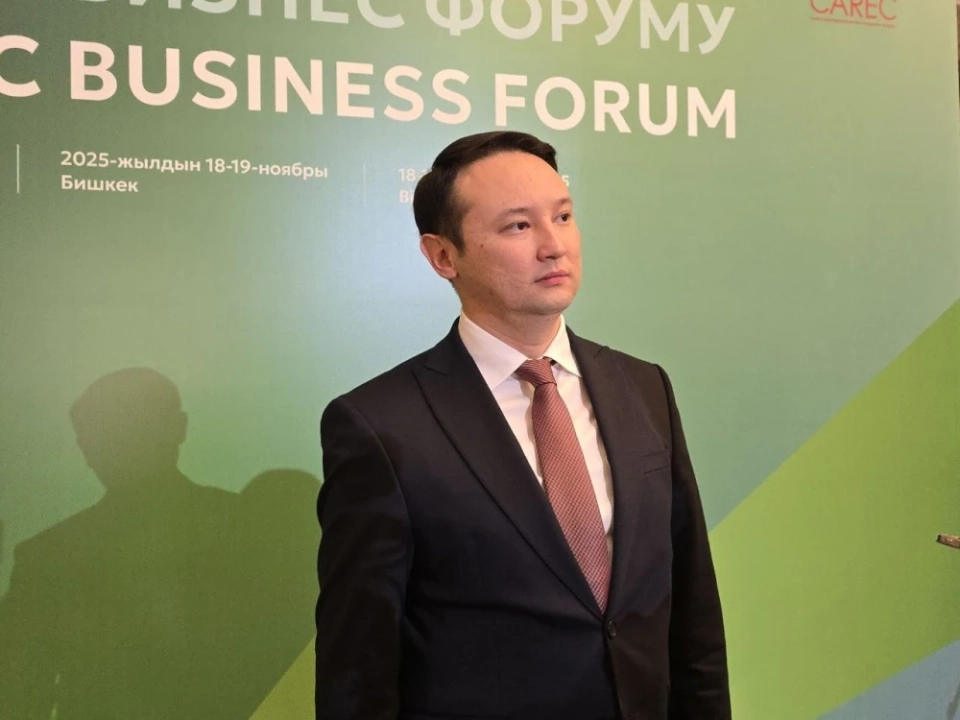
As noted by Kodir Kuliyev, an international expert on anti-corruption, Kazakhstan maintains its leadership in the region due to more professional regulatory and administrative institutions, as well as predictability in law enforcement. However, the WJP points to a weakening of civil justice—delays, a lack of alternative dispute resolution mechanisms, and risks of government interference.
To maintain its positions, Kazakhstan needs to shift from visible reforms to improving internal processes, including the digitalization of documentation, increasing the transparency of court operations, and strengthening mechanisms to protect decisions from informal pressure, believes Kuliyev.
The Situation in Uzbekistan
Uzbekistan demonstrates unique results in the area of the rule of law in 2025, with relatively high scores in the areas of "Order and Security" and "Absence of Corruption." This indicates a rise in administrative discipline and the quality of public services, according to Kuliyev.
However, areas such as "Open Government" and "Fundamental Rights" remain vulnerable. The WJP notes that pressure on these spheres is increasing at a global level.
"This indicates that the potential of law enforcement agencies is strengthening; however, the sustainability of reforms aimed at enhancing integrity and incorruptibility depends on consistency, impartiality, and public oversight. International experience shows that achievements in the fight against corruption are most sustainable in those countries where civil oversight, access to information, independent media, and safe channels for submitting appeals are actively developed," emphasizes the expert.
In Kuliyev's opinion, the next step in reforming to consolidate the achieved results should include expanding the practice of open data, supporting monitoring by civil society, and developing digitalization, which will enhance accountability and the ability to verify the work of government agencies.
The Reasons for the Absence of Tajikistan and Turkmenistan in the Study
Kuliyev points out that the absence of these countries in the index indicates a low level of openness to independent assessments, highlighting the need to improve transparency, efficiency of public administration, and the rule of law in these states.
Photo www