What is the "lipstick effect"?
The Lipstick Effect hypothesis in sociology asserts that in conditions of declining income, people forgo large purchases such as housing, cars, and education at prestigious institutions. However, the need for pleasures does not disappear; instead, people seek affordable joys, such as visiting cafes or buying inexpensive cosmetics, like lipstick.
As Forbes notes, when finances are tight, women prefer luxury lipsticks for public use, opting out of more expensive cosmetics for home use.
The first mention of this hypothesis belongs to Juliet Schor, a professor of sociology and economics, in her book "The Overspent American," published in 1998.
Standards of luxury: from aristocrats to Instagram
The key idea in the professor's works is that wealthy people, especially aristocrats, demonstrated their status through the acquisition of expensive items—be it palaces, luxury furniture, or jewelry.
For example, 18th-century Italian aristocrats built magnificent palaces with facades inscribed with the words Pro Invidia ("To Envy").
Some aristocrats even enacted laws prohibiting the newly rich from copying their style.
"At the turn of the century, the wealthy published the menus of their dinner parties in newspapers, and 50 years ago, American careerists bought fake portraits of their ancestors for their libraries," writes Juliet Schor.
However, scientific and technological progress and industrialization changed the situation. The advent of mass production in the 1920s made many goods accessible.
A new social standard emerged: a decent house, modern furniture, household appliances, and a car.
Thus, the wealthy set trends that were picked up by the less affluent. The concept of necessary consumption arose, where the acquisition of certain goods became perceived as a necessity to meet social standards.
The competitive consumption of the 1980s was not accidental; it arose from the desire of the middle class to conform to the standards of the rich, even with limited financial means, Schor notes.
Economic realities versus statistics
The desire to maintain social standards, regardless of income level, is a phenomenon not only for America but for modern society as a whole, including Kyrgyzstan.
This year, the consolidated budget of Kyrgyzstan amounted to 1 trillion 93 billion soms, which is a historic achievement. This was reported by the Prime Minister Adylbek Kasymaliev in the Jogorku Kenesh.
Bloomberg referred to Kyrgyzstan as the economic tiger of Central Asia, noting significant GDP growth in recent years.
Nevertheless, the standard of living for most Kyrgyz citizens remains low.
It seems that with high prices for food and living paycheck to paycheck, the import of goods such as coffee, jewelry, and expensive electronics should decrease.
However, imports are not only not decreasing but, in some cases, are increasing.
Restaurant boom: 50% growth in dining establishments in Bishkek and Osh
Here’s another example of the "lipstick effect."
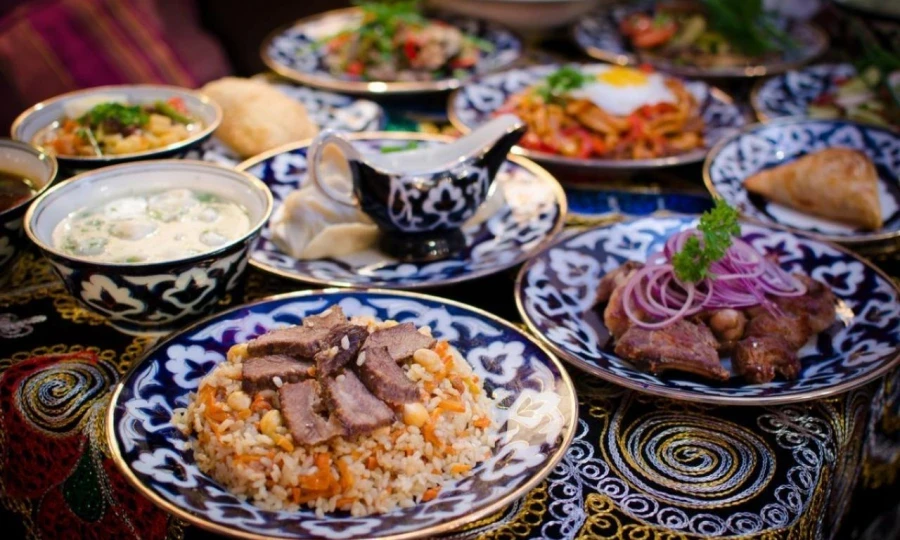
As previously reported, in 2024, the number of dining establishments in Bishkek increased by 53.1%—from 2,247 to 3,440. In Osh, the increase was even greater—57.2% (from 563 to 885 establishments).
On one hand, this can be explained by population growth; on the other hand, it confirms that people continue to spend money on dining out.
The average bill in Bishkek restaurants is 1,300 soms, in cafes—932 soms, and in coffee shops—564 soms.
Interestingly, in December of last year, Kyrgyz citizens actively searched online for:
- cafes—465,113 queries;
- restaurants—378,937 queries.
In total, there were over 1.5 million queries about dining out in a month.
Although this may be related to the pre-New Year excitement, it also indicates a willingness of people to spend money on celebrations, preferring cafes and restaurants over home settings.
Moreover, according to open data, in the first 10 months of 2024, Kyrgyzstan imported cosmetics worth $32.2 million. While rising food prices raise concerns, the desire to look attractive remains a priority.
In the republic, especially in Bishkek and Osh, there are about 130 fitness clubs and approximately 212 coffee shops.
Living on credit: loans for iPhones as a substitute for wealth
Instead of discussing statistics on the import of household appliances or mobile phones, it is worth paying attention to consumer loans.
As reported by 24.kg, in the first nine months of 2025, the volume of consumer loans in the country increased by 60.8% and amounted to 159.5 billion soms. These funds are spent on purchasing cars, electronics, and household goods.
Thus, when you see full cafes or a colleague buying a new iPhone, do not rush to conclusions.
This is not necessarily a sign of growing wealth but rather reflects adherence to social standards known as the "lipstick effect."
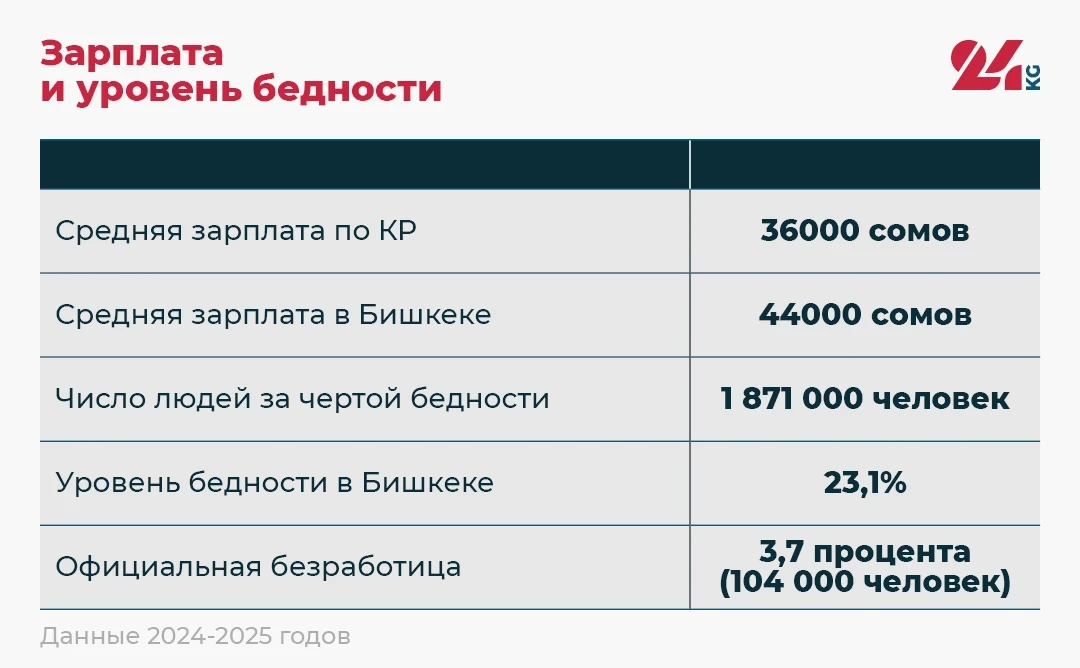
Therefore, crowded coffee shops with a salary of 44,000 soms are not an indicator of prosperity but a surrogate for wealth: when it is impossible to buy an apartment, a person takes a loan for an iPhone and dines in an expensive restaurant.