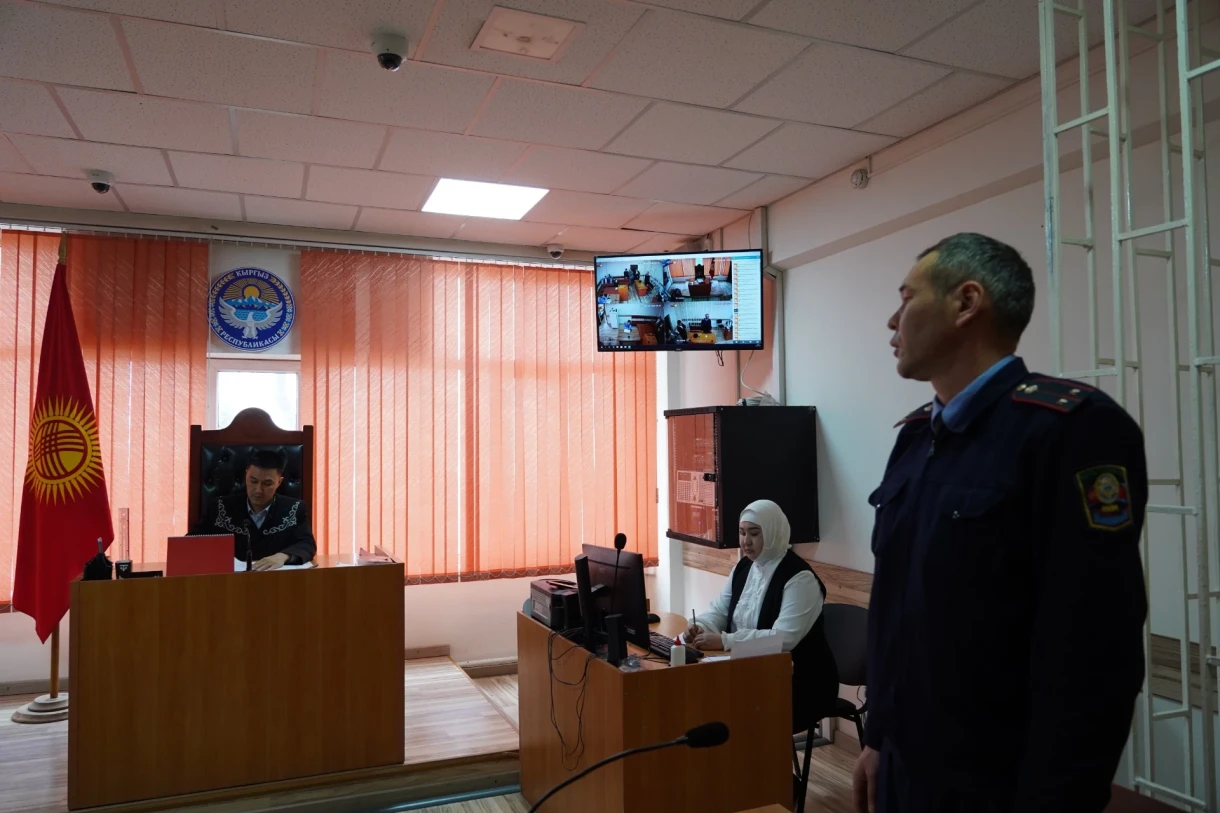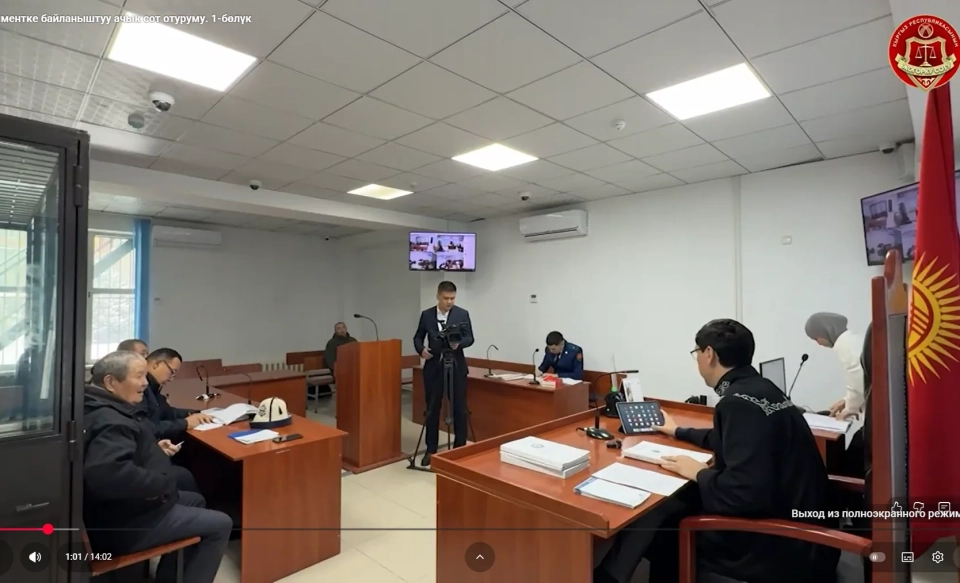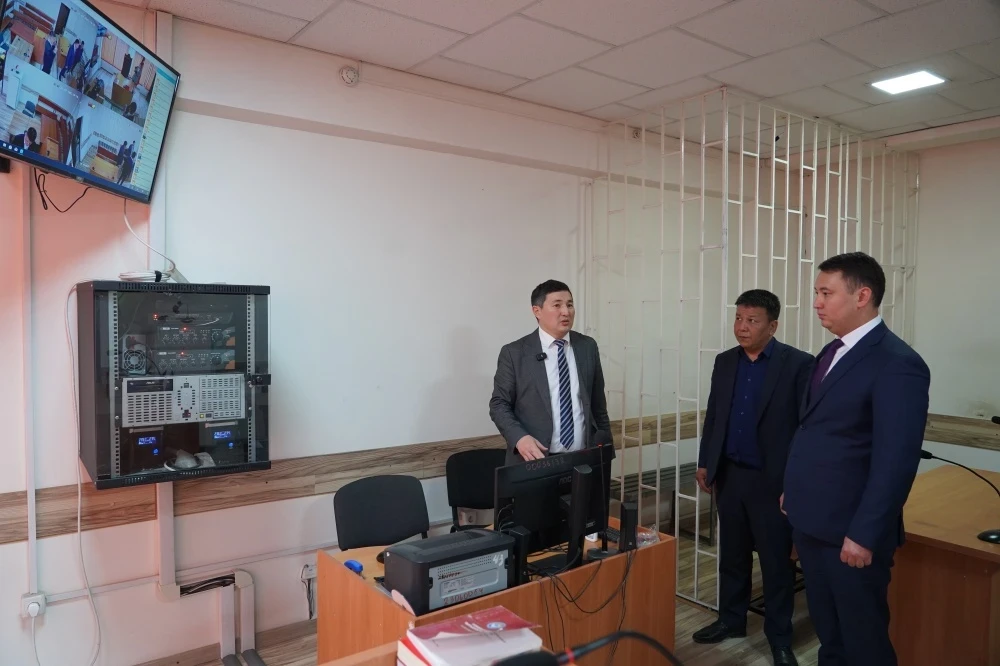
In the Sverdlovsk District Court of the capital of Kyrgyzstan, the first online broadcasts of court proceedings took place, including a case of domestic violence. The live broadcast was conducted on the YouTube channel "Supreme Court," as reported by the press service of the Supreme Court.
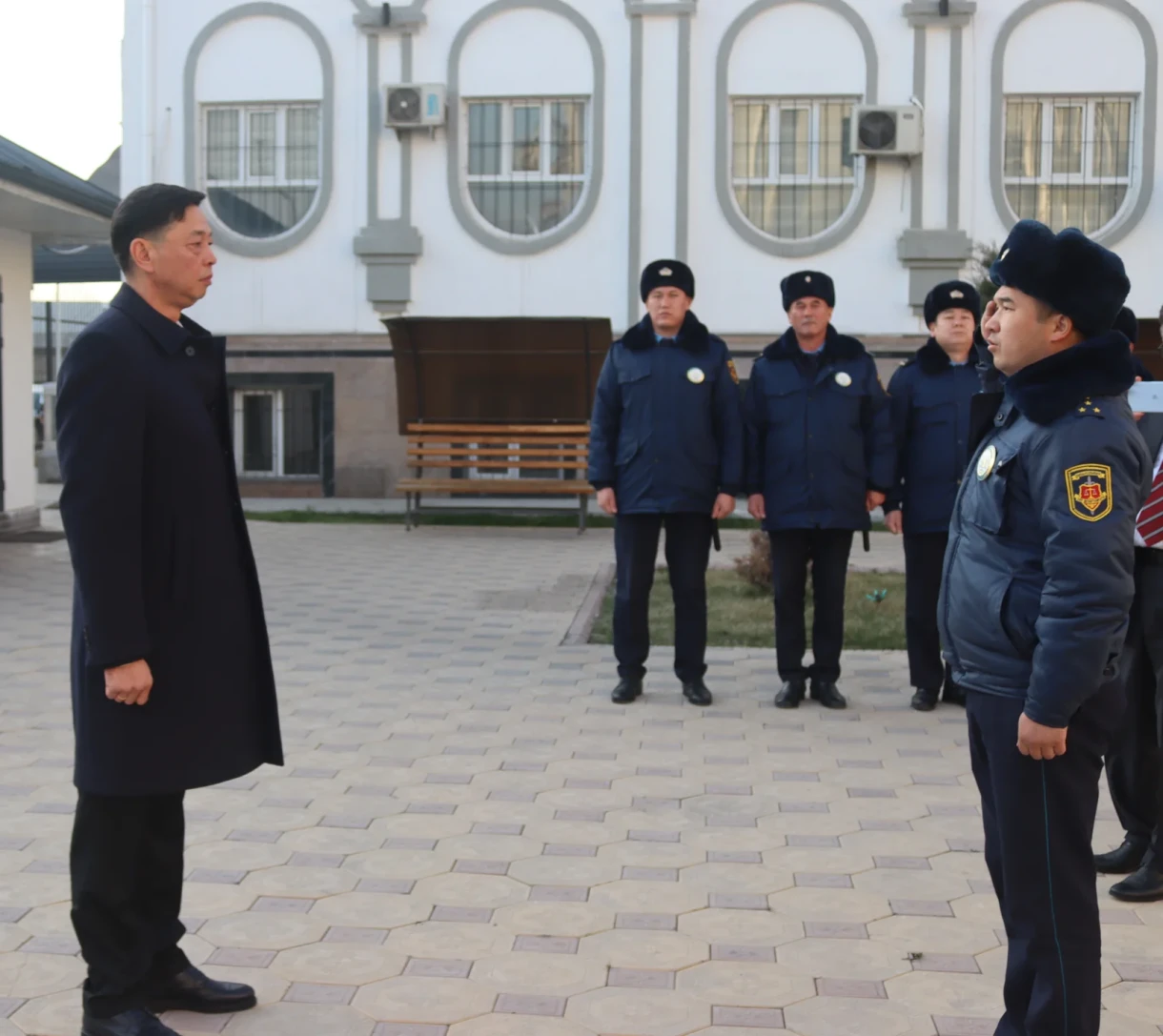
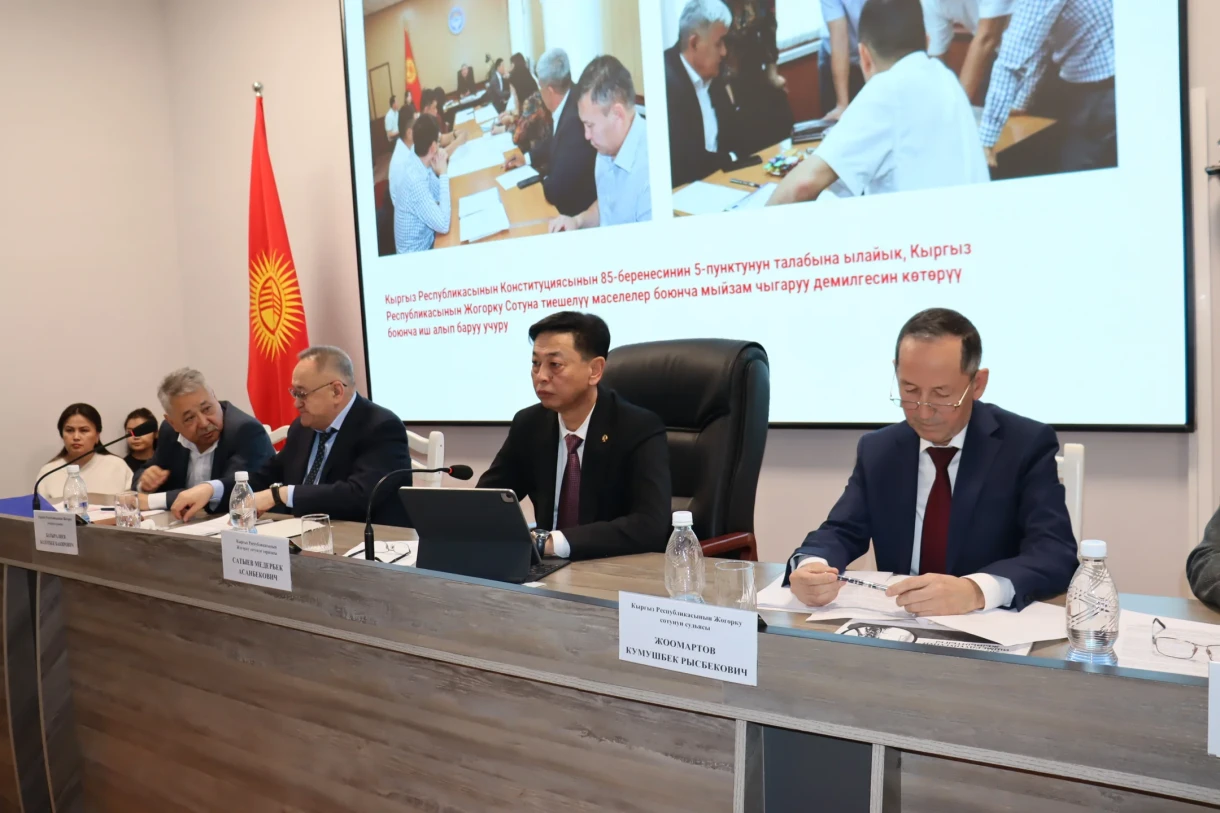
Present at the session were Aman Jumaliev, Deputy Head of the Supreme Court Apparatus, and Aibek Aydarov, Deputy Minister of Justice of the Kyrgyz Republic.
Recently, amendments were made to the Criminal Procedure Code of the Kyrgyz Republic, establishing the concepts of "video conferencing" and "online broadcast of court sessions." Now the law grants defendants and other participants in the criminal process the right to familiarize themselves with the minutes of the sessions, including audio and video recordings, as well as to submit comments on them. The possibility of requesting sessions to be held using video communication or broadcasting via television, radio, and the Internet has been updated.
According to the new amendments, the court may, at the request of the participants in the case or on its own initiative, permit the live broadcast of court sessions on television, radio, and the Internet. This is aimed at ensuring the interests of justice, maintaining transparency, and ensuring the safety of all participants in the process. An 18th paragraph has been added to Article 46, allowing participants to request that court proceedings be conducted using online broadcasting. Additionally, a 5th paragraph has been introduced into part 3 of Article 280, which opens up the possibility of broadcasting in the media and online in real-time format.
In accordance with Article 290-1 of the Criminal Procedure Code of Kyrgyzstan, the court may allow online broadcasting of sessions both at the request of participants and on its own initiative. The decision on the admissibility of such broadcasting is made by the court, taking into account the interests of justice, transparency, and safety. These measures are aimed at increasing the transparency of the judicial system, strengthening public trust in justice, and improving legal culture. They allow for real-time observation of court proceedings, discipline participants, and contribute to reducing bureaucracy and increasing access to justice.