Near the spring grows an ancient chinar tree, which serves as a reminder that water flowed here for many years. It is associated with numerous folk tales and stories.
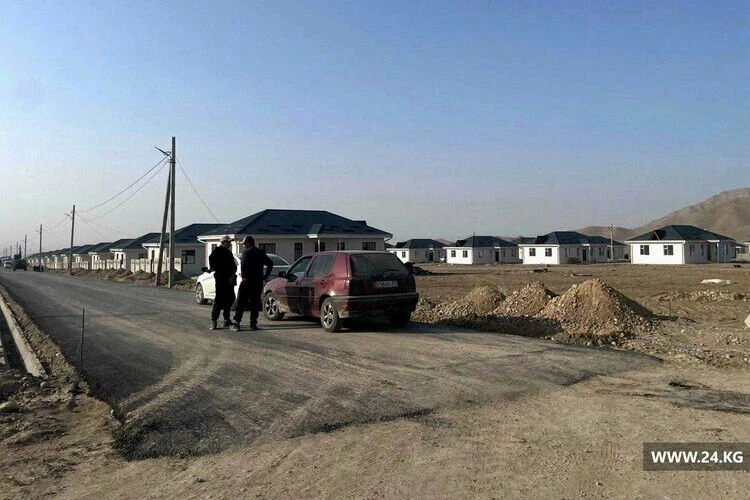
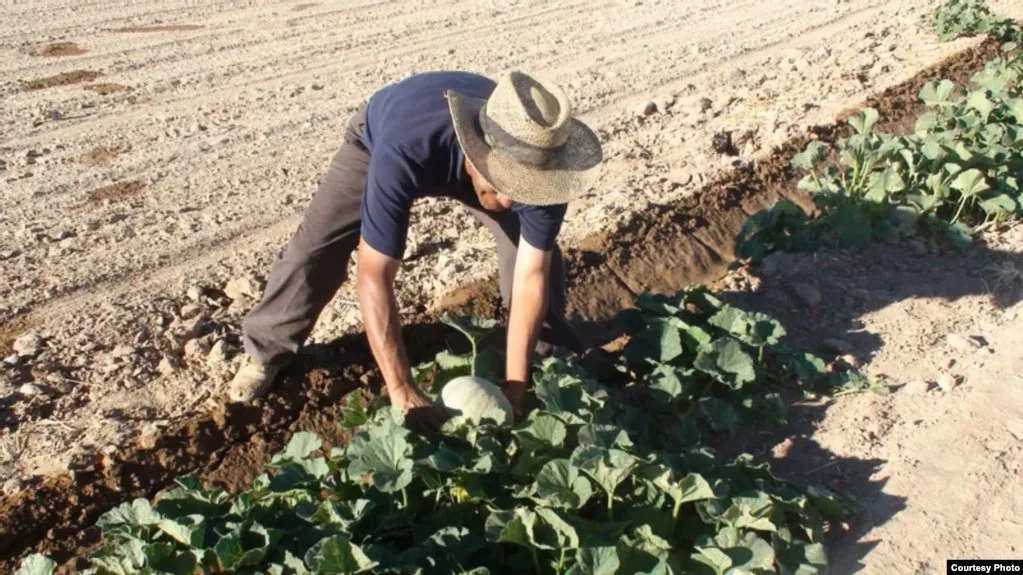
Previously, the spring provided villagers with drinking and irrigation water, and 15 years ago, agriculture in Suu-Bashy was thriving. However, over the past 10–15 years, the water level has significantly decreased. Farmers can now only grow trees, while arable land remains abandoned.
Abdilakim Abdurayimov from the neighboring village of Kara-Bulak is concerned that his 1.3-hectare plot is not being cultivated, and the fruit trees have long stopped bearing fruit. He recalls how, in his youth, even in the hollow leading to the pasture of Kykh, water flowed like from a spring. “In the past, when there were fewer people, there was enough water, and we did not experience a shortage. Neighboring villages and the city could not boast such beauty. We grew our own vegetables and fruits without needing to buy them at the market,” he shares.
Over time, the amount of water has sharply decreased, and we have been forced to stop sowing fields. We used to plant apples, but in the last 3–4 years, the harvest has become meager. Trees that do not receive enough moisture bear only shriveled fruits, and the wait for irrigation has increased to 45 days. Apricot and apple orchards have also been left unattended, and now we fear that we will not be able to keep livestock. Previously, we could collect grass for feed from our plot, but now this is impossible.
The only solution to the problem is drilling wells to extract water. Local authorities previously conducted surveys, promising to find underground sources, but after that, nothing was done. Each new administration requires a repeat explanation of the situation, as old problems are forgotten with the arrival of new people. We have another source — Kara-Suu, from which we take drinking water. But if it dries up too, we will be left without water. This source is already not productive enough, and residents receive water on a schedule. Sometimes it also stops flowing, and then we have to carry water. Many residents now have storage tanks, and some buy water from drivers who bring it in large tanks. As a result, some streets remain without access to water. Some have taken up livestock farming, while others work in the city building houses, but they themselves are in migration,” Abdilakim Abdurayimov recounts.
Another villager, Bekbol Bakyt uulu, who has just started planting seedlings, is now worried about the fate of his plants. “I didn’t know that the spring had dried up and managed to buy seedlings. When I found out, I was disheartened. This spring was the main source of water for Kara-Bulak,” he says.
In recent years, the water situation has been worsening. Last year, the glaciers on the mountains of Kara-Bulak completely disappeared, and there was no water left on the pasture of Chirikti, forcing people to bring their livestock down from the pastures in mid-summer. At this time of year, the spring usually still flows, but now it is completely dry. This has never happened before. If the water completely disappears, all the trees in the village will die, and life will become unbearable. Only Kara-Suu will remain for drinking, and we will have to drill wells,” emphasizes Bekbol Bakyt uulu.