Freemasonry, one of the oldest social and charitable organizations, requires its members to adhere to principles of brotherhood and mutual assistance. This decision was the result of a recommendation from an Independent Commission that investigated the unsolved murder of private detective Daniel Morgan, which occurred in 1987.
Morgan, a 37-year-old father of two, was found murdered in the parking lot of the Golden Lion pub in Sydenham, located in southeast London, in March 1987, leading to numerous investigations that uncovered facts of corruption.
The report published in 2021 raised concerns that police membership in Masonic lodges had become "a source of ongoing suspicion and distrust" regarding the investigations being conducted.
The Metropolitan Police made this decision after surveying its employees, where two-thirds of respondents indicated that membership in such organizations influenced public trust in the police and its impartiality.
Matt Kane, the General Secretary of the Metropolitan Police Federation, previously stated that this decision could violate employees' rights and deemed it "inappropriate and wrong." However, Commander Simon Messinger, responsible for combating corruption in the police, noted that "the time has come to address these issues," adding that public and police trust should take precedence over the secrecy of membership in any organizations.
He clarified that this does not restrict employees' rights to join Masonic lodges or similar organizations. In turn, senior officers of the London police discussed this policy with the United Grand Lodge of England, the headquarters of Freemasonry in England and Wales.
In response to this decision, the lodge characterized the new policy as "illegal, disproportionate, unfair, and discriminatory." In their statement, they expressed disappointment that the police made such a decision despite a desire for constructive interaction.
Adrian Marsh, representing the Order of Women Freemasons, also expressed discontent, calling the measure unjustified and adding that they are considering an appropriate response to this decision.
What is Freemasonry?
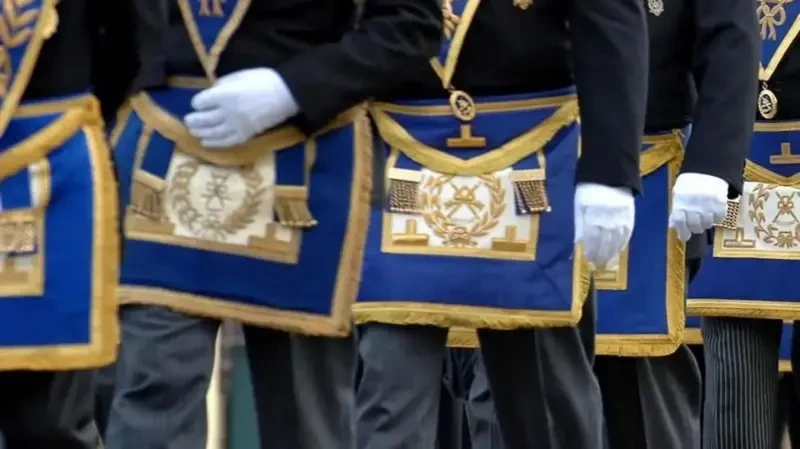
Freemasonry is a fraternal organization with a centuries-old history, boasting around six million members worldwide, including over 200,000 in England and Wales. The roots of Freemasonry trace back to medieval stonemason guilds, and their members still gather in "lodges" to conduct secret rituals and ceremonies based on allegories, such as the building of King Solomon's temple.
For 200 years, Freemasonry in England was open only to men; however, this practice changed in the 20th century, although most lodges still remain either exclusively male or female. Members of Masonic organizations wear symbolic aprons and progress through various degrees of membership.
Among the notable Freemasons in history are Winston Churchill, Arthur Conan Doyle, and Oscar Wilde.