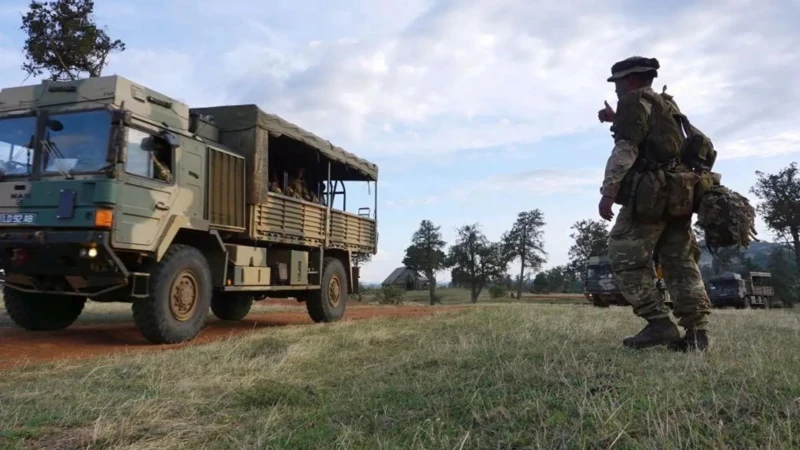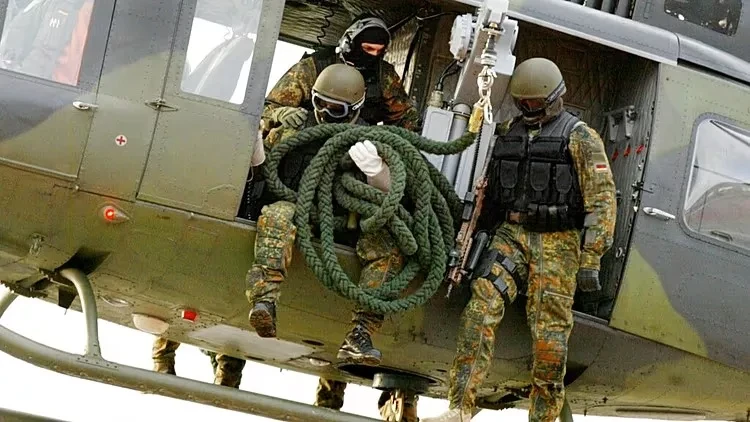
According to information provided by Frankfurter Allgemeine Zeitung (FAZ), the airborne troops of the German army are currently facing serious accusations related to far-right extremist activities, sexual violence, and drug use.
The situation escalated after two female soldiers approached the parliamentary commissioner for armed forces affairs. Currently, the military prosecutor's office and the military counterintelligence service (MAD) are conducting investigations, including in the 26th Parachute Regiment located in Zweibrücken, in the state of Rhineland-Palatinate.
FAZ reports that measures have already been taken: dismissals, restrictions on wearing uniforms, and changes in the regiment's command.
Internal documents obtained by FAZ indicate a long-standing existence of problematic practices within the airborne forces, including far-right slogans, anti-Semitic insults, as well as alcohol and drug abuse.
Female soldiers have also reported instances of sexual violence and derogatory comments, as well as the fact that their complaints were often perceived as a manifestation of disloyalty. In some units, women were viewed not as colleagues but as a hindrance.
According to the report, those who tried to protect themselves from incidents risked being rejected or transferred to other units, while the accused often remained in their units.
There are also rituals that are officially justified by "adhering to traditions," but are legally questionable. For example, there is a practice of forcibly attaching the parachutist badge, during which each participant in the course is allowed to hit the pin until it pierces the skin. It is believed that soldiers undergo this for the sake of belonging to the group, and those who refuse to participate are persecuted.
The German Ministry of Defense insists that such actions are absolutely unacceptable and are punishable under the Military Criminal Code.
Problems in the Bundeswehr's Elite Units
The situation in the airborne forces is not unique: similar problems are observed in the Special Forces Command (KSK) in Calw. Structurally, there are similarities with the airborne troops: fragmented units, high physical and psychological stress, a pronounced elite consciousness, and a culture where loyalty to the group is prioritized over formal rules.
According to MAD, it became evident in KSK that alarm signals had been ignored for many years. From 2017 to 2021, MAD conducted investigations into about fifty cases of right-wing extremism within this unit. The results: several soldiers were dismissed, others were transferred, and one company was disbanded.
A case that occurred in 2020 caused public outrage when it became known that a sergeant major from the second company of KSK, Philipp S., had stored weapons, ammunition, and explosives at his residence, including an AK-47 assault rifle and about two kilograms of explosives, as well as far-right extremist materials. However, the court was unable to establish a far-right extremist motive for his actions.
The soldier was convicted only for violating weapons laws and received a suspended sentence. The second company of KSK was disbanded as a result of identified right-wing extremist tendencies and a toxic leadership culture as part of the 2020 reform, as stated in the final report by then Inspector General Eberhard Zorn.
According to current annual reports from MAD, right-wing extremism remains a serious problem in the Bundeswehr: in 2024, 1,159 cases of suspected extremism were recorded, including 216 new cases related to right-wing extremism.
Why Does the System Respond So Late?
According to §10 of the Soldiers Act, Bundeswehr officers are required to immediately report cases of extremism, criminal offenses, or serious service violations through the established chain of command. Company and battalion commanders bear special responsibility for documenting suspicious facts, facilitating investigations, and involving military lawyers or civilian prosecutors in cases of serious accusations.
Officers and non-commissioned officers are expected to set an example, supervise, and care for the well-being of their subordinates, issuing orders only in accordance with the law and international law. Off duty, they should exercise restraint so as not to undermine trust in them.
Nevertheless, reports from the Bundeswehr Center for Military History and Social Sciences indicate that in isolated elite units subjected to high stress, complaints have often been ignored for many years. This is attributed to concerns over combat readiness or the reputation of the unit.
Disciplinary measures, such as dismissal or demotion, may be applied to soldiers who violate their duties; however, in practice, such sanctions come into effect only at a late stage when clear evidence of ineffective leadership emerges.