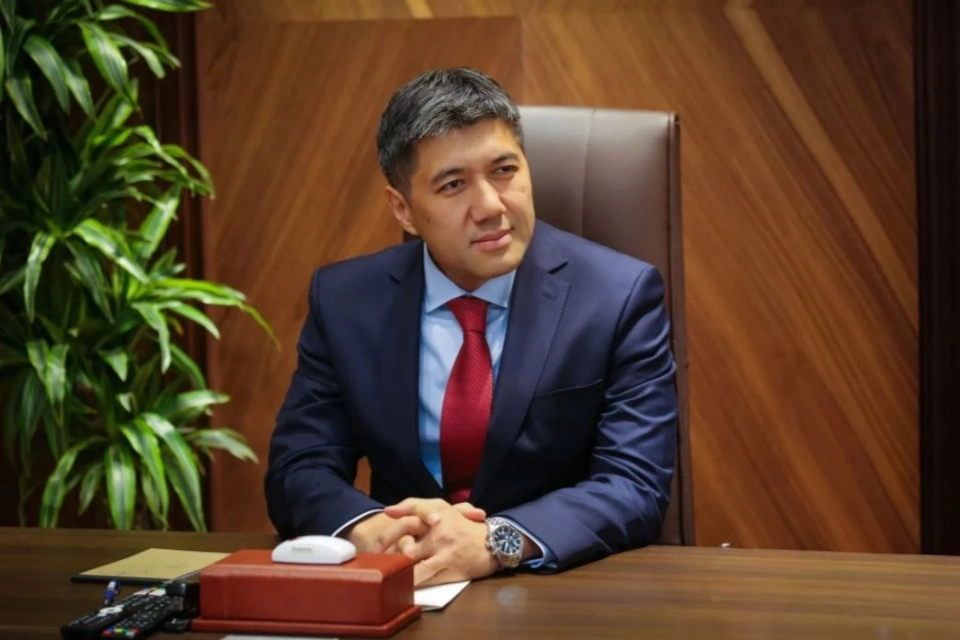
Shawn Rayn, founder and managing director of the China Market Research Group (CMR), believes that the assessments of the Chinese economy presented in the West are no longer relevant. In a recent interview, he explains why such opinions are outdated. Rayn notes that many experts whose opinions are currently quoted by politicians and businessmen left China back in 2015-2016 and still rely on old data about the country.
The expert acknowledges that the Chinese economy is facing certain challenges: the real estate market is experiencing a downturn, housing prices have dropped by 30-40%, and sales volumes remain low. However, he emphasizes that this does not constitute a financial crisis similar to those in the West, as mortgage loans do not pose a problem, and buyers in China generally make significant down payments. The main difficulty lies in the fact that the population has become more cautious and is spending less, which in turn affects confidence, especially among the youth, who are increasingly reluctant to start families, potentially leading to demographic issues in the future.
Nevertheless, Rayn notes that the economic situation is not as critical as it is portrayed outside the country. China has significant household savings, and stock markets demonstrated some of the highest growth rates in the world last year. He emphasizes that the main issue is not a lack of funds, but the overall anxiety of the population.
Regarding technological progress, Rayn asserts that the stereotype of China as a copycat country is already outdated. He cites examples of companies like DeepSeek and highlights the rapid development of Alibaba and Baidu, which have surprised even those experts in the U.S. who believed that China was far behind America. In his opinion, China is forming its own innovative ecosystem and is already catching up in some areas, and even surpassing the U.S. in others.
Under the influence of American sanctions, Rayn states that China has focused on self-sufficiency, developing its industries, including semiconductors and food production. He links this to concerns that the U.S. might impose similar measures on China as it has on Russia and Iran. Rayn emphasizes that pressure from the West has accelerated China's transition to domestic technologies.
In the automotive industry, he claims that Western brands have missed opportunities arising from the rapid growth of Chinese electric vehicles. For example, BYD is already considered a premium brand in several Asian countries, while Western companies have not managed to adapt to the changes. Rayn also reminds that subsidies are a common practice, and without government support, companies like Tesla and many other American tech firms would not exist.
Regarding the trade war between the U.S. and China, Rayn considers it a failure. He points out that China's exports to the U.S. account for only 2-2.5% of GDP, and many goods can be produced domestically or sourced from other countries. Thus, tariffs primarily harmed American consumers rather than Chinese industry.
Rayn notes that China will not return to the growth rates observed in the 2010s, but he considers the current situation stable and manageable. He believes that the country has overcome some of the consequences of sanctions, and entrepreneurial activity is beginning to recover.